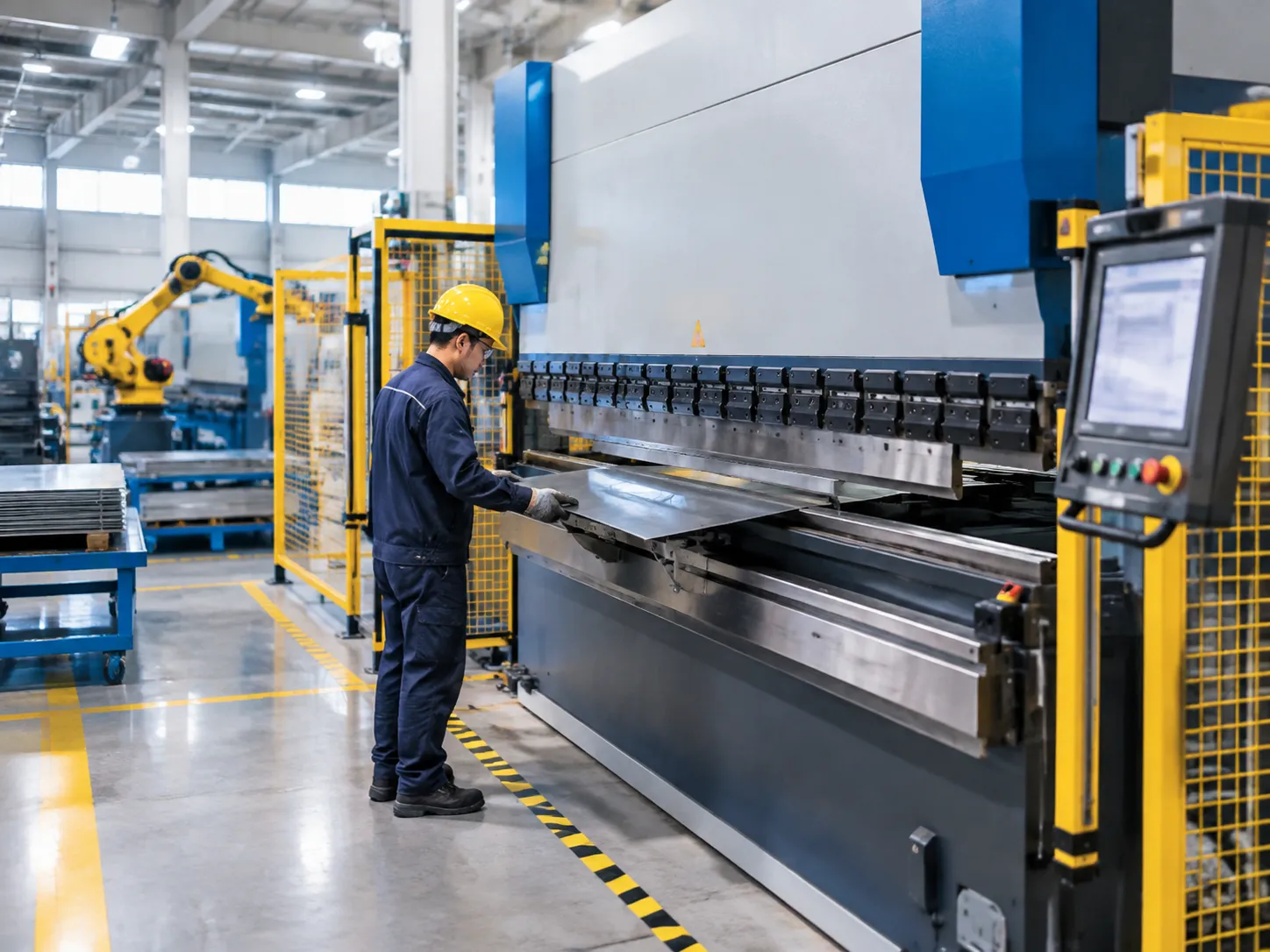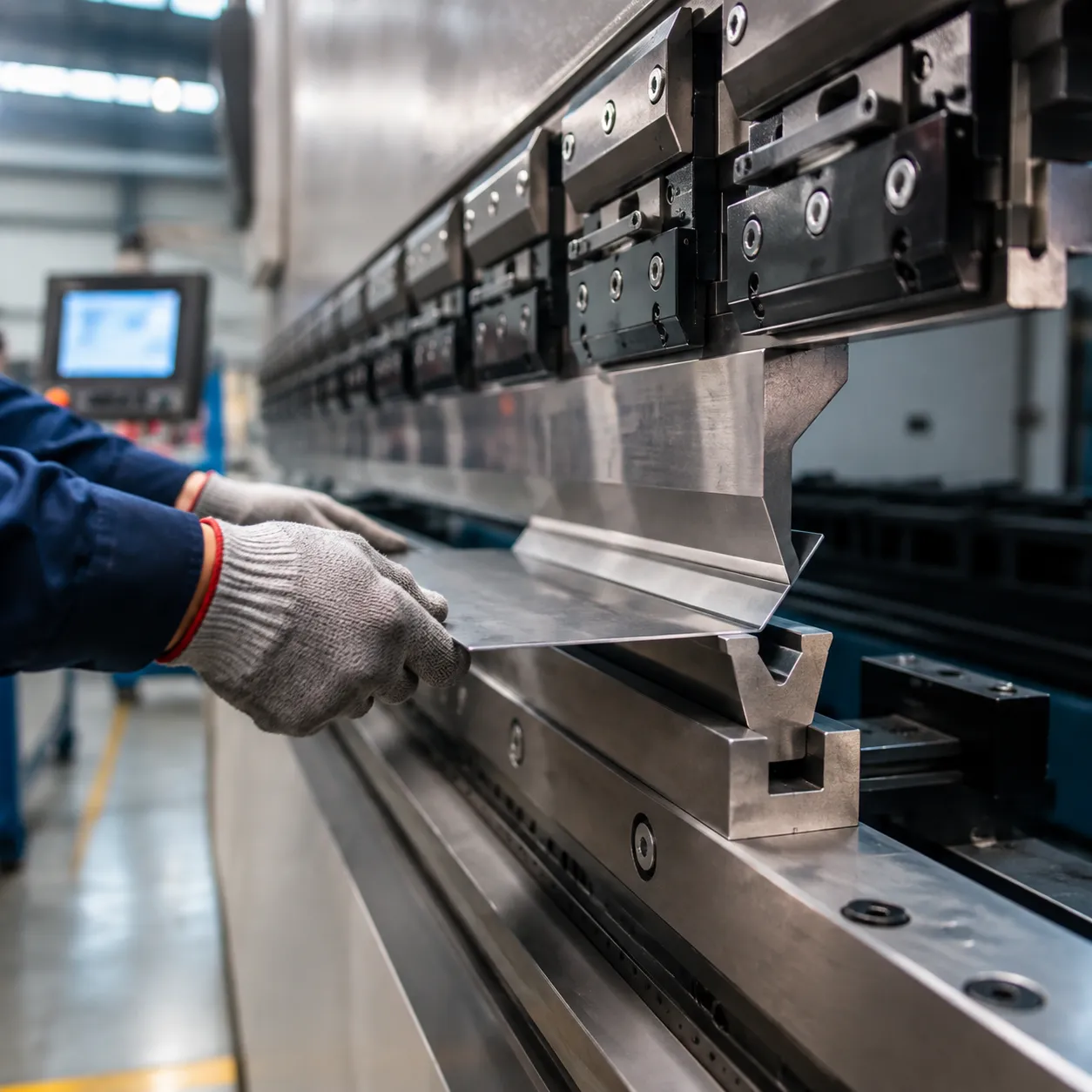
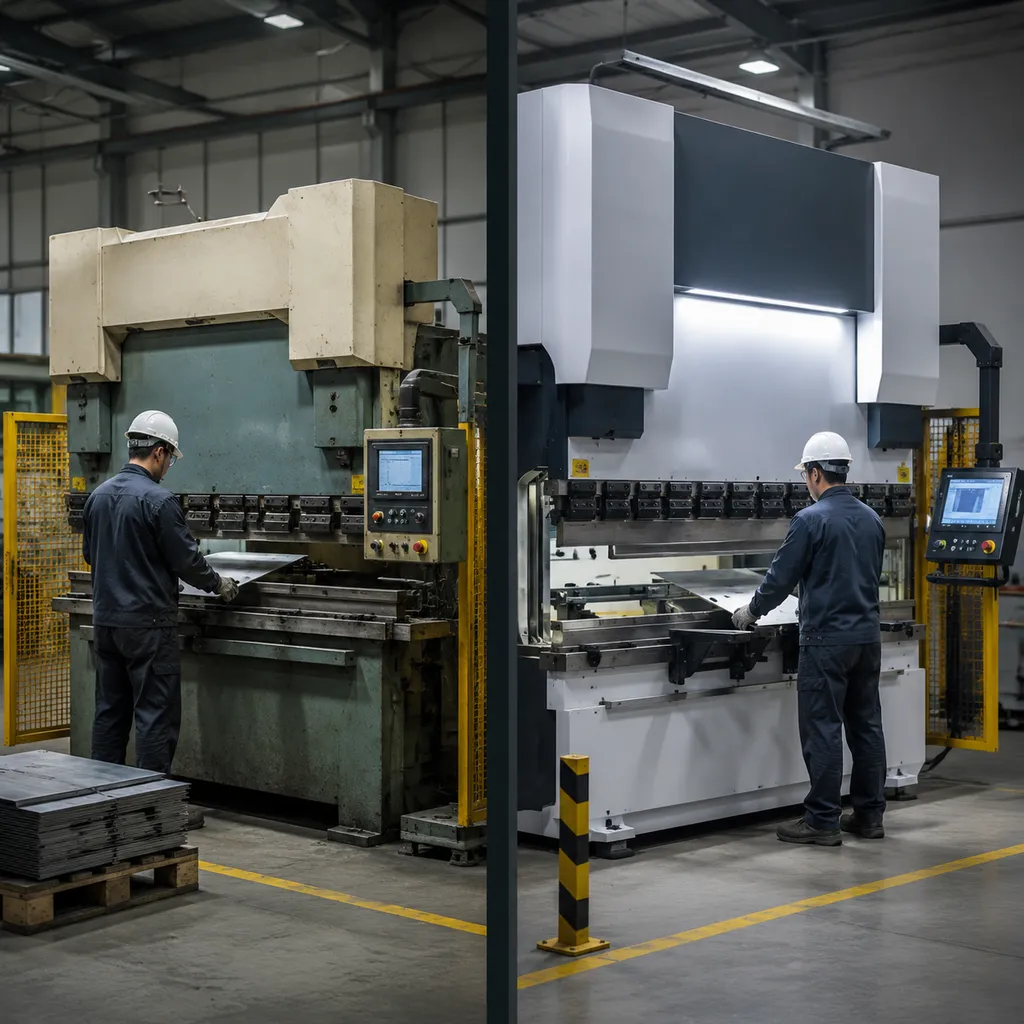
What is the difference between NC and CNC bending machine platforms? NC press brakes rely on basic numerical control with 1-2 axes and open-loop mechanical stops, while CNC systems use closed-loop multi-axis control, CAD import, and automated springback compensation. When shop owners ask us what is the difference between nc and cnc bending machine technology, the answer begins at the core architecture. This guide compares control systems, positioning accuracy, setup time, operator skill requirements, and total cost of ownership for sheet metal bending buyers.
NC vs CNC Bending Machine Core Architecture and Control Systems
When shop owners ask us what is the difference between nc and cnc bending machine technology, the answer begins at the core architecture. The way a machine processes control logic, drives its axes, and measures movement dictates your shop's daily output, positioning accuracy, and setup time.
| Feature | NC Bending Machine | CNC Bending Machine |
|---|---|---|
| Control Logic | Hardwired logic / basic PLC | Microprocessors (Delem, ESA, Cybelec) with CAD/CAM & 3D simulation |
| Axis Configuration | 1-2 axes (Y, X) | Multi-axis control (3+1 up to 8+1 axes) |
| Ram Synchronization | Mechanical torsion bar | Independent electro-hydraulic servo valves |
| Feedback System | Open-loop with mechanical limit stops | Closed-loop servo feedback with optical linear encoders |
Control System Logic & Interface
- NC Control Systems: Rely on hardwired logic or basic PLC units. Operators manually calculate bend sequences and input numerical parameters step-by-step without visual reference.
- CNC Control Systems: Feature advanced microprocessors running premium controllers like Delem, ESA, or Cybelec. They import CAD/CAM drawings directly, automate bend sequences, and offer interactive 3D simulation to detect tool collisions before sheet metal bending begins.
Axis Configuration & Movement Control
- 1-2 Axis NC Setup: Uses a mechanical torsion bar to synchronize the hydraulic press brake cylinders, driving primarily the ram depth (Y-axis) and backgauge positioning (X-axis).
- Multi-Axis CNC Setup: Features electro-hydraulic proportional valves that drive 3+1 to 8+1 axes independently.[1] Each side of the ram adjusts dynamically, ensuring perfect parallel alignment and consistent repeatability across long workpieces.
Closed-Loop Precision & Feedback Systems
- Open-Loop NC: Relies on physical mechanical stops to control bend depth. Once set, the machine cannot adjust for oil temperature shifts, structural flex, or material variations during the stroke.
- Closed-Loop CNC: Utilizes high-precision optical linear encoders mounted on C-frames to monitor ram movement in real time. The control system recalculates depth down to micron levels, delivering unmatched angle precision on every bend.
NC vs CNC Performance Benchmarks: Accuracy, Speed, and Repeatability
We measure the true impact of what is the difference between NC and CNC bending machine setups on the shop floor by looking at three key indicators: precision, cycle speed, and setup times.
Technical Metrics Comparison
| Metric | NC Bending Machine | CNC Bending Machine |
|---|---|---|
| Positioning Accuracy | ±0.05 mm - ±0.1 mm | ±0.01 mm[3] |
| Angle Precision | ±0.5° - ±1.0° | ±0.2° - ±0.3° |
| Backgauge Speed | Single-speed motor (Slow) | High-speed multi-axis AC servo |
| Average Setup Time | 30 - 45 minutes | 3 - 10 minutes |
| Repeatability | Moderate (Operator dependent) | High (Closed-loop encoder control)[1] |
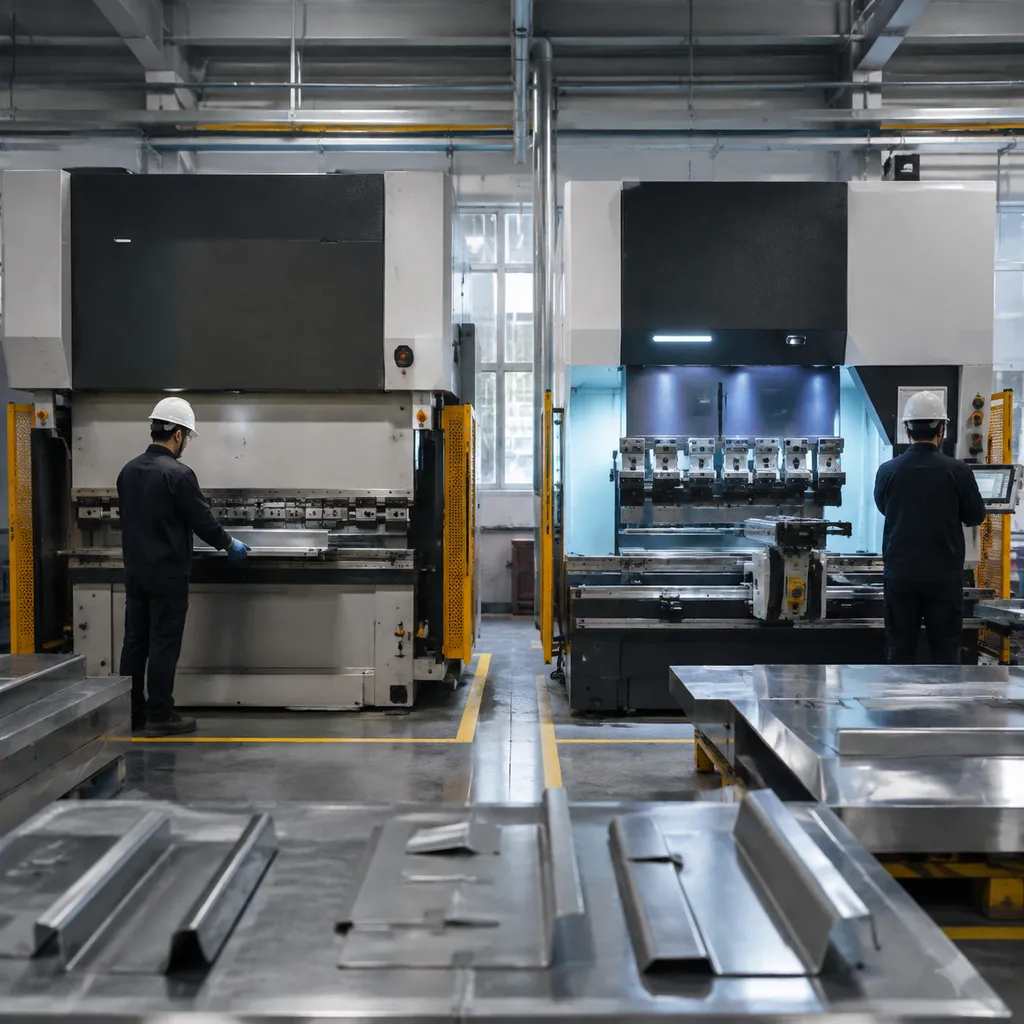
Deflection and Springback Compensation
Managing sheet metal bending deflection requires two completely different workflows depending on your control system:
- Manual NC Adjustments: Conventional numerical control press brake setups rely on physical trial bends and manual shimming under the bed. Operators must calculate material springback by hand, increasing scrap rates and adding idle changeover time.
- Automated CNC Algorithms: Modern computer numerical control machinery uses dynamic crowning systems and real-time springback compensation algorithms. The controller automatically calculates material thickness, bend length, and tensile resistance, driving instant hydraulic or electric adjustments for exact angular precision on the first pass.
Operational Impact: What is the Difference Between NC and CNC Bending Machine Workflows?
Choosing between machine types directly dictates how you staff your shop floor and handle daily sheet metal bending jobs. The operational gap between standard numerical control and computer numerical control determines your daily output capacity, scrap rates, and labor costs.
Operator Skill and Labor Dependence
Machine control logic heavily impacts your labor dependency:
- NC Bending Machines: Rely on master fabricators. Operators must manually calculate bend allowances, adjust mechanical depth stops, and fine-tune angles based on material batch variations.
- CNC Bending Machines: Utilize intuitive graphical 3D touchscreens.[2] Entry-level operators can load pre-programmed parts, follow step-by-step visual loading prompts, and execute complex multi-bend sequences safely and accurately.
Production Volume and Part Complexity
| Feature / Capability | NC Bending Machine | CNC Bending Machine |
|---|---|---|
| Best Part Types | Simple brackets, single-bend profiles, standardized channels | Complex multi-bend enclosures, box shapes, custom geometries |
| Batch Strategy | Long, continuous runs with high part counts | High-mix, low-volume (HMLV) job shop orders |
| Setup Times | 15-45 minutes for manual backgauge and depth adjustments | Under 2 minutes via offline programming and automated multi-axis control |
| Bending Precision | Requires physical trial bends and manual shimming | Automatic angle adjustments and dynamic crowning |
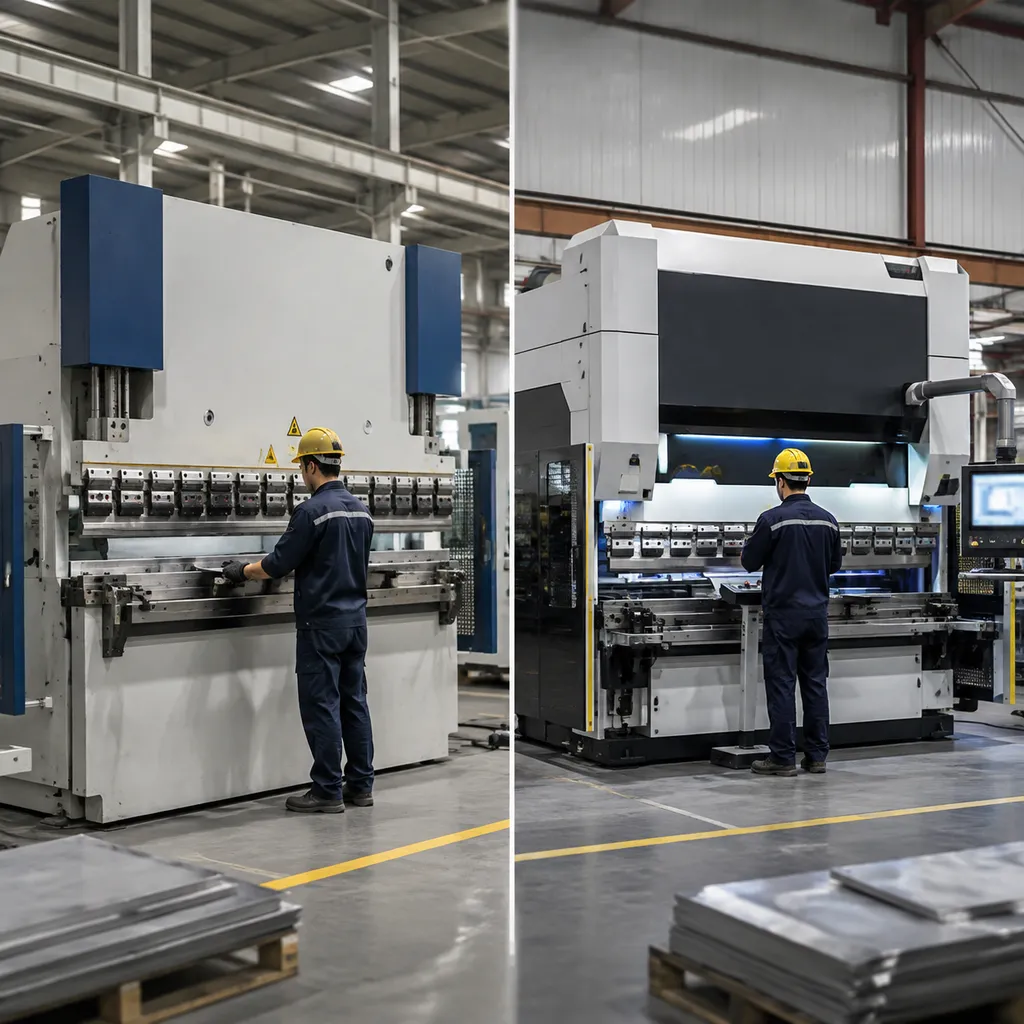
Automation and Industry 4.0 Integration
- NC Standalone Workflow: Restricted to manual loading, hand positioning, and physical part manipulation. This creates hard limits on daily throughput and limits shop connectivity.
- CNC Smart Cell Integration: Integrates seamlessly with robotic loading and unloading arms[4], automatic tool changers, and centralized ERP networks. Upgrading your press brake line to automated CNC bending cells enables lights-out continuous production with total process traceability.
Economic Breakdown: Upfront Cost vs. Long-Term ROI
When evaluating what is the difference between nc and cnc bending machine options for your shop, looking beyond the initial machinery sticker price is essential.
Capital Outlay Comparison
An NC bending machine requires significantly lower upfront capital expenditure, making it an appealing entry-level choice.
- NC Equipment Savings: Delivers significant initial cost savings compared to equivalent CNC models[2], preserving cash flow for shops running simple, dedicated parts.
- CNC Investment: Higher initial acquisition cost driven by multi-axis control systems, electro-hydraulic proportional valves, and dynamic crowning technology.
Total Cost of Ownership Factors
While numerical control equipment keeps your starting budget low, computer numerical control systems optimize operational expense drivers to lower the overall cost per part.
| Financial Metric | NC Bending Machine | CNC Bending Machine |
|---|---|---|
| Material Scrap | Higher due to manual trial bends | Near-zero with automated springback compensation |
| Setup & Changeovers | 30-60 minutes per job (manual stops) | Under 5 minutes via touchscreen controls and offline programming |
| Labor Overhead | High reliance on costly, highly skilled operators | Operates efficiently with entry-level staff guided by visual prompts |
| Part Productivity | Slower overall throughput on complex shapes | High speed execution across complex multi-bend sequences |
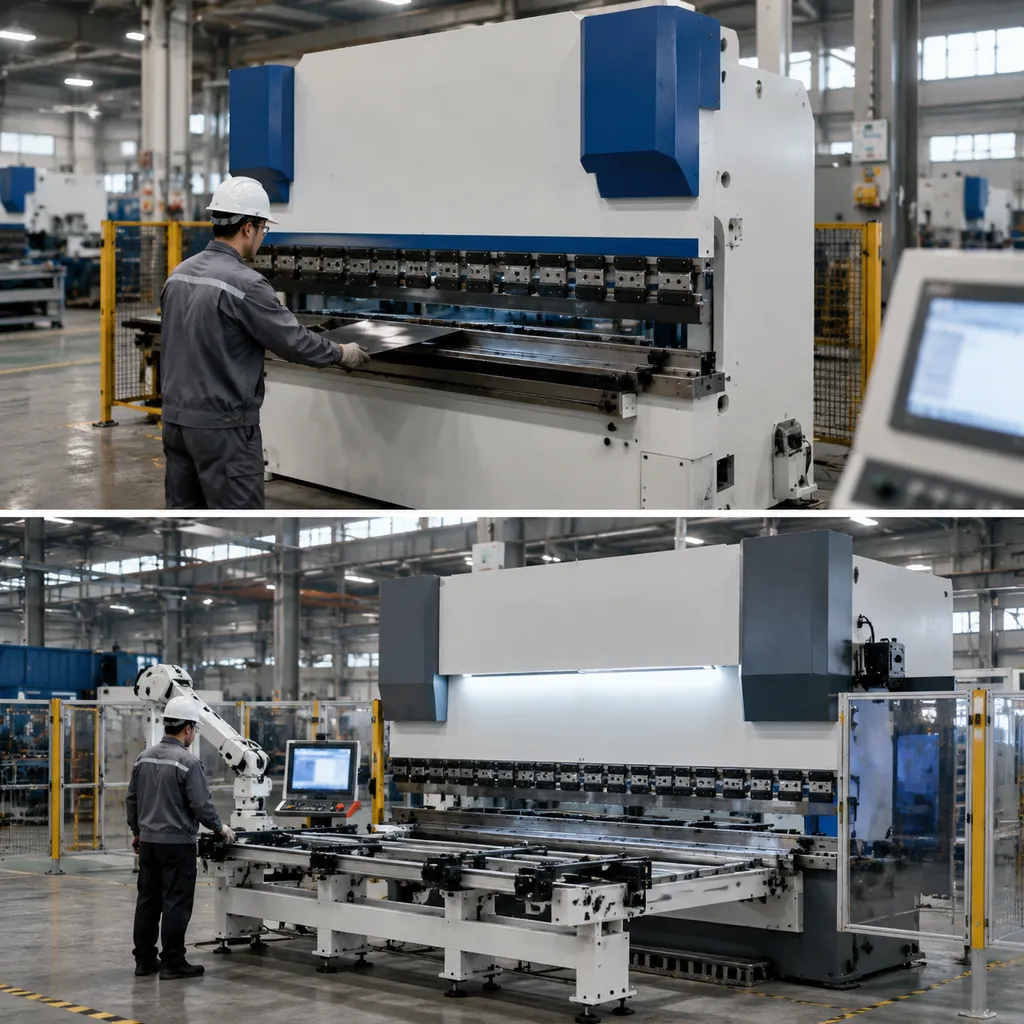
Automating setup times and eliminating manual setup scrap transforms daily margins. Investing in a high-precision hydraulic press brake with advanced CNC drives higher long-term ROI across high-mix, tight-tolerance sheet metal bending runs.
Decision Framework: Choosing the Right Machine for Your Facility
Choosing between equipment types comes down to three clear factors: part complexity, production volume, and your capital budget. Understanding what is the difference between NC and CNC bending machine setups helps us match the right machine to your shop floor's daily output requirements.
When to Choose an NC Bending Machine
An NC bending machine makes practical and financial sense when your workflow focuses on simple geometries and continuous production runs.
- Standardized Profiles: Best for straightforward 90-degree bends, simple channels, and uniform sheet metal components.
- Continuous Long Runs: Ideal for high-volume jobs where backgauge positioning remains unchanged for long periods.
- Strict Capital Constraints: Delivers a lower initial purchase cost, delivering significant savings on upfront machine equipment expenses.
When to Choose a CNC Bending Machine
A CNC bending machine is the standard choice when job shop flexibility, high accuracy, and minimal setup times drive your profitability.
- Complex Geometries: Handles multi-bend enclosures, varying angles, and intricate parts in a single, continuous sequence.
- Tight Tolerances: Delivers exceptional positioning accuracy (±0.01mm) and strict angle precision (±0.3°) across varied material batches.
- Automated Scaling: Features multi-axis control, dynamic crowning, offline programming, and full readiness for robotic integration.
Quick Selection Matrix
| Shop Requirement | NC Bending Machine | CNC Bending Machine |
|---|---|---|
| Part Geometry | Simple single-angle profile | Complex multi-bend parts |
| Target Tolerance | Standard commercial grade | High precision (±0.01mm, ±0.3°) |
| Setup Time | Manual mechanical stops | Automated multi-axis recall |
| Budget Focus | Low upfront CAPEX | High throughput & fast ROI |
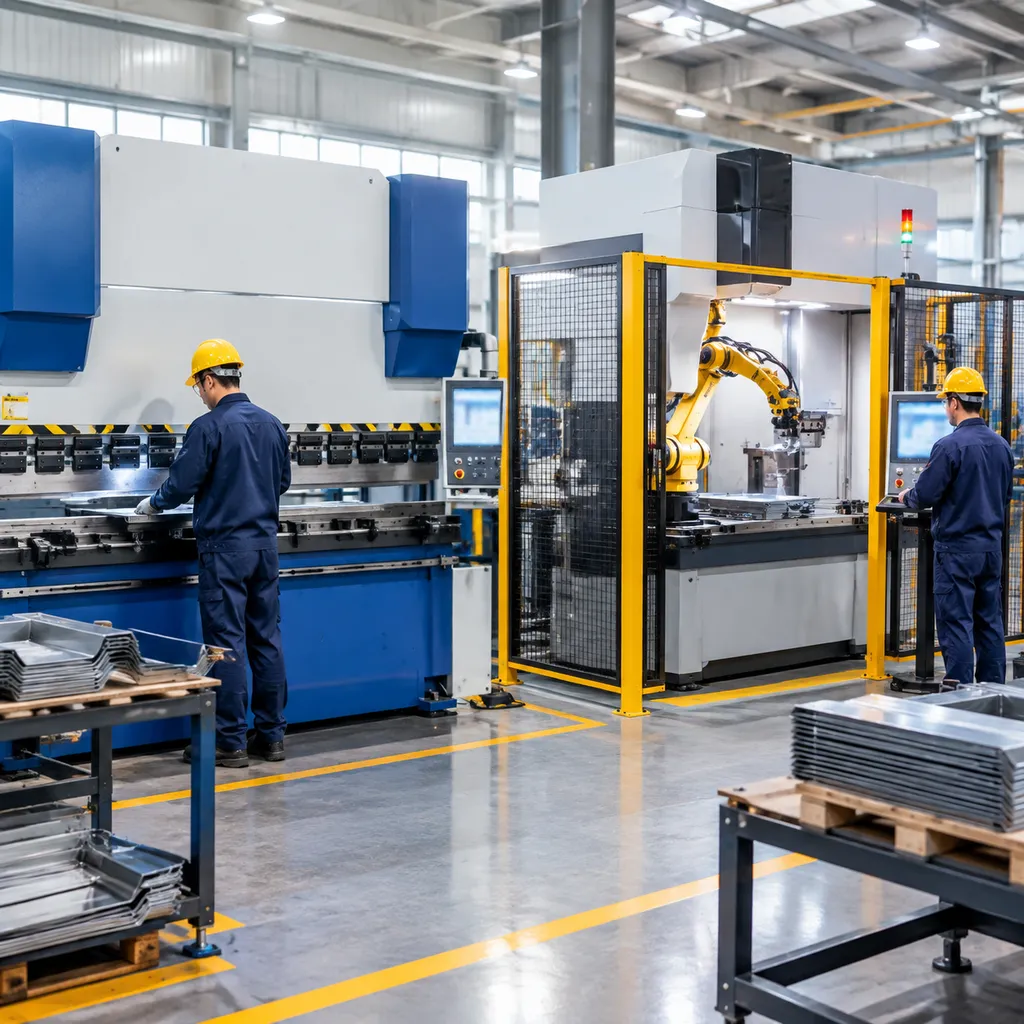
ProMach Bending Solutions: Precision Engineering for Modern Fabrication
Whether you are stepping up from a basic unit or upgrading an automated factory, we build equipment designed for rock-solid positioning accuracy and long-term reliability. Understanding what is the difference between nc and cnc bending machine capabilities comes down to control, speed, and precision - and our lineup delivers on all three.
Certified CNC Press Brakes and Flexible Cells
Our ISO9001 and CE-certified machinery handles demanding sheet metal bending jobs with minimal setup time:
- CNC Press Brakes: High-precision multi-axis control for multi-bend complex parts.
- Panel Benders: High-speed automated bending designed for box, panel, and enclosure manufacturing.
- Flexible Bending Cells: Robotic automation options for continuous, unattended production runs.
Tonnage Capacities and Drive Configurations
| Configuration | Hydraulic Press Brake | Pure Electric Servo Bending Machine |
|---|---|---|
| Tonnage Range | 40T to 1000T+ | 35T to 150T |
| Best Used For | Heavy plate fabrication and high-tonnage jobs | Ultra-fast, energy-efficient precision parts |
| Primary Benefit | Maximum bending force across long bed lengths | Zero hydraulic oil, lower maintenance, high repeatability |
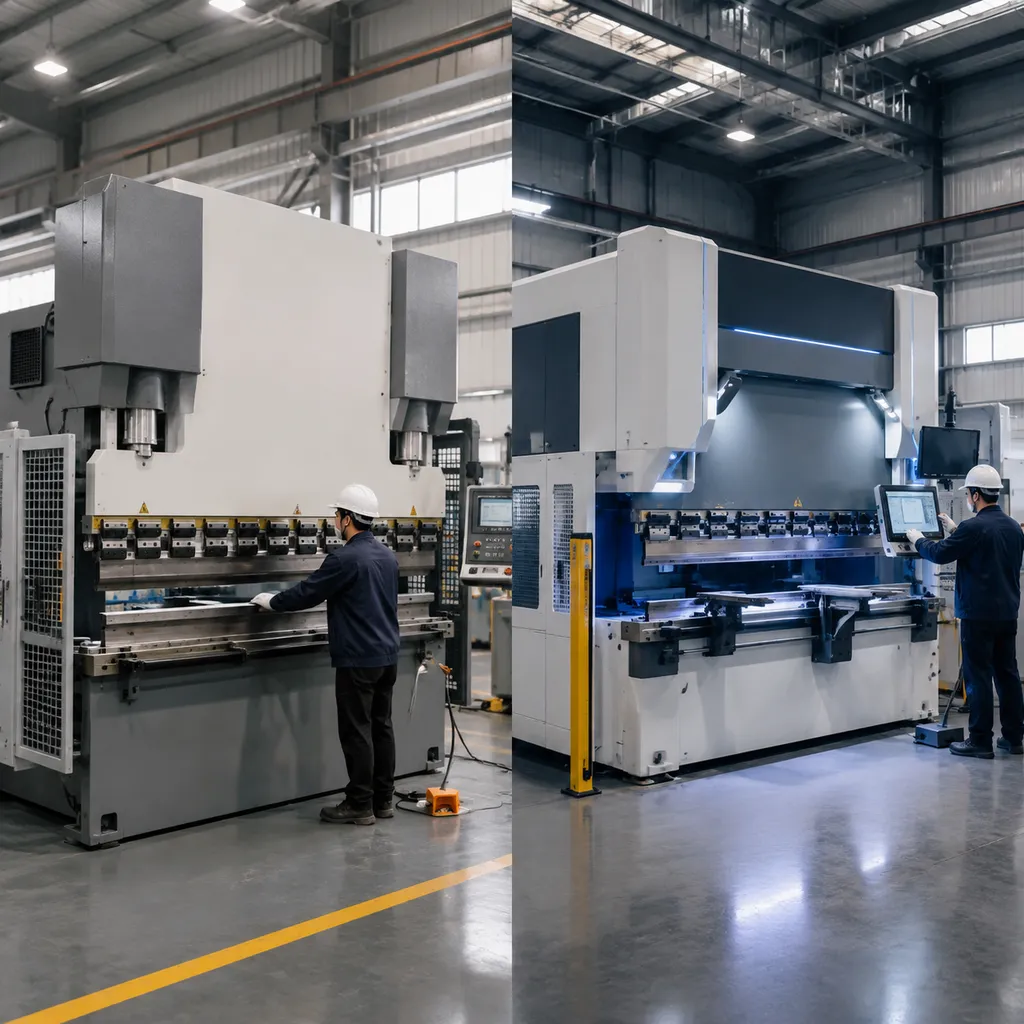
Premier Controllers and Global Support
We integrate top-tier control system hardware to guarantee smooth operation and simple offline programming for your team.
- Advanced Control Systems: Native support for Delem, ESA, and Cybelec 3D touchscreens.
- Dynamic Crowning: Real-time hydraulic and mechanical deflection compensation for perfect angle precision across the entire sheet.
- Custom OEM/ODM Engineering: Specialized backgauge speed, custom stroke lengths, and tailored tooling setups built around your shop floor.
- Lifetime Technical Assistance: On-demand technical support, fast component delivery, and ongoing service for the lifetime of your machine.
Frequently Asked Questions (FAQs)
What is the difference between NC and CNC bending machine operations?
The core operational difference between an NC and a CNC bending machine lies in automation depth, multi-axis control, and operator reliance. We find that NC machines require manual physical adjustments for backgauge positioning and depth stops, while CNC press brakes automate complex bend sequences through microprocessors and continuous closed-loop feedback.
Main Operational Differences
Understanding what is the difference between NC and CNC bending machine setups comes down to automation, axis configuration, and software control logic. We design our press brakes to address these exact operational bottlenecks.
| Feature | NC Bending Machine | CNC Bending Machine |
|---|---|---|
| Control Logic | Basic PLC with manual parameter entry | Advanced multi-axis microprocessors (Delem, ESA) |
| Axis Configuration | 1 to 2 axes (Standard X/Y depth stops) | 3+1 to 8+1 multi-axis electro-hydraulic control |
| Feedback System | Open-loop with mechanical stops | Closed-loop servo feedback with optical linear encoders |
| Programming | Manual step-by-step setup per batch | Offline CAD/CAM import with 3D graphic simulation |
Springback Compensation and Precision
Handling sheet metal bending variation requires completely different approaches on these two platform types.
- NC Press Brakes: Rely on physical trial bends, manual shimming, and operator guesswork to compensate for material springback. Angle precision depends heavily on metal batch consistency.
- CNC Press Brakes: Feature dynamic crowning systems and automated software algorithms that calculate springback instantly. Closed-loop optical encoders monitor beam depth in real time, guaranteeing exact positioning accuracy and repeatability across long runs.
Cost-Effectiveness for Small Job Shops
A CNC bending machine is highly cost-effective for high-mix, low-volume job shops because it slashes changeover time and material waste.
- Dramatically Reduced Setup Time: Transitioning between different sheet metal parts takes seconds using touchscreen programs instead of 20 to 30 minutes of manual adjustments.
- Reduced Operator Skill Requirement: Clear 3D visual prompts guide entry-level technicians through complex multi-bend sequences, eliminating the need for expensive master operators.
- Zero Scrap Production: Automated backgauge positioning hits exact tolerances on the very first bend, saving costly material on short production runs.