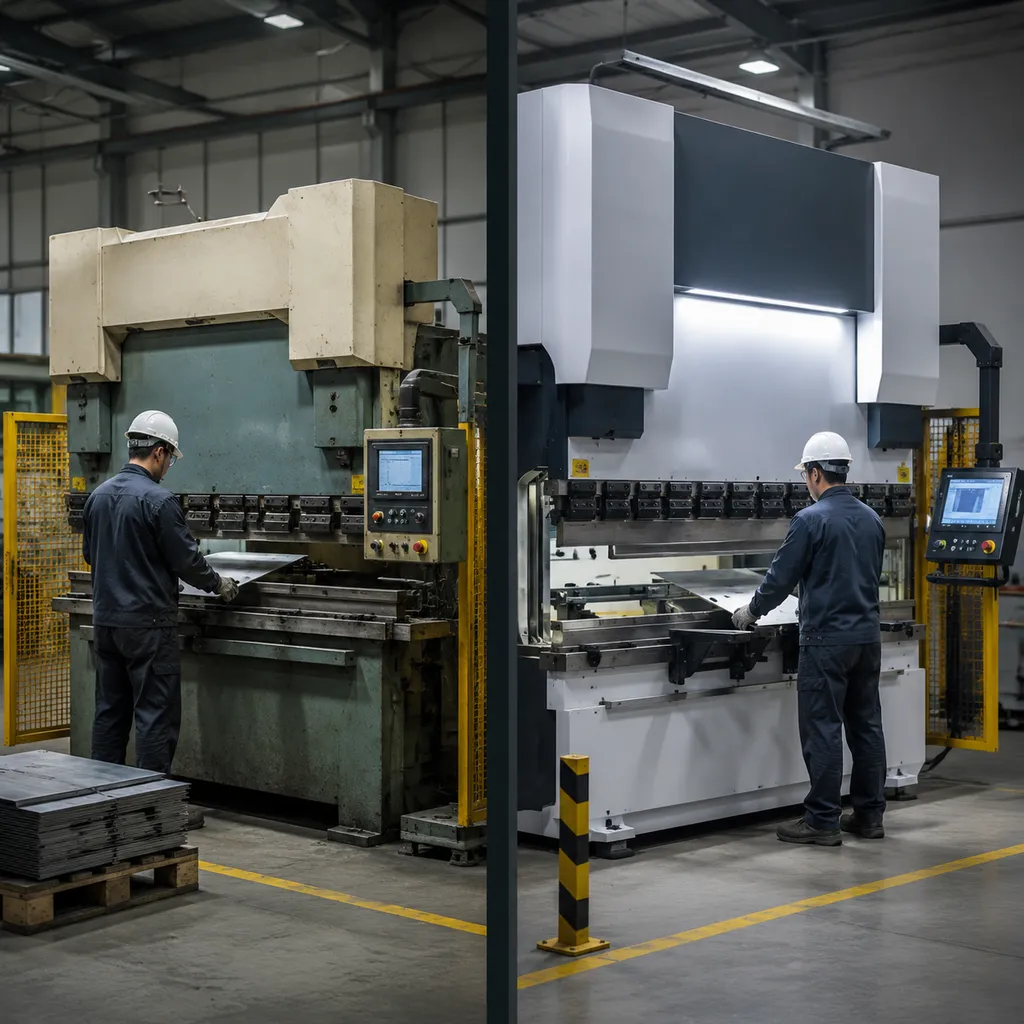
Choosing the best CNC bending machine starts with matching drive architecture, tonnage, and control precision to your sheet mix - not chasing brochure peak specs. Across electro-hydraulic, all-electric, and hybrid platforms, the shops that win measure first-part-correct rate, energy draw, and setup time together. This guide walks through drive types, must-have features, sizing math, industry configurations, TCO, and a buyer checklist so you can specify with confidence.
CNC Bending Drive Architectures: Hydraulic, Electric, and Hybrid
To find the best cnc bending machine for your shop floor, you must match the drive architecture to your specific material thickness, production volume, and precision requirements. We engineer our sheet metal processing machinery around three core drive platforms, each built to solve distinct operational challenges.
Electro-Hydraulic Synchronous CNC Press Brakes (Synchro)
Electro-hydraulic synchro systems remain the industrial standard for heavy-duty, versatile sheet metal processing.
- Dual-Axis Synchronization: Independent optical linear scales monitor the position of the Y1 and Y2 cylinders in real time, delivering precise ram leveling even under off-center loading.
- Proportional Valve Precision: High-response Bosch-Rexroth proportional valves dynamically adjust oil flow for smooth deceleration and micron-level depth positioning.
- Broad Tonnage Capability: Easily scales from 30 tons up to 1000+ tons for bending structural steel, heavy plate, and long architectural profiles.
All-Electric Servo CNC Bending Machines
All-electric press brakes eliminate hydraulic oil entirely, driving the ram via high-torque servo motors paired with heavy-duty ball screws or specialized belt systems.
- Zero Thermal Drift: Eliminates angle variation caused by fluctuating hydraulic oil temperatures during long production shifts.
- Maximum Energy Efficiency: Servos draw power only when the ram is in motion, slashing idle power consumption to near zero.
- High-Speed Micro-Bending: Delivers the fastest approach and return speeds for small, thin-gauge sheet components like electrical enclosures and medical hardware.
Hybrid Servo-Hydraulic Bending Systems
Hybrid technology combines the raw force of hydraulic cylinders with the rapid responsiveness of servo drives. A bi-directional servo motor drives a dedicated hydraulic pump on demand.
- On-Demand Power Delivery: The motor remains stationary during dwell and idle phases, cutting overall energy consumption by typically 40-60% compared to standard hydraulic systems in multi-shift cells.[1]
- Reduced Oil Volume: Uses compact oil reservoirs, resulting in less thermal degradation and fewer fluid change intervals.
- Quiet Shop-Floor Operation: Decibel levels drop significantly during standby and bending cycles.
Comparative Breakdown: Hydraulic vs. Electric vs. Hybrid
| Performance Metric | Electro-Hydraulic Synchro | All-Electric Servo | Hybrid Servo-Hydraulic |
|---|---|---|---|
| Typical Tonnage Range | 30T - 1000T+ (Tandem expandable) | 20T - 150T | 40T - 400T |
| Energy Consumption | Standard continuous motor draw | Ultra-low (power on demand only) | Low (typically 40-60% energy savings) |
| Positioning Accuracy | +/- 0.01 mm via linear scales | +/- 0.005 mm direct servo feedback | +/- 0.008 mm closed-loop |
| Maintenance Demands | Routine oil, seal, and valve checks | Minimal (lubrication of mechanical drives) | Low (sealed, compact hydraulic circuits) |
| Optimal Application | Thick plate, structural parts, mixed fabrication | High-speed thin sheet, precision electronics | Medium-to-high volume precision fabrication |
Critical Technical Features of the Best CNC Bending Machine
When you are looking for the best CNC bending machine, your priority must be structural integrity and precision control. We focus on these core technical pillars to eliminate common shop issues like frame distortion and angle drift.
Heavy-Duty Frame Rigidity and Annealing
We use heavy-duty steel plates that undergo high-temperature annealing and stress-relief treatments. This process prevents the machine from twisting or deforming under high-tonnage pressure, ensuring your parts remain consistent over years of operation.
Multi-Axis Backgauge Flexibility
To handle complex geometries, a high-end system needs more than just a basic backgauge. We provide scalable configurations to suit your specific production needs:
| Axis Configuration | Ideal For |
|---|---|
| 3+1 Axis | Standard, high-volume production runs. |
| 4+1 to 6+1 Axis | Complex parts requiring multi-stage bending. |
| 8+1 Axis | Advanced 3D shapes and custom structural components. |
Deflection Compensation Systems
To maintain a perfect bend angle across the entire length of the workpiece, we utilize advanced compensation:
Mechanical Crowning: CNC-controlled motorized wedges that adjust to counteract bed deflection.
Hydraulic Crowning: Uses dynamic pressure to ensure the die remains perfectly parallel to the punch.
Next-Gen CNC Controllers and 3D Simulation
We integrate industrial controllers like the Delem DA-66T/69T, Cybelec, or ESA systems. These controllers allow your operators to:
Use 3D graphical simulation to preview bends before touching the metal.
Reduce scrap rates by identifying potential collisions early.
Achieve micron-level positioning via high-accuracy optical encoders - detailed further in how a CNC bending machine works.
Real-Time Laser Angle Measurement
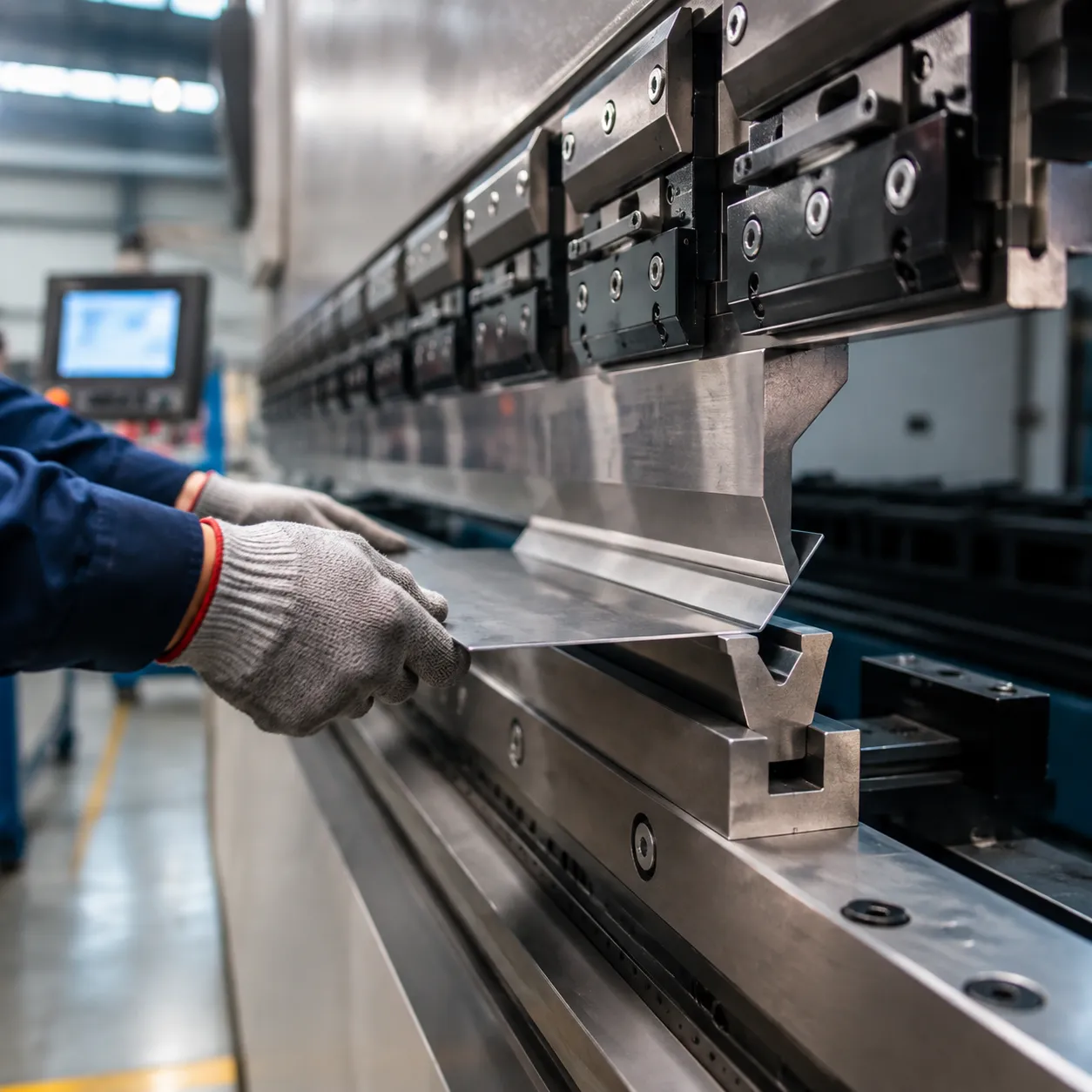
To guarantee "first-part-correct" production, our systems incorporate closed-loop laser angle measurement. This technology monitors the bend in real-time and makes automatic adjustments to the ram position, ensuring that every piece - from the first to the thousandth - meets your exact specifications without manual re-calibration.
Step-by-Step Machine Sizing Guide for the Best CNC Bending Machine
Selecting the right equipment starts with matching your specific production requirements to the machine's technical capacity. Choosing an undersized or oversized press brake leads to inefficiency, frame stress, or poor bending accuracy.
Bending Force Calculation Formula
To determine the required tonnage for your best CNC bending machine, we use the standard bending force formula based on material thickness, die opening, and tensile strength. As a rule of thumb:
Tonnage = (650 x Length x Thickness^2) / (Die Opening x 1000)
Always factor in a 20% buffer to avoid running the machine at its absolute limit, which protects the hydraulic system and ensures long-term repeatability.
Throat Depth, Daylight Opening, and Stroke Length
These physical clearances define the geometry of parts you can process:
Throat Depth: Determines the maximum distance from the edge of the sheet to the bend line. A deeper throat is essential for larger panels.
Daylight Opening: The vertical space between the ram and the table. Ensure this is sufficient for your tallest tooling and box-forming requirements.
Stroke Length: Defines the maximum travel of the ram. A longer stroke allows for deeper box bending and easier part removal.
Tooling Compatibility and Quick-Clamping
Versatility in sheet metal fabrication equipment relies on your tooling system. We prioritize compatibility to ensure you can swap jobs quickly:
European/Promecam Style: The industry standard for versatility and cost-effectiveness, ideal for most general fabrication shops.
Wila/Trumpf Style: Best for high-precision, heavy-duty applications requiring rapid hydraulic clamping.
Quick-Clamping Systems: Upgrading to pneumatic or hydraulic top-tool clamping significantly reduces setup time, allowing you to switch between different bending profiles in minutes rather than hours.
Best CNC Bending Machine Applications by Industry
Every shop floor faces unique bending challenges, from angular drift on long trim parts to flange collision on multi-bend boxes. We engineer our machinery to solve these exact bottlenecks across diverse sheet metal processing environments. Selecting the best cnc bending machine configuration comes down to matching tonnage, bed length, and multi-axis backgauge automation to your specific end product.
| Industry Application | Core Production Pain Points | Targeted Machine Configuration |
|---|---|---|
| Electrical Enclosures | Cumulative angle error, box depth | 4+1 to 6+1 Axis, tall daylight |
| Automotive & Chassis | High springback, cycle speed | Dynamic synchro, optical scales |
| Architectural & Elevator | Center canoe defect, surface marks | Motorized mechanical crowning |
| Heavy Structural & Mining | Frame deflection, extreme tonnage | 500T-1000T+ heavy-duty / Tandem |

Precision Electrical Enclosures and Control Cabinets
Fabricating NEMA-rated electrical enclosures and server racks requires tight tolerances to ensure proper sealing, latch alignment, and flush door fits.
- The Problem: Deep return flanges often collide with standard tool holders, and minor angle variations multiply across 6-to-8 bend sequences, leaving uneven corner gaps.
- Our Solution: We configure our electro-hydraulic synchro press brakes with extended daylight, deep throat depths, and segmented European-style quick-clamp tooling.
- Key Specs Used: 4+1 to 6+1 axis backgauge systems (X, R, Z1, Z2) driven by Yaskawa servo motors to position narrow side flanges instantly without manual gauge repositioning.
Automotive Chassis, Brackets, and Vehicle Bodywork
High-volume automotive components demand rapid cycle times, high repeatability, and immediate compensation for springback when forming high-strength steels.
- The Problem: Material yield strength fluctuates between coil batches, causing angle inconsistency and high scrap rates on critical structural mounts.
- Our Solution: High-speed electro-hydraulic proportional valves paired with linear optical encoders provide micron-level ram positioning (Y1/Y2).
- Key Specs Used: Delem graphical CNC controllers with automatic bend sequence calculation and real-time tonnage adjustment to deliver first-part-correct precision on structural brackets, chassis stiffeners, and reinforcement channels.
Architectural Facades and Stainless Steel Elevator Fabrication
Long architectural panels and decorative stainless steel trims require flawless aesthetics without the dreaded "canoe effect" across the centerline.
- The Problem: Standard press brakes flex in the middle under load, producing open angles in the center and tight angles at the machine side frames on 10-foot to 14-foot sheets.
- Our Solution: We integrate CNC-controlled motorized mechanical crowning tables. The controller calculates the exact deflection profile based on sheet thickness, material type, and length, driving specialized dynamic wedges to keep the bed perfectly parallel under full pressure.
- Key Specs Used: 3000 mm to 4000 mm bending lengths with delicate pressure control to protect brushed, mirror-finish stainless, and pre-anodized aluminum panels from tooling witness marks.
Heavy Equipment, Earthmoving Machinery, and Structural Bridge Plates
Forming wear-resistant plate, heavy boom sections, and thick structural steel demands high-rigidity machine construction that resists structural distortion.
- The Problem: Bending 1/2-inch to 1-inch thick hard plate exerts extreme stress on the throat and side frames, leading to permanent frame warping on lighter-built machinery.
- Our Solution: Heavy-duty welded steel frames subjected to full-body, high-temperature thermal annealing and vibratory stress relief to eliminate residual manufacturing stresses.
- Key Specs Used: High-tonnage hydraulic systems delivering from 500 Tons up to 1000+ Tons (extendable to multi-machine Tandem configurations up to 12 meters) with heavy-duty Bosch-Rexroth hydraulics capable of off-center loading without hydraulic cylinder cavitation or mechanical binding.
Total Cost of Ownership (TCO) and ROI Evaluation
When evaluating the best CNC bending machine for your shop floor, the initial purchase price is only a fraction of the equation. We measure true profitability by looking at lifecycle operating expenses: electrical draw, material scrap rates, tooling longevity, and routine service downtime. Choosing an engineered system with high-efficiency drives and precision controls ensures faster payback and sustained margins over years of continuous production.
Energy Consumption: Hydraulic vs. Servo vs. All-Electric Press Brakes
- Standard Electro-Hydraulic Systems: Traditional hydraulic units run the main motor continuously, consuming power even while the ram is idling or the operator is adjusting the sheet.
- Hybrid Servo-Hydraulic Systems: We utilize bi-directional servo pumps that operate exclusively during active ram movement. Standby power consumption drops to near zero, lowering overall electrical use by typically 40-50% compared to standard hydraulics.[1]
- All-Electric Servo Bending Machines: Using direct belt-driven ball screw drives without any hydraulic oil, all-electric units consume power strictly on demand. They provide the highest energy efficiency for light-to-medium gauge bending cells.
Scrap Rate Reduction via First-Part-Correct Simulation
- Offline 3D Bending Simulation: Advanced controllers, such as the Delem DA-66T and DA-69T graphical interfaces, allow programmers to test bend sequences, check for part-to-tool interference, and verify backgauge clearance before cutting metal.
- Automated Crowning Accuracy: Motorized mechanical deflection compensation calculates required bed compensation dynamically, preventing center-bow angle variations and eliminating test-bend scrap.
- Precision Angle Repeatability: High-resolution optical encoders and proportional valve hydraulics hold micron-level positioning accuracy, delivering accurate bends on the very first try.
Tool Wear Mitigation and Preventative Maintenance Schedules
Unbalanced tonnage loads and poor machine alignment accelerate tool damage and lead to expensive replacement cycles. We protect your tooling investment through precise, repeatable CNC parameters:
- Even Load Distribution: Dynamic multi-axis backgauge positioning (X, R, Z1, Z2) and CNC crowning distribute force evenly across the tooling profile, preventing localized wear and punch chipping.
- Quick Clamping Systems: Hydraulic or pneumatic quick-clamp tooling bars seat punches with uniform pressure, eliminating manual misalignment and uneven edge stress.
- Streamlined Maintenance Routines:
- Daily: Clean optical linear scales and inspect safety light curtains.
- Weekly: Check automatic lubrication levels on backgauge ball screws and linear guide rails.
- Monthly / Bi-Annual: Inspect hydraulic fluid cleanliness, check proportional valve seals, and verify axis zero points to ensure continuous peak uptime.
ProMach CNC Press Brake Engineering for Production Shops
Fabricators choose our equipment because we eliminate the common bottlenecks in sheet metal processing: angle inconsistency, thermal drift, and unexpected machine downtime. We engineer every system from the ground up to serve as the best CNC bending machine investment for demanding industrial job shops and high-volume production lines.
FEA-Optimized Frames with Stress-Relief Annealing
We design our solid steel side frames and bed assemblies using Finite Element Analysis (FEA) to minimize structural deflection during peak tonnage cycles.
- High-Temperature Annealing: Every welded frame undergoes full thermal stress-relief tempering in dedicated industrial ovens to eliminate residual manufacturing stress.
- Long-Term Structural Stability: Our stress-relieved frames guarantee zero structural deformation over decades of high-load pressing.
- Precision Machining: Critical mounting surfaces are milled in a single setup on large five-face machining centers for exact parallel alignment between the ram and bed.
Top-Tier Component Integration: Bosch-Rexroth, Delem, and Yaskawa
We partner with world-leading industrial automation brands to guarantee precise motion control, rapid hydraulic response, and dependable global parts availability.
| Component Group | Brand Partner | Technical Advantage |
|---|---|---|
| CNC Controllers | Delem / Cybelec / ESA | Intuitive 2D/3D graphical simulation, offline programming, and automated bend sequencing. |
| Hydraulic Valves | Bosch-Rexroth | High-frequency electro-hydraulic proportional valves delivering sub-millimeter ram synchronization. |
| Servo Motors & Drives | Yaskawa / Panasonic | Rapid, high-torque backgauge positioning across all linear and rotary axes. |
| Linear Optical Scales | Givi Misure / Heidenhain | Real-time dual-cylinder position feedback accurate to within +/-0.005 mm. |
| Electrical Subsystems | Schneider Electric | Industrial-grade panel components built to rigorous CE and UL standards. |
Custom Turnkey Automation: Robotic Bending Cells and Tandem Synchronization
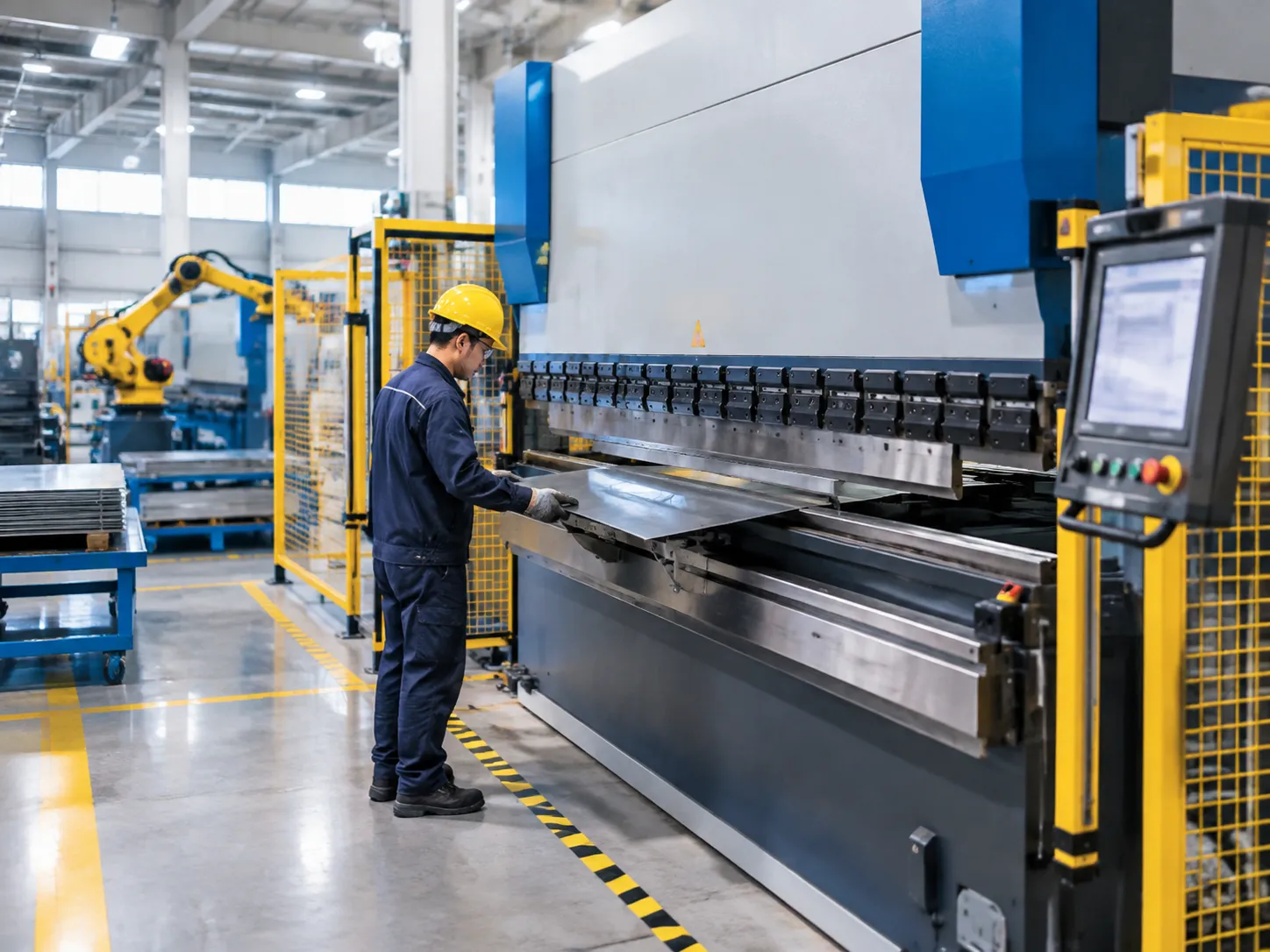
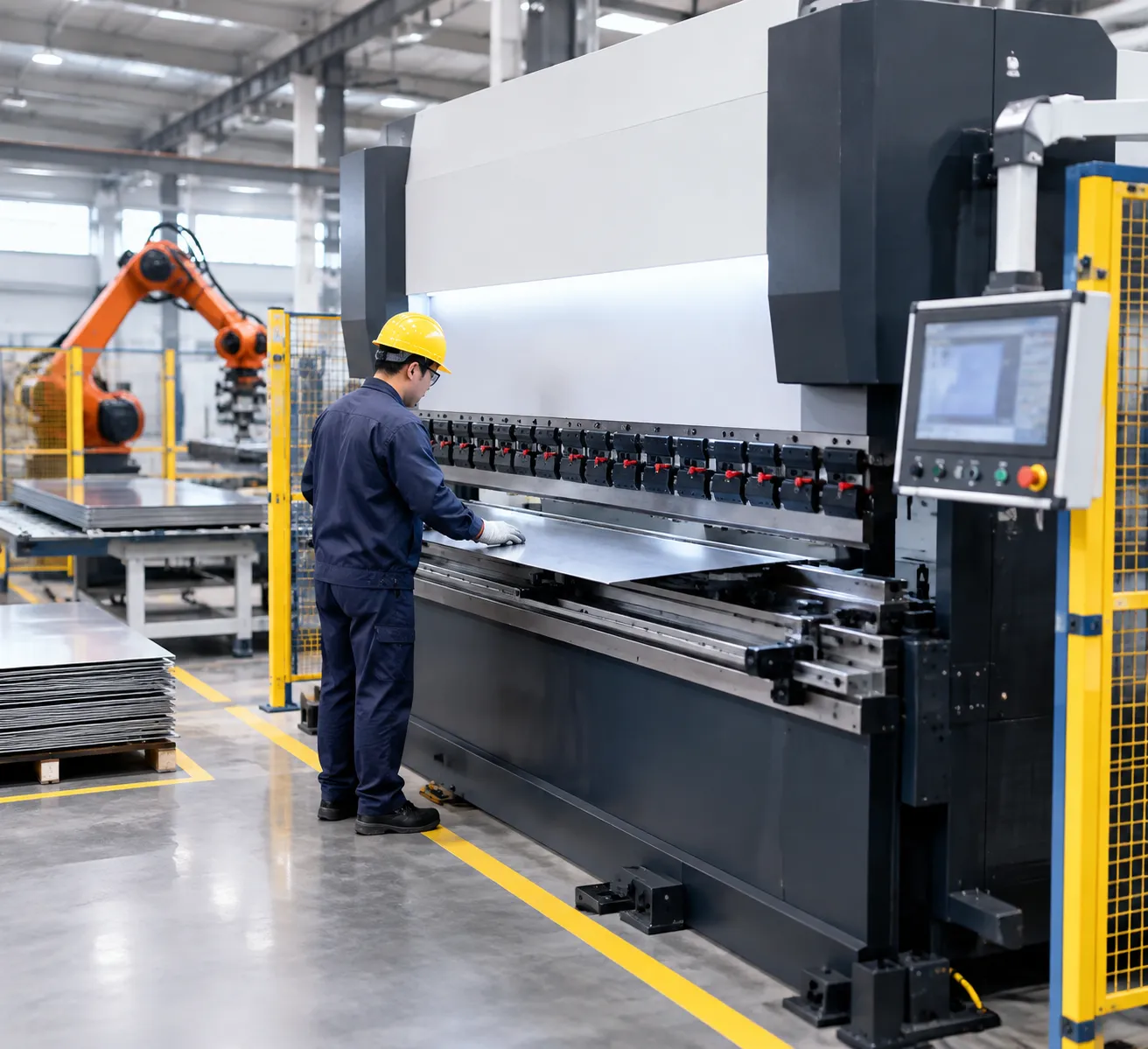
- Robotic Bending Integration: Turnkey 6-axis robot automation for unattended part loading, flipping, multi-station bending, and palletizing.
- Tandem Press Brake Synchronization: Dual or multi-machine synchronized setups operating under a single CNC controller for bending oversized sheets up to 12 meters (40 feet) and beyond.
- Sheet Follower Supports: Heavy-duty, CNC-controlled front support arms that move synchronously with the bending cycle to prevent back-bend distortion on thin, oversized sheets.
Global Support and Lifecycle Engineering Services
We back every CNC press brake with comprehensive lifecycle engineering support:
- Custom Tooling Design: In-house engineering for standard European, Promecam, and custom-profile quick-clamp tooling configurations.
- Remote Diagnostics: Fast, encrypted network connectivity directly to our technical support team for real-time controller troubleshooting and software updates.
- Comprehensive Parts Availability: Critical wear items, seals, and electrical components kept in stock for immediate dispatch to minimize shop downtime.
CNC Bending Machine Buyer's Evaluation Checklist
Selecting the best CNC bending machine requires looking beyond raw tonnage and fancy paint. When we evaluate machine configurations for high-mix or high-volume sheet metal fabrication, we focus on matching machine capacity, computing power, and operator safety to daily floor demands. Use this technical checklist to vet your next investment.
Tonnage and Bed Length Compatibility Matrix
Never size a CNC press brake strictly for your average part. We always factor in material yield strength, longest bend profile, and minimum distance between side housings to prevent off-center deflection and premature frame fatigue on prints that also call out CNC bending machine tolerance bands.
| Target Material & Thickness | Minimum Required Tonnage | Recommended Bed Length | Housing Distance Consideration |
|---|---|---|---|
| Thin Sheet (0.5 - 1.5 mm / 16-26 Ga CR Steel) | 30T - 60T | 1250 mm - 2000 mm (4-6 ft) | Compact footprint, ultra-fast cycle speeds |
| Medium Fabrication (2.0 - 4.0 mm / 11-14 Ga Steel) | 100T - 160T | 2500 mm - 3200 mm (8-10 ft) | Standard 2600 mm clear pass-through width |
| Heavy Plate (5.0 - 8.0 mm / 3/16"-5/16" Plate) | 200T - 320T | 3200 mm - 4000 mm (10-13 ft) | Deep throat depth (400 mm+) for box/pan flanges |
| Structural & Heavy-Duty (10.0+ mm / 3/8"+ Plate) | 400T - 1000T+ | 4000 mm - 6000 mm+ (13-20 ft) | Reinforced side frames, tandem configuration option |

Controller and Software Capabilities Assessment
A top-tier electro-hydraulic synchro bending machine is only as good as its computing brain. Outdated NC controls slow down setup and drive up scrap rates on complex multi-bend parts.
- 2D/3D Graphical Simulation: Industrial CNC units like the Delem DA-66T, DA-69T, or ESA controllers calculate bend sequences automatically, verify tool clearance, and simulate sheet collisions before the ram moves.
- Multi-Axis Backgauge Management: Ensure your controller handles independent multi-axis control (X, R, Z1, Z2, X1, X2) with direct servo-driven ball screw positioning down to +/- 0.01 mm for asymmetrical workpieces.
- Deflection Compensation Integration: Look for integrated control of real-time CNC mechanical crowning tables to eliminate manual shimming along extended bed lengths.
- Offline CAM Programming: Verify that operators can import standard STEP/DXF CAD files directly over shop networks to keep the machine running instead of programming at the machine console.
Essential Safety Standards: CE/ISO Certified Optical Laser Guarding Systems
Modern high-precision sheet metal bending demands real-time optical protection that keeps operators safe without killing cycle speed.
- Continuous Optical Laser Guarding: Premium setups feature dual-beam optical laser guarding systems mounted directly to the ram. These track the punch tip in real time, permitting high-speed approach down to a typical 2 mm mute point before switching to bend speed.
- CE and ISO Compliance: We enforce full compliance with ISO 12100 and CE machinery directives, backed by dual-channel monitored safety PLCs and integrated safety relief valves.[2][3]
- Physical Protection Enclosures: Complete machine safety requires interlocked side access doors, rear light curtains or physical safety enclosures, and easily accessible dual-circuit foot pedal emergency stop switches.
Frequently Asked Questions About CNC Bending Machines
Finding the best CNC bending machine comes down to matching your production volume, material thickness, and tolerance requirements with the right machine build. Here are the answers to the most common questions we hear from fabricators on the shop floor.
What tonnage CNC bending machine do I need for my sheet metal thickness?
Your required tonnage depends on four core parameters: material tensile strength, sheet thickness, bend length, and your V-die opening width.
- Standard Rule: For air bending mild steel over a standard V-die (V = 8 x thickness), you generally need about 8 tons of force per linear foot for 1/8-inch (3 mm) plate.
- Safety Buffer: We always recommend sizing your CNC press brake with a 20% to 30% tonnage overhead. This protects the hydraulic proportional valves and heavy-duty frame from operating at peak strain, extending tool and machine life.
How does an electro-hydraulic synchro press brake differ from a torsion bar machine?
The primary difference lies in control precision and axis independence:
- Torsion Bar Machines: Use a mechanical connecting shaft to force both sides of the ram down. They lack individual cylinder correction, struggle with off-center bending, and provide limited angle accuracy on long parts.
- Electro-Hydraulic Synchro Press Brakes: Control the left and right cylinders (Y1 and Y2 axes) independently via dual proportional valves and high-accuracy optical linear scales. They continuously self-correct in real time down to micron-level positioning, handling stepped bends, off-center jobs, and tight-tolerance production effortlessly.
Is an all-electric press brake better than a hydraulic bending machine?
- All-Electric / Servo Brakes: Exceptional for light-gauge sheet metal, high-speed small parts, and zero-oil cleanroom operations.
- Hydraulic and Hybrid Press Brakes: The industrial workhorses for medium to heavy tonnages (30 tons to 1000+ tons). When bending high-tensile structural steel, long plate lengths, or heavy-duty chassis components, a robust electro-hydraulic machine provides the raw force, deep throat clearance, and structural rigidity you need.
Why is mechanical crowning preferred over hydraulic crowning for long parts?
Mechanical deflection compensation uses CNC-controlled motorized wedge systems along the lower beam to counteract bed deflection.
- Uniform Angle Control: Unlike hydraulic cylinders that rely on fluid pressure - which can fluctuate with oil temperature - mechanical crowning delivers exact geometric compensation across every inch of the bed.
- Zero "Canoe" Effect: It eliminates center angle drift on 10-foot, 13-foot, or tandem bed lengths, ensuring consistent 90-degree flanges from end to end.
What is the expected lifespan and maintenance schedule of a CNC press brake?
With a stress-relieved, annealed steel frame and premium components, our CNC bending machines deliver 10 to 15+ years of high-precision operation under full-shift production.
- Daily: Clean tooling beds, check optical safety guarding alignment, and inspect hydraulic pressure levels.
- Monthly: Lubricate backgauge ball screws and linear guide rails; inspect electrical terminal blocks.
- Bi-Annually / Annually: Test and filter hydraulic fluid, replace oil return filters, and run CNC controller diagnostic calibrations across all linear scales.
Ready to size a cell for your parts? Send drawings and annual volume targets, and we will recommend tonnage, axis, and tooling options for a CNC bending machine for sheet metal line - including automatic CNC bending machine cells when volume justifies automation.