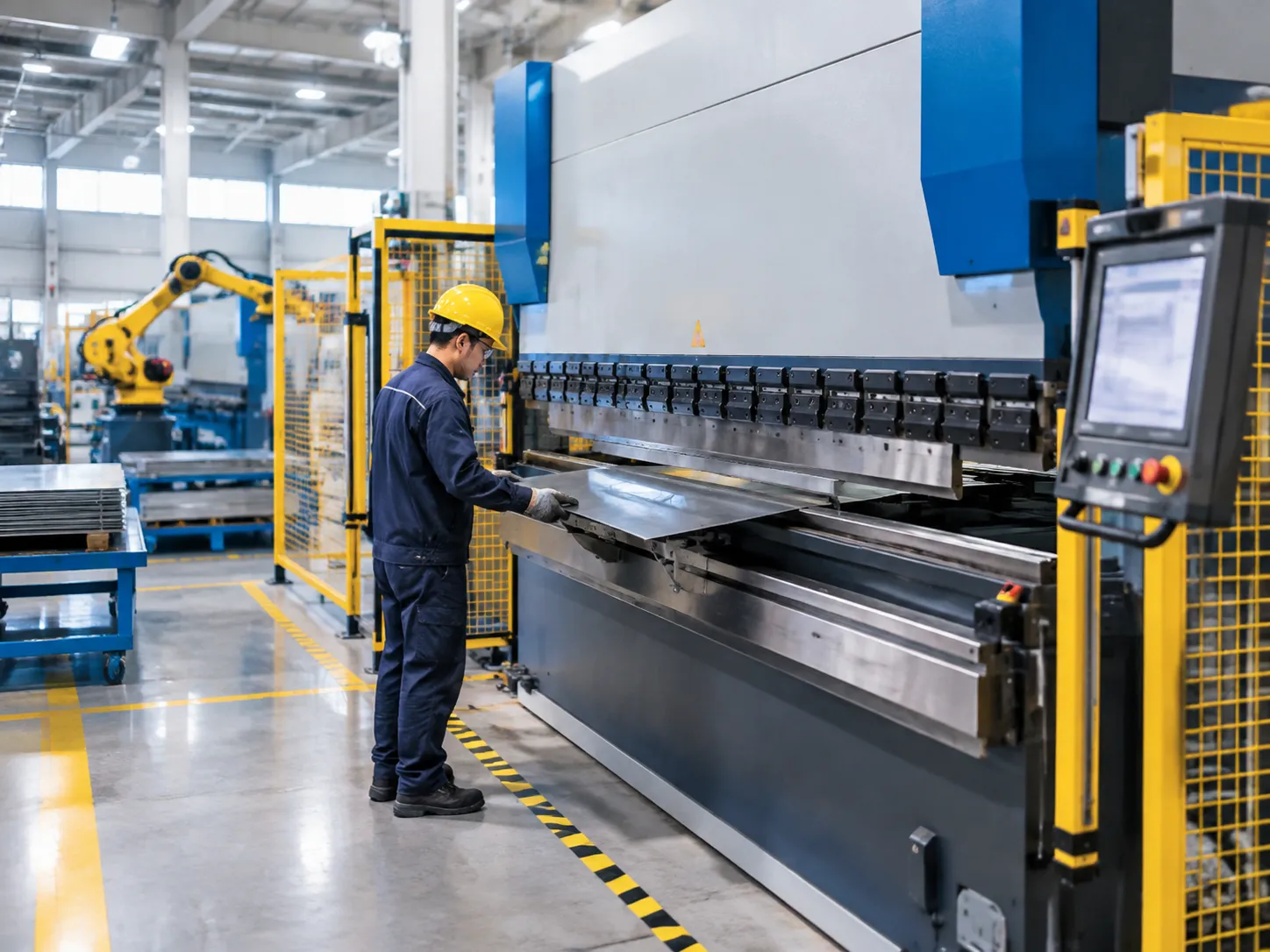
A CNC bending machine (CNC press brake) automates cold metal bending by driving a punch into a V-die under computer numerical control—forming precise bend angles and geometric shapes in sheet metal fabrication.
What does a CNC bending machine do? In one cycle it:
- Programs: Imports CAD/CAM data and calculates tonnage, allowance, and sequence.
- Positions: Sets the backgauge and clamping mechanism for each flange.
- Forms: Applies controlled deformation via punch and die contact (air, bottoming, or coining).
- Compensates: Adjusts stroke for springback to hit target bend radius.
How Does a CNC Bending Machine Work: Operating Principle
What is a cnc bending machine? In buyer language, what is cnc bending machine refers to the same CNC press brake class—it automates sheet metal forming by using computer numerical control to drive calculated force, shaping metal plates into precise geometric shapes with high accuracy.
The Core Working Principle: Punch into Lower Die
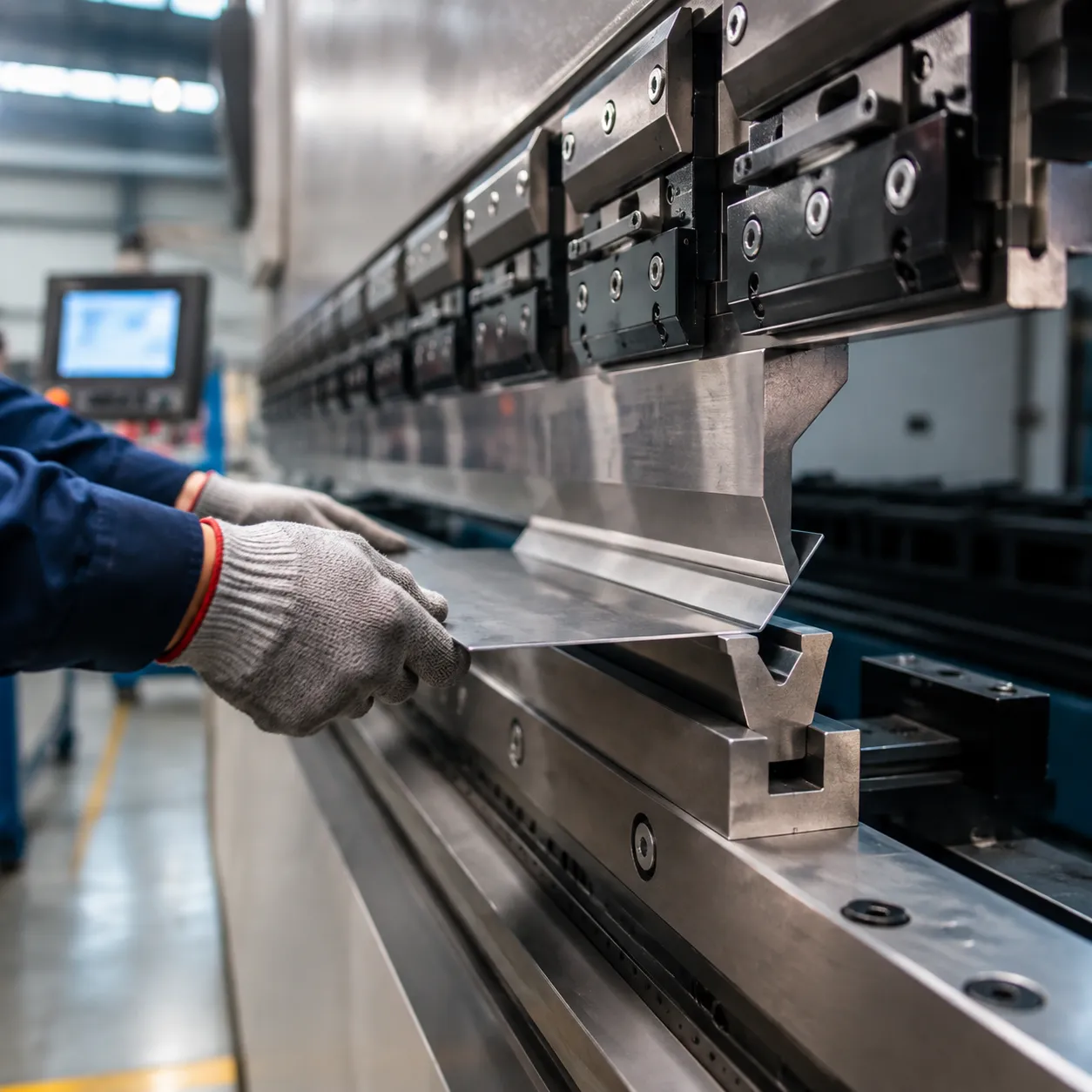
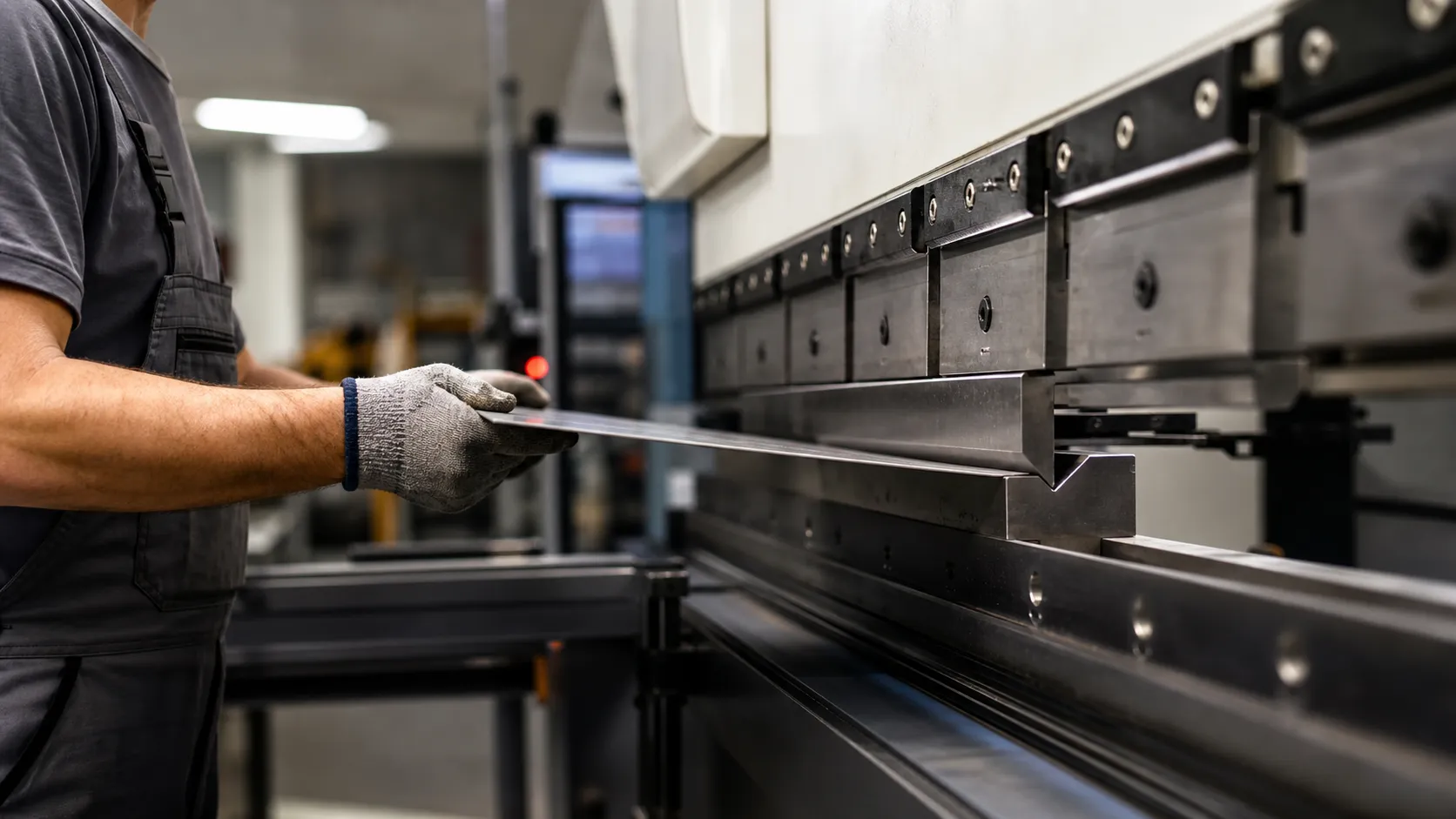
At its heart, the operational concept is straightforward. A CNC press brake uses two main tooling components to shape the metal:
- Upper Punch: Attached to the moving ram, this tool descends from above.
- Lower V-Die: Positioned stationary on the bed, this tool holds the material.
When you start a cycle, the computer numerical control (CNC) system drives the upper ram down with calculated tonnage[1]. The punch forces the sheet metal into the V-groove of the lower die. By controlling the exact depth to which the punch penetrates the die, the system achieves your desired bend angle.
Cold Metal Forming Mechanics: Plastic Deformation Without Heat
CNC bending is a cold metal forming process. There are no torches, lasers, or pre-heating required. Instead, the machine relies entirely on mechanical physics to alter the metal’s structure.
Here is how the deformation happens inside the material:
- Elastic Phase: When the punch first touches the metal, it flexes slightly. If released here, the sheet springs right back flat.
- Yield Point: As the drive system increases force, the stress exceeds the metal’s tensile strength yield point.
- Plastic Deformation: The metal permanent bends along the bend line. The inner radius experiences compression, while the outer radius undergoes stretching.
By exceeding the elastic limit in a controlled zone, you achieve permanent, clean shapes while maintaining the structural integrity of the part.
Key Bending Techniques: Air Bending, Bottoming, and Coining
Depending on your target accuracy, sheet thickness, and required tonnage, CNC press brakes execute three primary sheet metal forming methods:
| Technique | How It Works | Tonnage Required | Precision & Flexibility |
|---|---|---|---|
| Air Bending | The punch presses the metal into the die without touching the bottom. The depth of the punch determines the bend angle. | Lowest | High flexibility; one tool set produces multiple angles. |
| Bottoming | The sheet metal is pressed fully against the angled walls of the lower V-die. | Medium (3–4x Air Bending) | Highly consistent; reduces springback effects. |
| Coining | The punch penetrates deep into the metal bed under extreme force, stamping the exact die profile into the sheet. | Highest (up to 10x Air Bending) | Extreme precision; eliminates springback entirely, but causes heavy tool wear. |
For most modern sheet metal fabrication setups, CNC bending machine for sheet metal lines use air bending paired with multi-axis CNC control. It offers maximum versatility while putting less wear and tear on your machine components.
CNC Press Brake Components for Sheet Metal Forming
To understand how does a cnc bending machine work, look at the core parts that handle force application and positioning calculations.
Here are the six essential components that drive an automated CNC press brake system:
1. High-Rigidity Machine Frame and Bed
The foundation of the entire sheet metal fabrication process. A heavy-duty, stress-relieved steel frame prevents the machine from flexing under extreme pressure. Without a rigid bed, you lose precision instantly when the upper ram force application hits the metal.
2. CNC Controller and HMI Interface
This is the brain of the operation. The computer numerical control[2] (CNC) touch screen takes your CAD/CAM software integration files and translates them into exact movements. Operators can simulate the metal folding sequence in 3D before the punch ever touches the metal.
3. Drive System (Hydraulic, Servo-Electric, or Hybrid)
The muscle that forces the sheet metal to bend. Depending on your shop’s production goals, we look at three main types:
| Drive Type | Main Advantage | Best For |
|---|---|---|
| Hydraulic system | High tonnage capacity at a lower cost | Heavy-duty, thick plate bending |
| Servo-Electric | Extreme speed, energy efficiency, and low maintenance | High-speed, high-precision thin parts |
| Hybrid | Combines hydraulic power with servo-driven control | Maximum precision with low oil consumption |
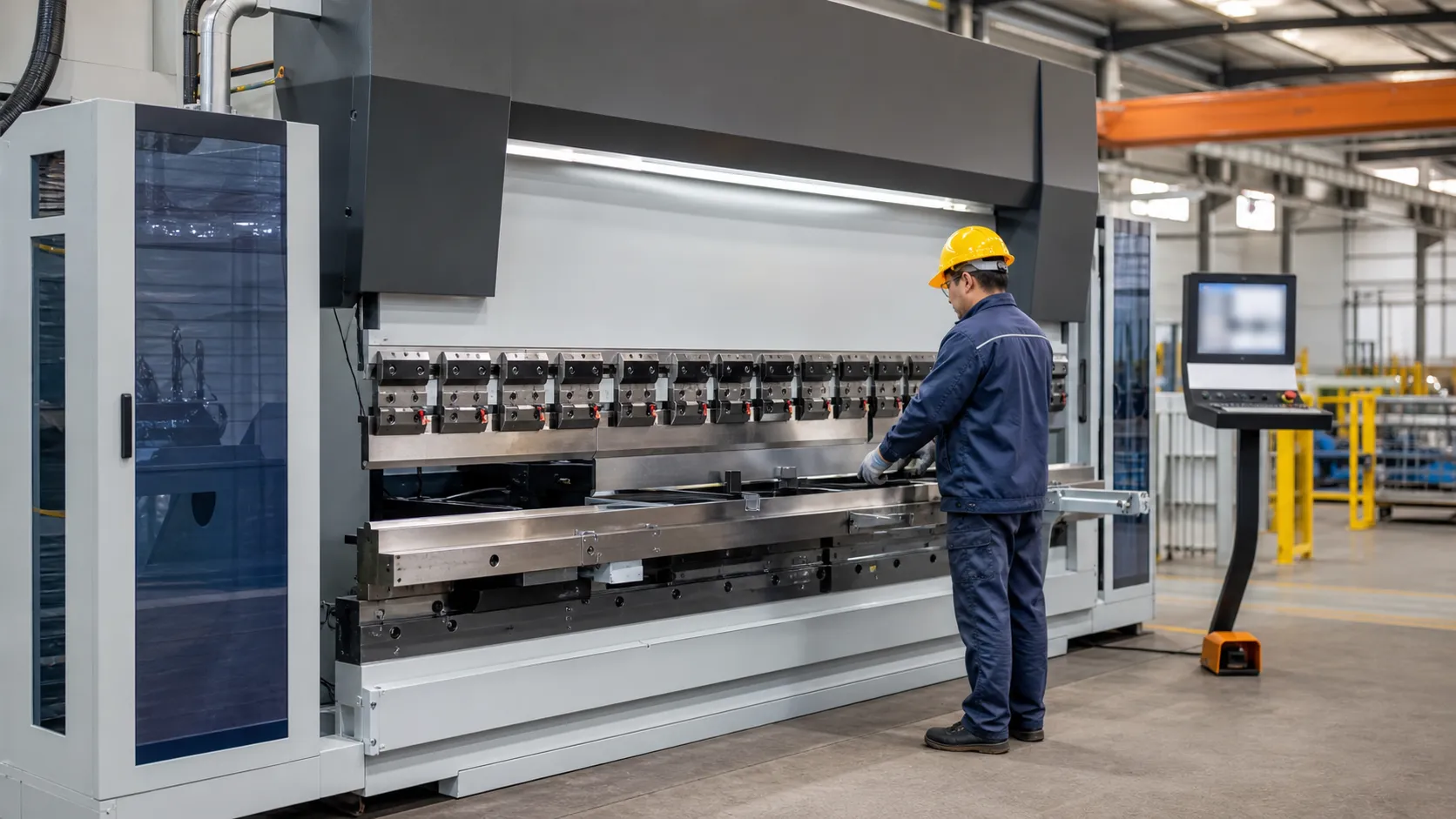
4. Precision Punch and Die Tooling
The punch and die sets directly dictate your final geometric shapes. The upper punch presses the material into the lower V-die. Hardened tool steel ensures the bend radius stays consistent over thousands of cycles without wearing down.
5. Multi-Axis Backgauge Positioning System
You cannot get accurate sheet metal forming without perfect part placement. The automated backgauge moves instantly along multiple axes ($X$, $R$, $Z1$, $Z2$) to stop the metal sheet at the exact depth and height required for the next bend.
6. Auto-Crowning and Deflection Compensation
When pressing wide sheets, the center of the machine naturally wants to flex upward, causing a canoe effect on your workpiece. An automatic crowning system counteracts this deflection by physically adjusting the lower bed, ensuring a uniform bend angle across the entire length of the part.
Step-by-Step CNC Bending Machine Workflow
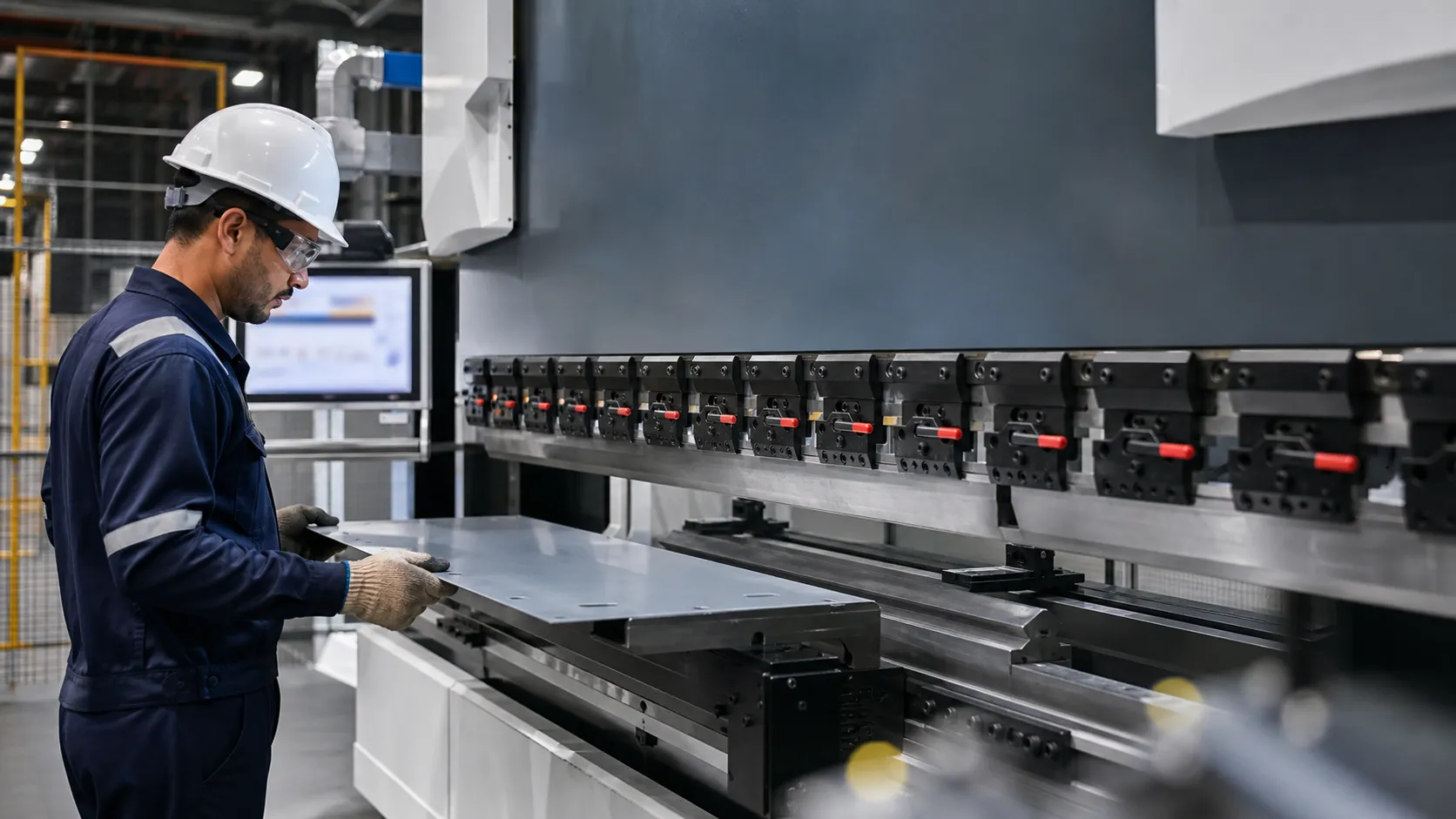
Understanding how does a cnc bending machine work comes down to watching a flawless, automated sequence. Here is exactly what happens from the moment you load a file to the finished part.
Step-by-Step CNC Bending Cycle
- CAD/CAM data input: The computer numerical control system imports the part file, calculates bend allowance, sequence, and tonnage.
- Material loading & backgauge: The operator places the sheet; the backgauge aligns the blank for the next metal folding operation.
- Clamping & ram descent: The clamping mechanism holds the workpiece while the upper ram brings the punch toward the lower die.
- Controlled penetration: The punch and die pair forms the target bend angle; the controller applies springback compensation.
- Retraction & next bend: The ram retracts, the part releases, and the backgauge indexes for the next flange in the multi-bend sequence.
Factors Influencing Bending Precision and Tonnage
Achieving exact angles on a CNC press brake depends on mastering metal physics before the upper ram force application even begins. Several physical variables directly impact your required tonnage calculation and final part accuracy.
Material Properties: Tensile Strength, Yield Point, and Grain Direction
Different metals react uniquely to cold metal bending.
- Tensile Strength & Yield Point: Higher tensile metals like stainless steel require significantly more tonnage than mild steel or aluminum. The yield point dictates when permanent plastic sheet metal deformation begins.
- Grain Direction: Bending parallel to the metal’s rolling grain increases the risk of cracking on the outer bend radius. Bending across or diagonal to the grain ensures superior structural integrity.
Sheet Thickness & V-Die Opening Width: The 8x Rule Impact
Selecting the correct punch and die tooling is critical for consistent sheet metal forming.
| Sheet Thickness (T) | Recommended V-Die Opening (V) | Standard Ratio | Tonnage Requirement |
|---|---|---|---|
| Thin Gauge (< 3mm) | 6x to 8x Thickness | 8x Rule | Baseline |
| Medium Plate (3mm – 8mm) | 8x to 10x Thickness | Industry Standard | Moderate |
| Heavy Plate (> 8mm) | 10x to 12x Thickness | Wide Die | High |
The 8x Rule: For standard air bending of mild steel, set your V-die opening width to roughly 8 times the sheet thickness. Dropping to a smaller V-die sharply spikes required tonnage and tightens the inside bend radius.
Bend Radius & K-Factor: Balancing Stretch and Structural Integrity
When a CNC bending machine forms a flange, the outer metal stretches while the inner surface compresses.
- Bend Radius: A radius that is too tight relative to material thickness leads to cracking or uneven bend angles.
- K-Factor: This ratio defines the position of the neutral axis where the metal neither expands nor contracts.
- Bend Allowance: Calculating accurate K-factor values ensures your CAD layout compensates for material stretch before cutting, guaranteeing spot-on final dimensions.
Why Precision Matters in CNC Bending Equipment
When you invest in high-end metal folding technology, CNC bending machine precision engineering is the difference between consistent production and costly downtime. Understanding how a CNC bending machine works at a deep structural level reveals why built-in machine quality matters for your bottom line.
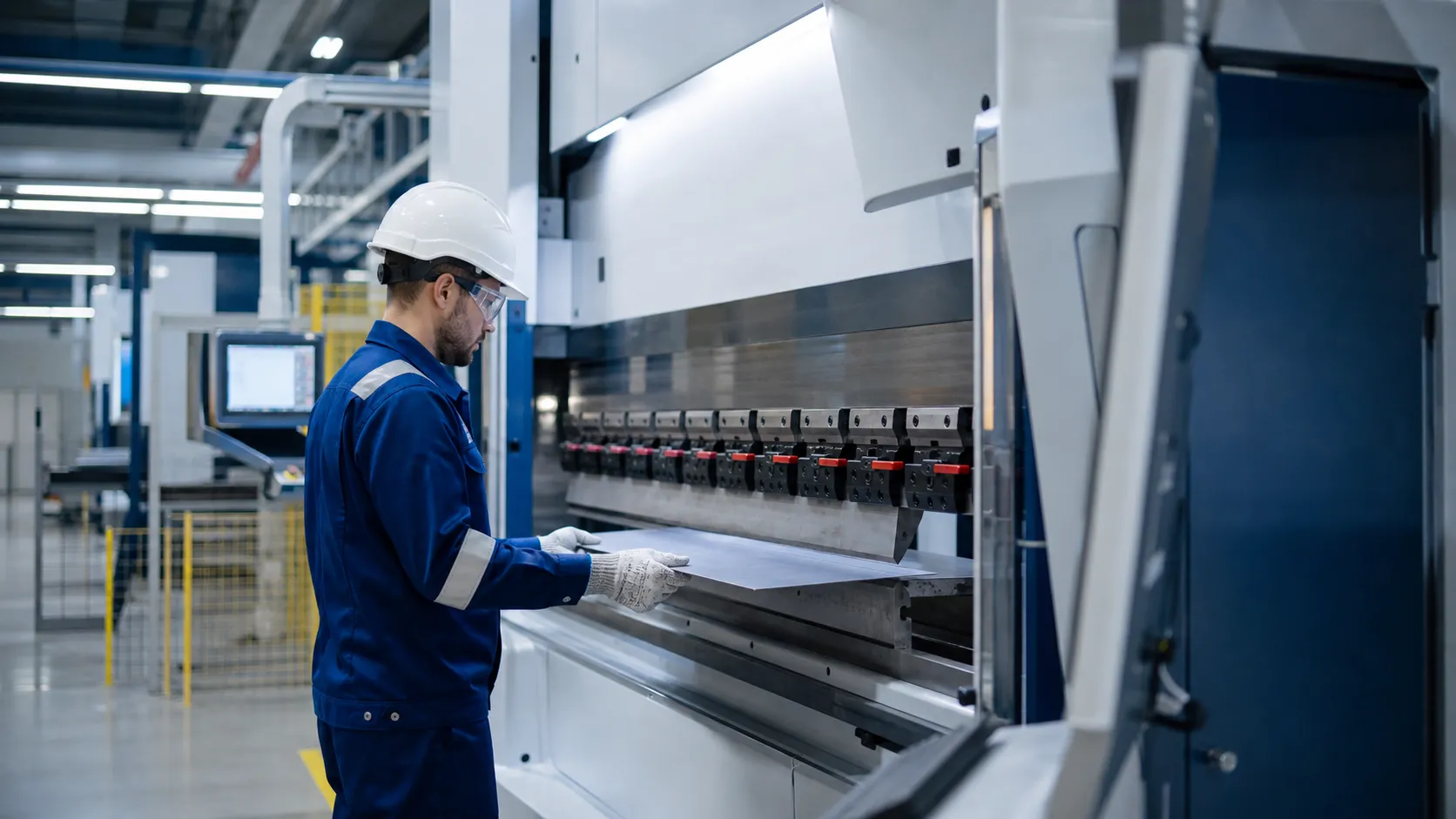
Structural Integrity: Stress-Relieved Steel Frames
A CNC press brake subjects its core structure to hundreds of tons of force on every shift. Without rigorous engineering, machine frames flex unevenly, degrading your bend accuracy over time.
- Stress-Relieved Weldments: We heat-treat and stress-relieve every heavy-duty steel frame to prevent internal metal fatigue and long-term frame warp.
- Minimal Deflection: Solid machine beds resist force application, keeping the upper ram perfectly aligned with the lower die under maximum tonnage loads.
- Long-Term Repeatability: Stable frame rigidity guarantees your backgauge positioning system stays accurate to fractions of a millimeter year after year.
Automation Readiness: Robotic Loaders and ATC Integration
Modern fabrication shops rely on smart automation to reduce bottlenecks in sheet metal forming.
| Feature | Production Impact | Key Benefit |
|---|---|---|
| Robotic Loaders | Automated material handling | Runs lights-out production with zero operator fatigue |
| Automatic Tool Changer (ATC) | Swaps punch and die tooling in seconds | Cuts job setup times by up to 70% on complex parts |
| CAD/CAM Connectivity | Direct offline programming | Sends multi-axis bending sequences straight to the machine |
Standards Compliance: ISO9001 and CE Safety Certification
Industrial CNC bending equipment is built to meet international quality and workplace safety mandates.
Frequently Asked Questions About CNC Bending
What is the difference between a manual press brake and a CNC press brake?
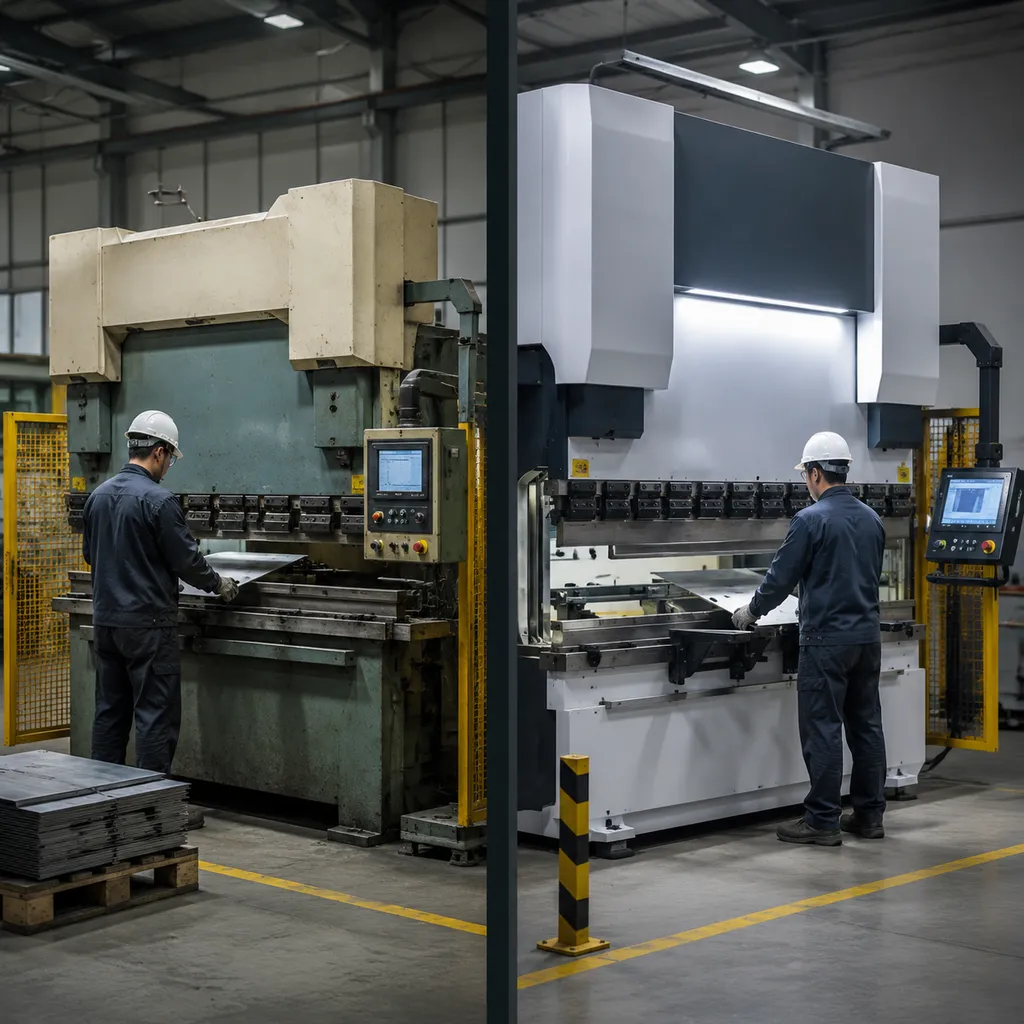
While both machines shape metal using a punch and die set, the underlying control systems and precision levels differ significantly. A manual press brake relies entirely on operator skill for positioning the backgauge, setting the stroke depth, and adjusting for material variance. In contrast, a CNC press brake automates these parameters through computer numerical control, delivering higher repeatability, multi-axis control (Y1, Y2, X, R, Z), and automated springback compensation.
| Feature | Manual Press Brake | CNC Press Brake |
|---|---|---|
| Backgauge Positioning System | Manual mechanical stops | Multi-axis CNC controlled |
| Setup Time | High (manual measurements required) | Low (automated program loading) |
| Angle Accuracy | Variable based on operator skill | High precision (automated punch penetration) |
| Complex Multi-Bends | Slow, prone to cumulative error | Fast, seamless single-pass sequence |
How does a CNC bending machine handle material springback?
When bending metal, the material naturally attempts to return to its original flat shape once force is removed. Modern CNC bending machines calculate and account for material springback compensation in real time:
- Database Lookup: The CNC controller evaluates stored material properties, including tensile strength and yield point, to estimate elastic recovery.
- Over-Bending Strategy: The upper ram pushes the punch and die tooling slightly past the target bend angle so the final relaxed state matches the required geometry.
- Laser/Optical Angle Sensors: Advanced feedback sensors measure the live bend angle during the press cycle and instantly adjust depth for batch consistency.
What drives the tonnage requirement in metal bending?
Calculating the required tonnage ensures clean sheet metal deformation without exceeding machine or tooling limits. Three primary variables drive force requirements:
- Material Tensile Strength: Harder metals like stainless steel demand significantly more force than mild steel or aluminum.
- Sheet Thickness: Force scales exponentially as sheet metal thickness increases.
- V-Die Opening Width: A smaller V-die opening creates a tighter bend radius but requires higher overall force; widening the die opening reduces the required tonnage.