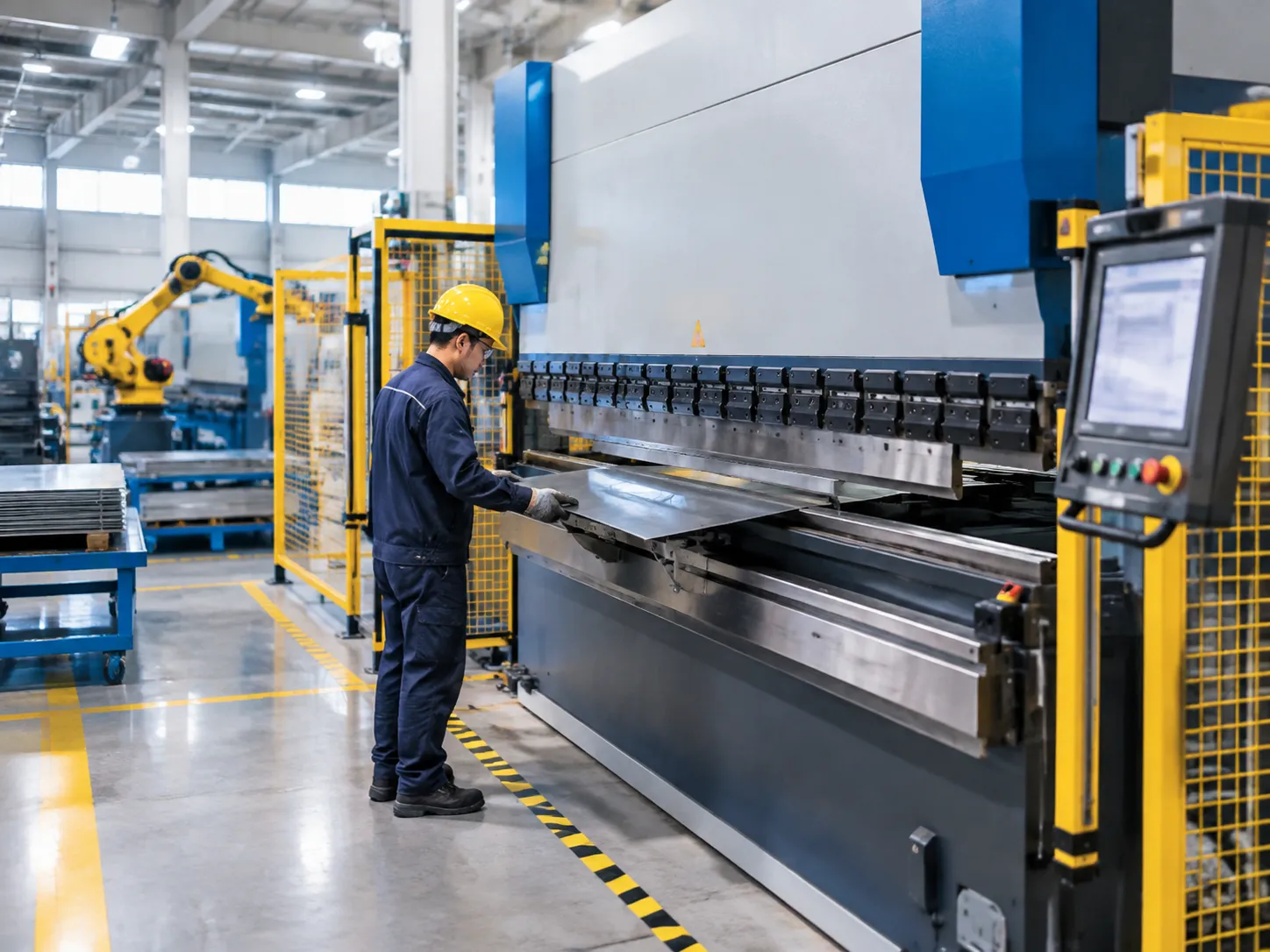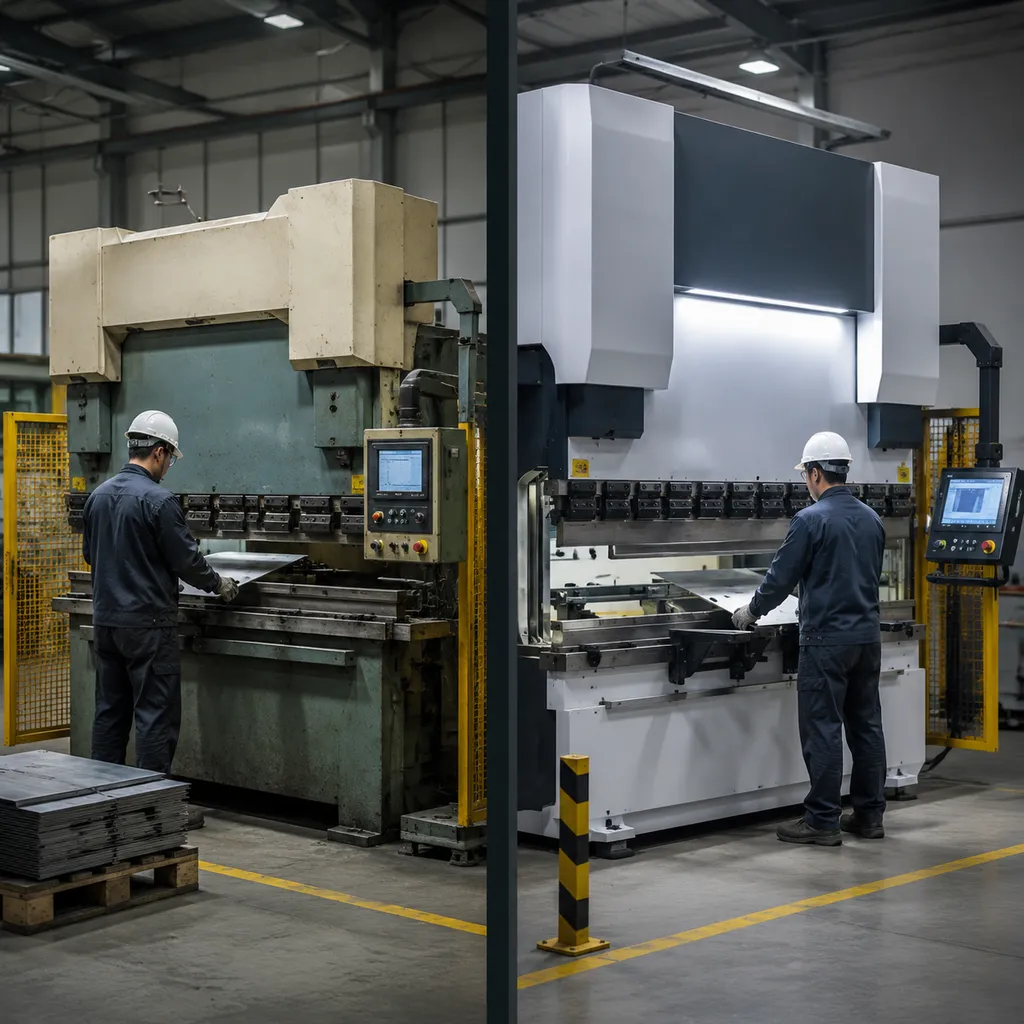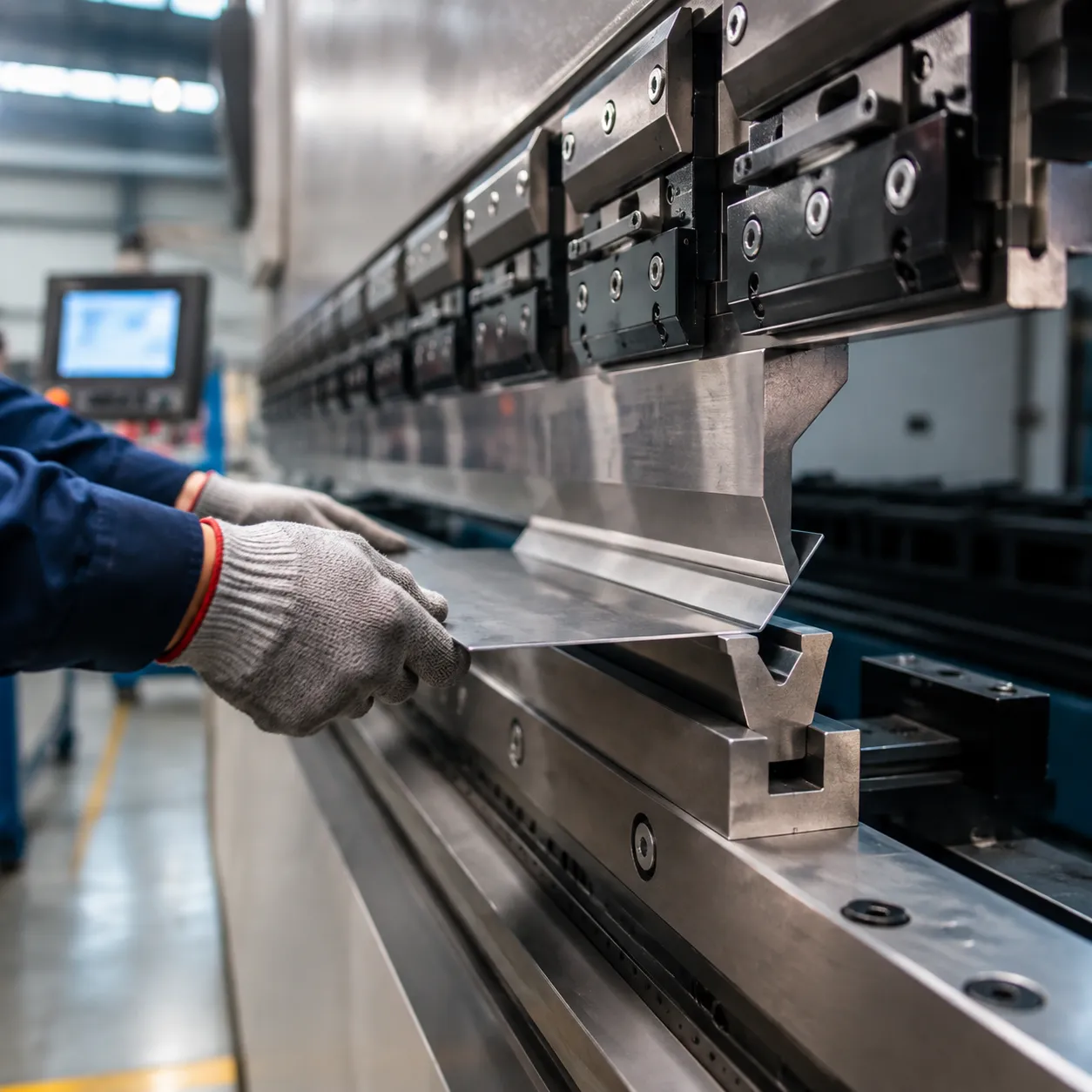
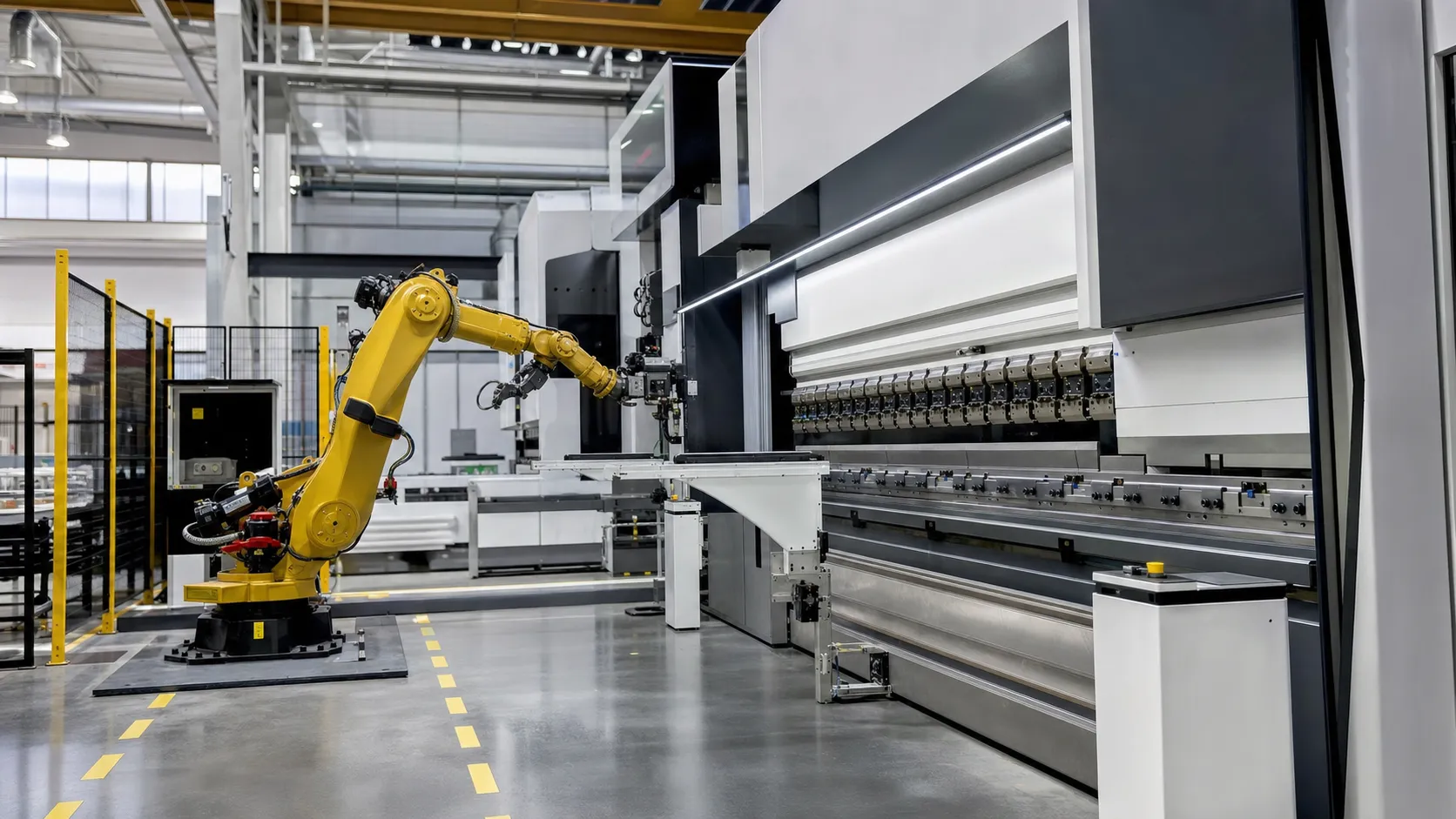
Up to 30% lower power draw — a headline metric in recent cnc bending machine news as shops compare servo electric drives, hybrid cells, and hydraulic bending machine options.
- Energy & compliance: Sustainability mandates push eco-friendly upgrades across the metal forming industry.
- Automation: Multi-axis automatic bending machine cells offset operator gaps on high-mix sheet metal fabrication lines.
- Tube & sheet parity: Tube bending machine and press-brake launches share cad cam software integration and digital twin technology rollouts.
The 2026 CNC Bending Landscape: Industry News & Market Dynamics
Market signals shaping cnc bending machine production investments:
- Accelerating Global Demand Across Key Sectors: Fabricators face growing order volumes for complex, precision-bent components. Growth is surging across:
- Automotive & EVs: Precision forming of lightweight aluminum chassis and battery tray enclosures.
- Aerospace & Defense: Strict-tolerance structural components designed to handle extreme stresses.
- Infrastructure & HVAC: Heavy-duty structural steel forming and high-volume HVAC cabinet housing production.
- Transition to Smart Multi-Axis CNC Automation: Manual press brake setups are fast becoming a liability. Shops are transitioning toward multi-axis CNC bending systems equipped with automated backgauge controls to slash cycle times, minimize setup friction, and reduce scrap rates.
- Strict Energy Regulations & Sustainability Standards: Power efficiency is no longer an afterthought. Global energy mandates and rising electrical costs are driving the rapid adoption of eco-friendly metal forming equipment. Modern electric and hybrid machines significantly drop energy consumption while eliminating hydraulic oil maintenance liabilities.
Technological Innovations — Press Brake & Tube Bender Performance
Real-Time Laser Angle Measurement
Sheet thickness variations between material batches cause constant headaches with springback.
- Material Springback Compensation: Real-time laser angle measurement systems monitor the exact bend angle during operation, prompting the machine to make immediate ram depth adjustments.
- Zero-Scrap Part Runs: Closed-loop sensor feedback corrects the angle on the first hit, eliminating wasted test bends and expensive material scrap.
Drive Systems: Servo-Electric vs. Hybrid vs. Hydraulic
Choosing the right drive train directly affects operating costs, speed, and plant noise levels:
| Feature | Servo-Electric Press Brake | Hybrid Bending Systems | Heavy Hydraulic Bending |
|---|---|---|---|
| Energy Consumption | Up to 30% lower power draw | Moderate energy savings | Higher continuous power draw |
| Maintenance | Zero hydraulic oil maintenance | Reduced oil volume and leaks | Regular oil changes & seal service |
| Cycle Speed | Fast, high-precision movement | Balanced speed & tonnage | Standard cycle speeds |
| Best Application | Light-to-medium precision metal bending | Versatile medium-to-heavy forming | High-tonnage, heavy-plate bending |
Multi-Axis Flexible Bending Center
Manual sheet flipping on standard machines creates operator fatigue and production bottlenecks.
- Automated 4-Side Panel Forming: A multi-axis flexible bending center automatically bends all four sides of a sheet without manual intervention.
- Streamlined Throughput: Ideal for rapid, high-volume production of steel furniture, electrical enclosures, doors, and appliance housings.
Tube, Pipe & Rotary Draw Bending Updates
- Rotary draw bending: Mandrel and wiper-die setups on tube bending machine lines improve OD/ID control on automotive and HVAC tube runs.
- Pipe bending tools: Quick-change tooling and offline cnc bending machine programming shorten changeovers on mixed-diameter jobs.
- Electric tube cells: Fully electric tube bender debuts at major trade shows mirror press-brake shifts away from full-time hydraulic pumps.
Digital Twin G-Code Simulation
Tooling crashes and manual setup mistakes slow down production and damage expensive dies.
- CAD/CAM Software Integration: Import standard design files for offline cnc bending machine programming directly to generate optimized bend sequences away from the machine bed.
- Digital Twin G-Code Simulation: Run 3D collision testing offline to spot tooling interference before running a single live sheet metal part.
Smart Automation — Labor Shortage & Connected Factory Trends
Robotic press-brake cells on the automatic CNC bending machine line reduce manual handling on long runs.
Skilled-operator gaps push shops toward automatic bending machine cells and connected monitoring.
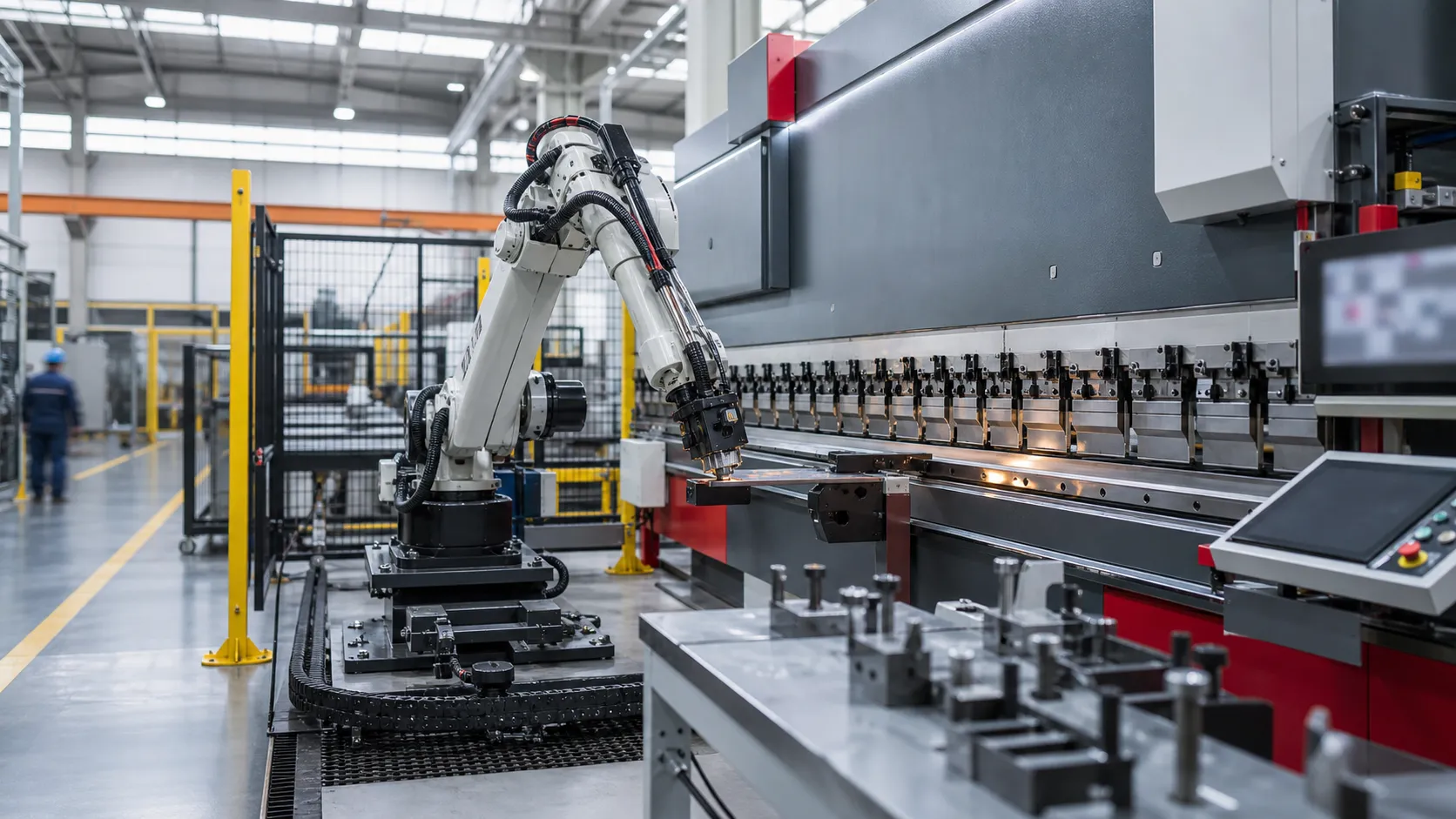
Robotic Cell Bending Automation
- Continuous Untended Operation: ProMach pair articulated robotic arms directly with an automated backgauge system to execute fully automated, lights-out sheet metal feeding, positioning, and bending.
- Eliminate Handling Strain: Robots easily handle heavy, awkward panels, taking physical strain off your staff while keeping overall production cycles consistent.
- High Repeatability: Automated part centering and robotic handling remove manual variability, delivering consistent bend accuracy on every single part.
Intuitive HMI Touchscreen Controls
- Drastically Shortened Learning Curves: User-friendly HMI touchscreen controls feature visual multi-bend sequencing, allowing junior operators to load and run complex jobs accurately within hours.
- Graphical 3D Setup Guidance: Step-by-step visual prompts display exact material orientation and tooling placement on screen before the ram moves, preventing costly setup mistakes.
- Simplified CAD/CAM Software Integration: Direct digital program loading eliminates manual data entry, enabling new operators to achieve full productivity without years of specialized press brake experience.
IoT Condition Monitoring & Predictive Maintenance
- Real-Time System Tracking: Integrated IoT predictive maintenance sensors monitor motor loads, hydraulic oil temperatures, and tooling wear continuously during operation.
- Prevent Unscheduled Downtime: Early warning notifications alert plant managers to potential mechanical wear long before it causes an unexpected halt on the shop floor.
- Connected Smart Manufacturing Automation[2]: Operational data syncs directly into the factory network, giving you total visibility over machine efficiency, maintenance schedules, and unit output.
B2B Buying & Tooling Selection Strategy for CNC Bending Machines
Compare catalog tiers on the CNC bending machine hub before locking tonnage and bed length.
Procurement teams balance bending capacity, tooling life, and TCO before committing capital on cnc bending machine production upgrades.
Calculating Bending Tonnage & Bed Length
Buying too little tonnage limits shop capabilities; buying too much wastes capital and floor space. Matching machine capacity to your sheet metal fabrication jobs requires evaluating material tensile strength, sheet thickness, and bend length.
- Material Tensile Strength: Stainless steel and high-strength alloys require up to 50% more bending force than standard mild steel.
- Die Opening (V-Width): A proven industry rule of thumb is selecting a V-die opening equal to 8 times the sheet thickness for mild steel.
- Bed Length & Deflection: Tonnage requirements scale with part length. Matching bed length to maximum part width prevents frame deflection and ensures uniform bend angles across the entire sheet.
| Material Type | Sheet Thickness | Recommended V-Die Opening | Required Tonnage per Foot |
|---|---|---|---|
| Mild Steel (A36) | 16 Gauge (0.060") | 0.500" | 4.2 Tons |
| Stainless Steel (304) | 16 Gauge (0.060") | 0.500" | 6.3 Tons |
| Aluminum (5052-H32) | 16 Gauge (0.060") | 0.500" | 2.1 Tons |
| High-Strength Alloy | 1/8" (0.125") | 1.000" | 14.5 Tons |
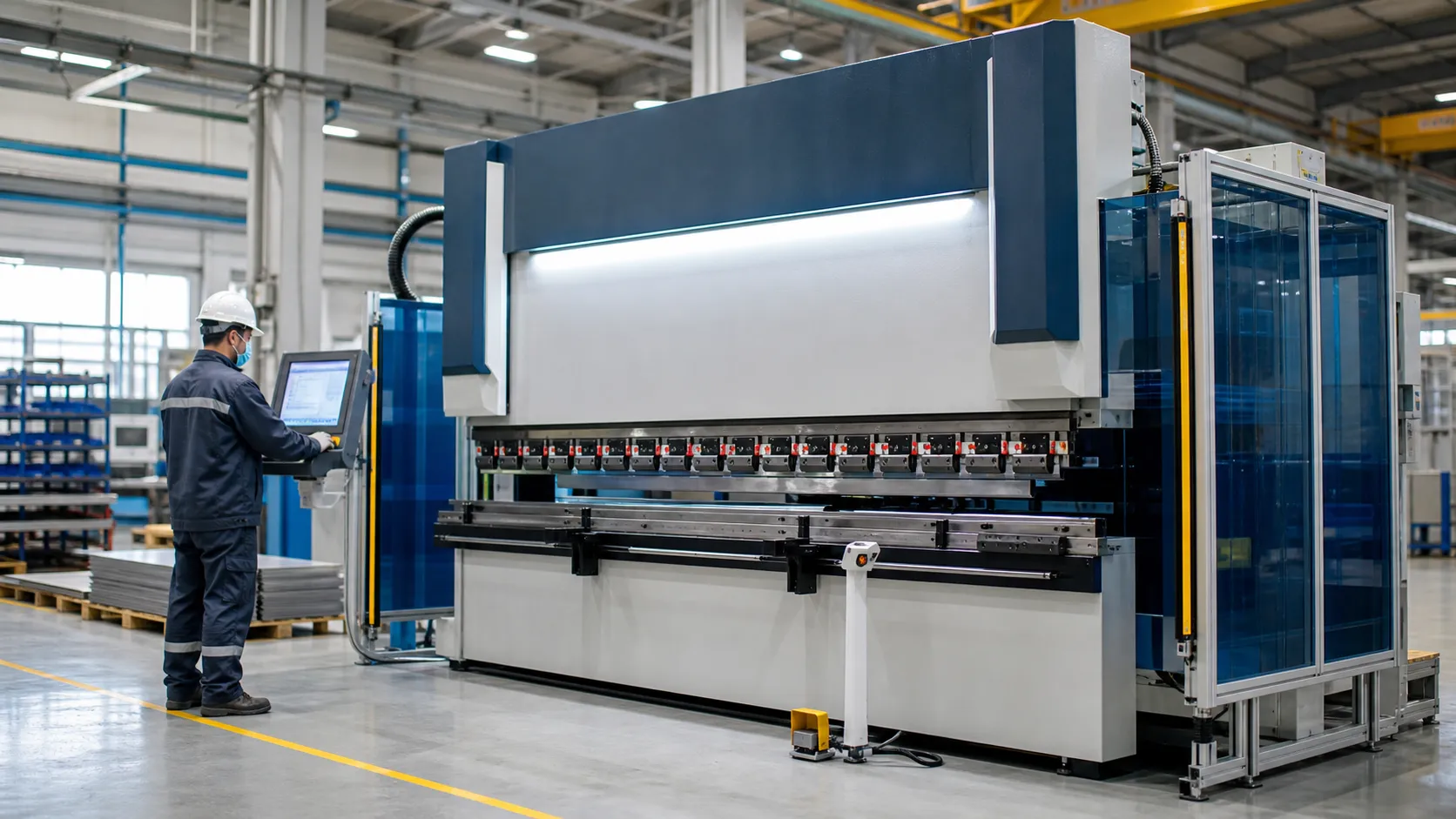
Pro Tip: Select a machine with a bending capacity at least 20% above your maximum calculated workload to reduce hydraulic or drive motor wear over time.
Tooling Optimization & Surface Protection
Proper precision punch and die radius selection protects your workpiece aesthetics and extends tool life. Choosing incorrect radii causes cracking on high-strength metals and leaves deep pressure marks on cosmetic parts.
- Preventing Alloy Cracking: Match the top punch tip radius to the material's natural bend allowance. High-tensile metals require larger punch radii to distribute stress evenly.
- Non-Marking Surface Protection: Architectural stainless steel, painted panels, and aluminum require pristine finishes. Builds use non-marking tooling films, urethane die inserts, and specialized dies to eliminate metal-on-metal galling.
- OEM Press Brake Tooling: High-grade, induction-hardened OEM press brake tooling (55–60 HRC) maintains tolerances through long production runs, eliminating setup adjustments caused by tool wear.
Evaluating Total Cost of Ownership (TCO)
Focusing solely on initial machine purchase price is a common pitfall. Evaluating Total Cost of Ownership (TCO) provides a true picture of long-term profitability.
TCO = Initial Machine Price + Operating Costs (Power + Maintenance + Labor) - Scrap & Downtime Savings
- Power Efficiency: Machines with servo electric drives consume power only during stroke execution, reducing electricity costs by up to 30% to 50% over conventional full-time pumps.
- Setup Speed: Multi-axis automated backgauge system configurations combined with quick-change clamping slash job changeovers from 45 minutes to under 3 minutes.
- Scrap Reduction: Real-time angle sensors dramatically cut test bends, saving raw material costs on expensive production runs.
| Cost Factor | Traditional Bending System | Modern CNC Bending System |
|---|---|---|
| Energy Usage | Continuous pump idle consumption | Power-on-demand operation |
| Maintenance | Hydraulic fluid changes, seal leaks | Minimal grease lubrication, clean operation |
| Setup Times | Manual backgauge alignment (30–45 min) | Automatic offline program loading (< 3 min) |
| Material Scrap | 2–3 test bends per part batch | First-part accuracy with live feedback |
By combining precise tonnage calculations, hardened tooling selection, and thorough TCO analysis, you protect your bottom line while upgrading shop precision metal bending capabilities.
ProMach: Precision Engineering & Custom CNC Bending Solutions
Catalog presses rarely match specialized throat depth, tooling, or automation tiers on high-mix cnc bending machine production lines. ProMach scopes press brake technology[1] and precision bending systems for multi-shift throughput.
Heavy-duty industrial build standards
Every CNC bending unit strictly adheres to ISO9001 quality management standards[4] and carries full CE safety certifications[3]. Builds use heavy-duty, stress-relieved frames engineered for superior vibration damping, maintaining tight tolerances on long production runs without frame deflection.
Tailored OEM/ODM engineering capabilities
OEM scopes customize equipment to fit your exact production geometry rather than forcing standard configurations onto the floor. Sheet-metal builds: CNC bending machine for sheet metal.
OEM scopes include:
- Automated backgauge systems: Flexible multi-axis backgauge configurations designed for complex, multi-stage bends.
- Custom bed lengths & tonnage: Sized precisely from 30T up to 1,000T+ to match light sheet metal or heavy plate forming.
- OEM press brake tooling: Customized punch and die sets for non-marking architectural panels, stainless steel, or high-strength alloys.
- Localized power supply: Pre-configured electrical systems adapted directly to standard export factory voltage inputs.
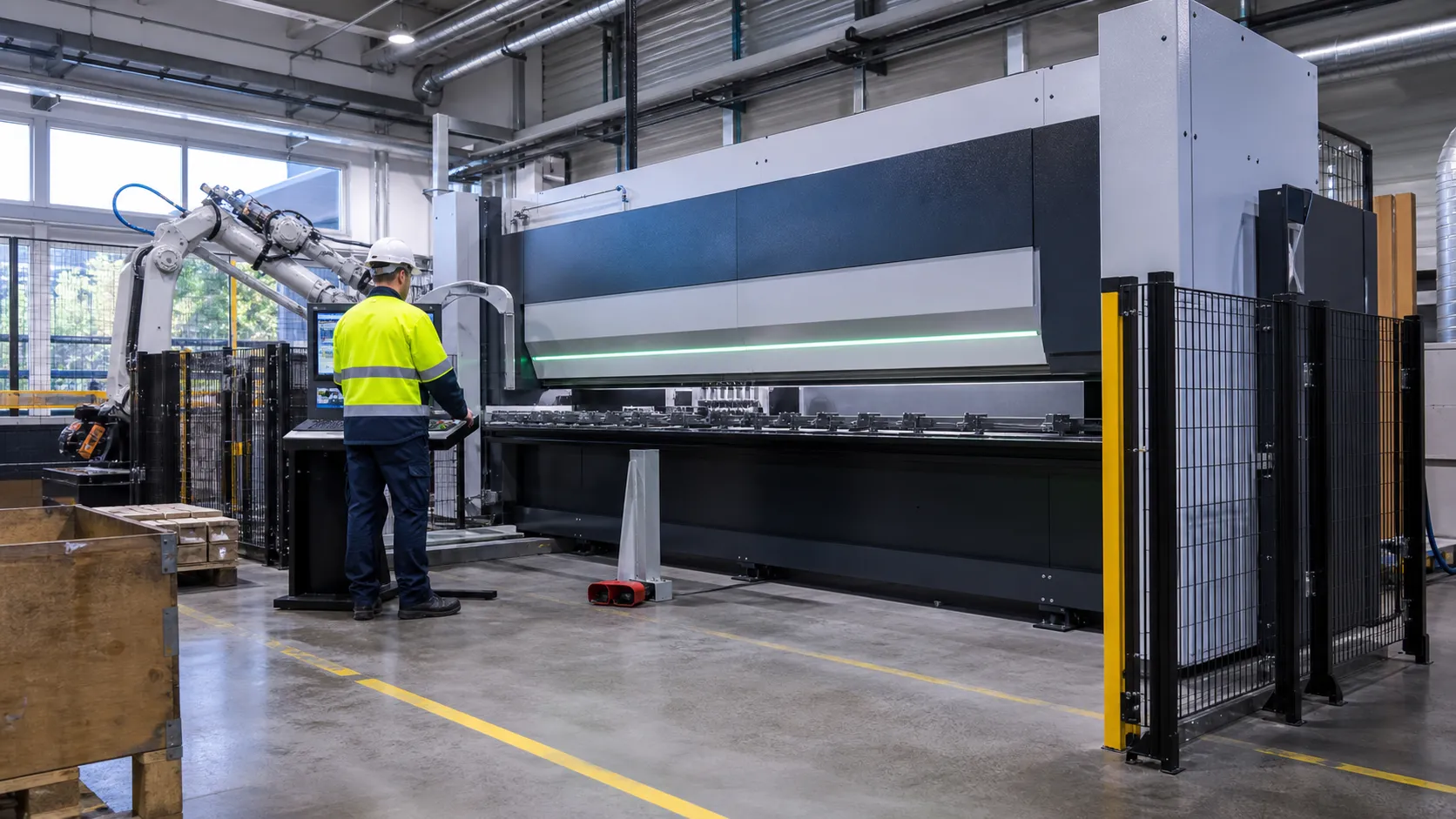
Rigorous pre-shipment wet testing
To eliminate setup delays and ramp up production quickly, every system undergoes 100% pre-shipment wet-testing validation. Acceptance testing covers hydraulic pressure cycles, multi-axis synchronization, and CNC logic at full capacity before shipment, guaranteeing out-of-the-crate precision.
Turnkey procurement and lifetime global support
ProMach streamlines international procurement with rapid response times and complete lifecycle backup:
| Procurement Pillar | B2B Buyer Advantage |
|---|---|
| Rapid Quotations | Itemized ex-factory pricing delivered within 1–2 business days. |
| Flexible MOQ | Minimum order quantity starting at 1 machine set. |
| Turnkey Logistics & Setup | Comprehensive freight handling, on-site installation, and operator training. |
| Lifetime Technical Backup | Fast replacement parts dispatch, remote diagnostics, and dedicated support. |
Custom sheet metal fabrication automation solutions eliminate operational bottlenecks, reduce scrap, and deliver measurable return on investment for modern fabrication facilities.
Frequently Asked Questions (FAQ)
For bend-cycle basics, see how a CNC bending machine works.
How does real-time laser angle measurement improve bending accuracy?
Real-time laser angle measurement systems eliminate setup waste by performing live contactless triangulation during the bending stroke.
- Live Springback Compensation: Optical sensors continuously track the sheet surface, feeding angular data to the controller to instantly adjust for batch-to-batch variations in material hardness and thickness.
- Zero-Scrap First Parts: Instead of wasting raw sheet metal on trial bends, the system locks in exact bend angles (within ±0.1°) on the initial hit.
- Thermal Stability: Removes reliance on operator experience or thermal fluid warm-up times, guaranteeing part-to-part consistency across long shifts.
What is the ROI timeframe when switching from hydraulic to a servo-electric press brake?
Most precision sheet metal fabrication shops recover their initial capital investment within 12 to 24 months after making the switch.
- Power Savings: Servo-electric drives only draw electricity during active bending strokes, cutting energy consumption by 30% to 50% compared to standard hydraulic pumps.
- Zero Hydraulic Fluid Costs: Completely eliminates oil purchases, filter replacements, fluid disposal fees, and potential leak cleanups.
- Higher Part Throughput: Faster ram approach and return speeds significantly shorten cycle times, yielding immediate labor cost savings.
Can ProMach CNC bending machines integrate with existing offline CAD/CAM software?
Yes, all ProMach CNC bending equipment utilizes open-architecture controllers designed for seamless CAD/CAM software integration.
- Direct File Imports: Easily imports 3D models and G-code directly from standard industry software like SOLIDWORKS, Lantek, or AutoPOL.
- Digital Twin G-Code Simulation: Allows your programmers to simulate complex bend sequences, check for tool collisions, and optimize backgauge positions offline before sending programs to the shop floor.
- Smart Factory Connectivity: Fits right into your existing automated workflow, giving plant managers real-time visibility into production metrics and machine uptime.