
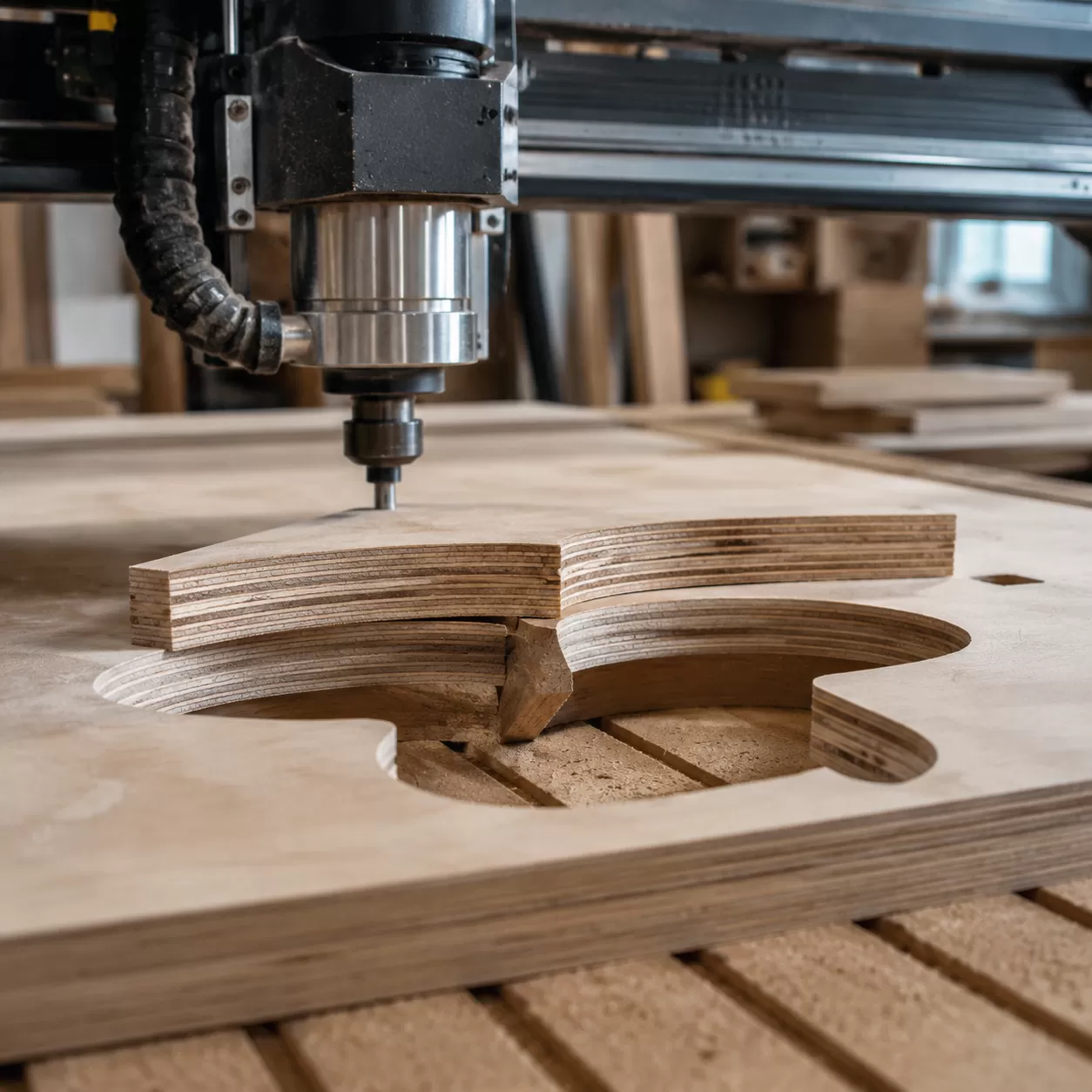
Can a cnc router cut completely through 3 4 wood? Yes—3/4-inch panels in Baltic birch plywood or solid stock are routine through-cut targets when spindle power, router bit choice, and pass depth match your machine class. Industrial CNC wood routers with enough spindle horsepower often clear 3/4-inch stock in a single pass; desktop and Maslow CNC setups step down with conservative cut depth and tuned feed rate instead. The sections below cover spiral flute bit and compression bit selection, chip load calculation, hold-down vacuum system options, and onion skinning technique for chip-free edges.
Can a CNC Router Cut Completely Through 3/4-Inch Wood?
Whether you are processing Baltic birch plywood for cabinetry or shaping thick hardwoods, cutting through a 3/4-inch panel is standard practice in modern woodworking. However, achieving a clean, precise cut depends entirely on your machine’s capabilities and your cutting strategy.
As a CNC router manufacturer, we see firsthand how different setups handle heavy stock. The approach changes completely based on your hardware:
- Industrial CNC Routers: Heavy-duty, rigid commercial machines can easily plow through 3/4-inch plywood in a single pass while maintaining a high feed rate. They feature the spindle horsepower and structural mass required to handle extreme forces without breaking a sweat.
- Hobbyist and DIY Setups: Desktop units or entry-level kits (like a Maslow CNC) require a multi-pass step-down strategy. Attempting a single-pass cut on these machines will cause tool deflection, motor stalling, or ruined workpieces.
To guarantee success, your cut depth per pass must align with your machine's rigidity and the specific router bit you select.
| Machine Class | Typical Pass Depth for 3/4" Wood | Required Strategy |
|---|---|---|
| Industrial / Commercial | Full 0.75 inches | Single pass, high feed rate |
| Mid-Range / Prosumer | 0.25 to 0.375 inches | 2 to 3 passes, optimized chip load |
| Hobbyist / Desktop | 0.0625 to 0.125 inches | Multi-pass step-down, conservative feed rate |
While any capable router can get through the material, executing the cut cleanly requires balancing your feed rate, spindle power, and tooling selection.
Spindle Horsepower, Rigidity, and Pass Depth for 3/4-Inch Wood
When asking can a cnc router cut completely through 3 4 wood, the answer is yes—but your machine setup dictates exactly how you get there.
Spindle Power and Motor Torque
Cutting deep into dense hardwoods requires significantly more muscle than routing softwoods or foam. Spindle horsepower directly impacts how well the CNC wood router spindle handles structural resistance. If your spindle lacks torque, the bit will bog down, causing the motor to stall or the wood to char. For continuous 3/4-inch cutting, robust industrial spindles are essential to maintain consistent RPM under heavy loads.
Machine Rigidity and Build Quality
A heavy-duty steel or cast-iron chassis construction is vital to eliminate the vibrations and chatter that naturally occur when cutting at full depth. A rigid 3-axis CNC wood router keeps the tool tracking perfectly straight, ensuring your vertical edges stay square rather than tapered.
The Rule of Thumb for Pass Depth
You cannot always cut 3/4-inch stock in a single pass. The standard woodworking guideline relies on calculated pass depth ratios:
- Standard Rule: Your axial cut depth per pass should equal 0.5x to 1x the router bit diameter.[1]
- 1/4-inch Bit: Safe pass depth is between 1/8-inch and 1/4-inch deep per pass.[1]
- 3/8-inch or 1/2-inch Bit: Allows for much deeper steps, reducing the total number of passes needed to clear the material.
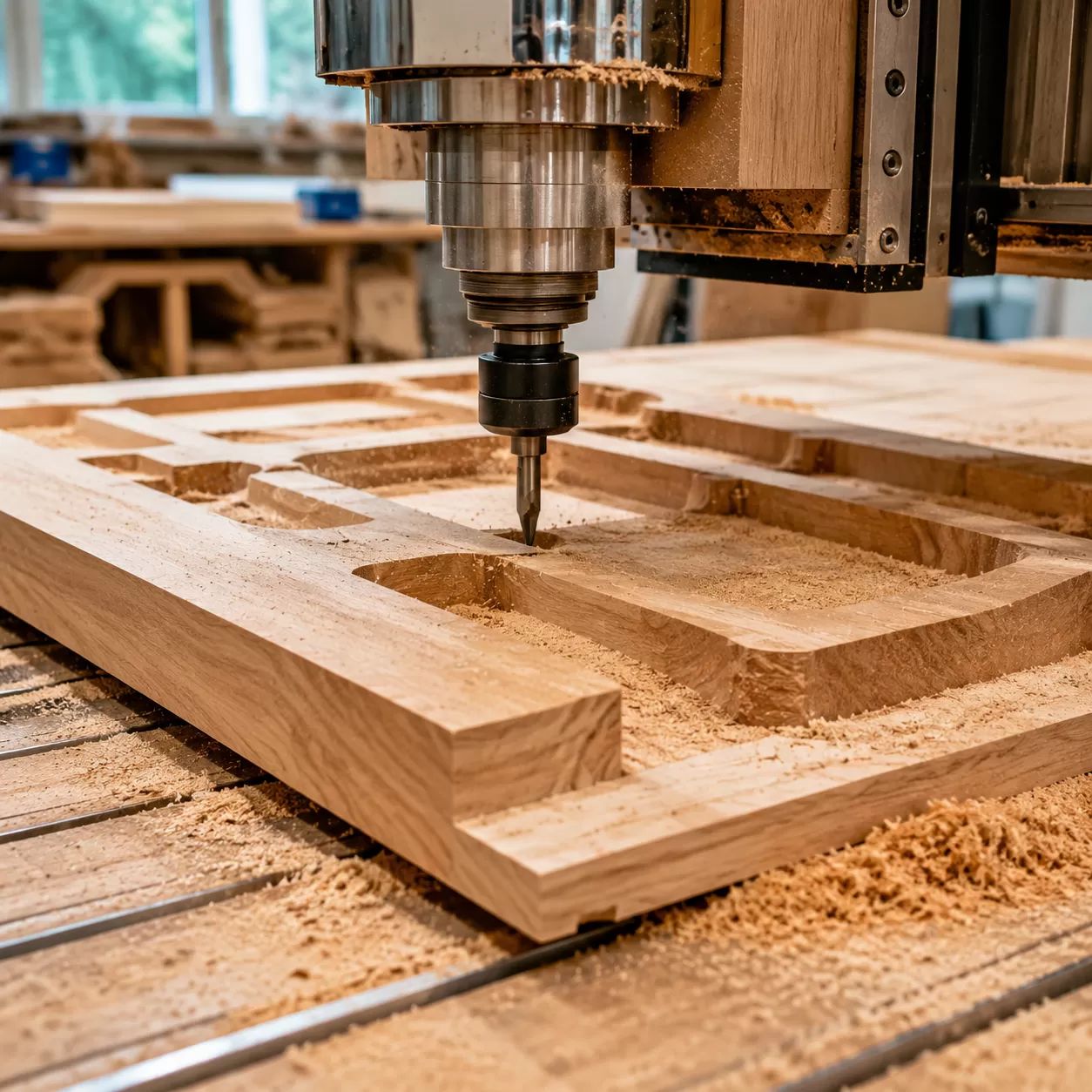
Exceeding these limits forces excessive lateral pressure on the tool, leading to snapped bits or ruined workpieces.
Selecting the Right Router Bit for 3/4" Woodworking
Bit Diameter and Flute Length
To cut completely through a 3/4-inch (19.05mm) panel, your tool must have a cutting edge length—or usable flute length—of at least 7/8-inch (22.2mm). This extra 1/8-inch ensures the bit clears the bottom of the material and enters the spoilboard without the un-fluted shank rubbing against the upper edge of the cut. A 1/4-inch or 3/8-inch tool diameter is ideal here; anything thinner will flex too much under the deep load and snap, while thicker bits require massive spindle power. For heavy-duty deeper profiling, choosing specialized hard wood CNC router bits ensures the tool can withstand the continuous heat and lateral forces.
Upcut Spiral Flute Bit
An upcut spiral flute bit pulls chips upward and out of the cut zone, similar to a standard drill bit. This aggressive chip evacuation prevents clogging inside deep 3/4-inch grooves, keeping the tool cool. The downside is that the upward lifting action tends to fray or splinter the top surface layer of plywood and veneers.
Downcut Spiral Flute Bit
A downcut spiral flute bit pushes chips downward toward the bottom of the material. This action forces the top fibers of the wood down, leaving an incredibly clean top face. However, it packs sawdust into the deep 3/4-inch trench, which can cause heat buildup or re-cutting of chips if you do not use strong air blasts or a high-velocity dust collection setup.[6]
Straight Bit
Straight bits utilize flat vertical edges rather than a spiral twist. They are a highly cost-effective option for basic slotting and straight dado work. However, they lack the efficiency of spiral tools, meaning they struggle with chip clearance in deep pockets and require slower feed rates to avoid burning.
Compression Bits
For high-end production on materials like Baltic birch plywood, MDF, or double-sided melamine, compression bits are the industry standard. These tools combine both upcut and downcut geometry on a single flute. The very bottom of the bit pulls chips up, while the upper portion pushes down. When cutting through 3/4-inch sheets, this dual-action geometry compresses the wood fibers inward, delivering perfectly clean, chip-free edges on both the top and bottom faces simultaneously.[5]
Optimizing Speeds, Feeds, and Chip Load for 3/4" Wood
Calculating the Sweet Spot
To prevent tool overheating and motor overloading, you must target the correct chip load—the actual thickness of the wood chip that each cutting edge removes.[2]
- Too Fast RPM / Too Slow Feed Rate: The bit rubs against the wood instead of cutting, creating extreme friction, heat, and ugly burn marks.
- Too Slow RPM / Too Fast Feed Rate: The bit plows into the material too aggressively, causing tool deflection, rough cuts, or a snapped router bit.
Material Settings Matrix
Different woods behave differently under a CNC spindle. Density and dust creation dictate how you should adjust your settings for a 3/4-inch cut depth:[3]
| Material Type | Recommended Feed Rate | Spindle RPM Range | Chip Removal Characteristics |
|---|---|---|---|
| Softwoods (Pine, Cedar) | High | 16,000 - 18,000 | Produces larger chips; easy to clear from deep channels. |
| Hardwoods (Oak, Maple) | Moderate | 14,000 - 16,000 | Requires slower feed rates to prevent motor stalling and heat buildup. |
| MDF & Particle Board | High | 18,000 - 20,000 | Generates fine, abrasive dust; requires excellent extraction to avoid packing the cut.[4] |
| Baltic Birch Plywood | Moderate-High | 16,000 - 18,000 | Alternating grain layers require balanced speeds to avoid veneer chip-out. |
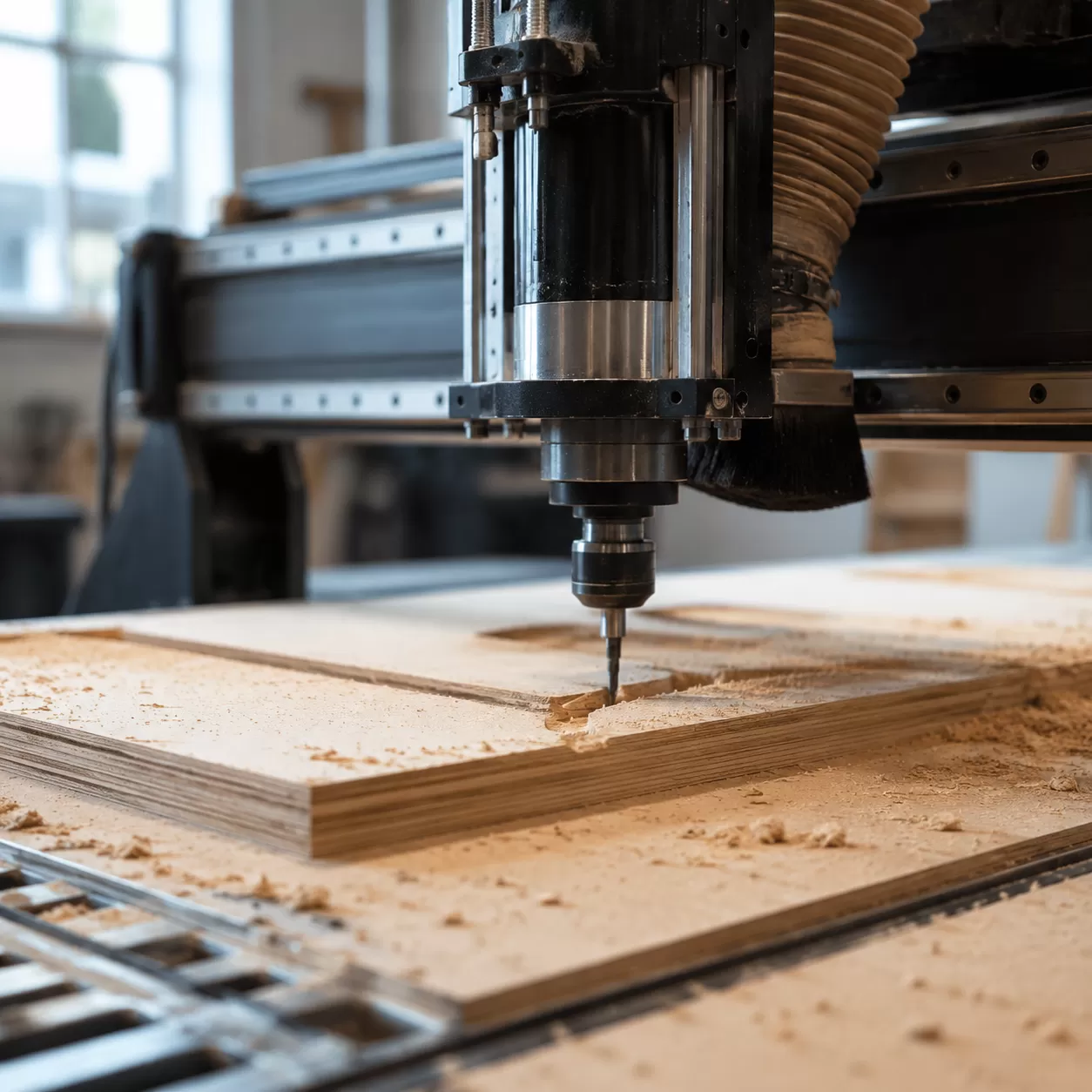
Pro Tip: When managing high feed rates and heavy chip loads on dense materials, keeping your machinery components in top shape is vital—especially drive systems and spindles under heavy cutting loads.
CAM Techniques for Cutting 3/4" Wood
When figuring out if a CNC router can cut completely through 3/4 wood, your CAM software strategies make or break the final result. We use specific toolpath strategies to ensure clean, high-precision results every time.
Smart Toolpaths for Deep CNC Routing
- Ramping and Helical Entries: Never plunge a router bit straight down into 3/4-inch stock. This creates extreme heat, burns the tips, and puts massive stress on your Z-axis. Instead, use a smooth ramping or helical entry to gradually ease the tool into its initial cut depth.
- The Onion Skinning Technique: When cutting all the way through heavy panels like Baltic birch plywood, use an onion skinning technique. Leave a paper-thin layer (about 0.015 inches) on your main cutting passes to keep the part completely stable. Then, execute a lightning-fast final cleanup pass to slice through the skin.
- Tabs and Bridges: For smaller components, program strategic physical tabs into your CAM software. These small bridges keep parts securely anchored to the main sheet, preventing them from flying loose or shifting into the spinning tool when detached.
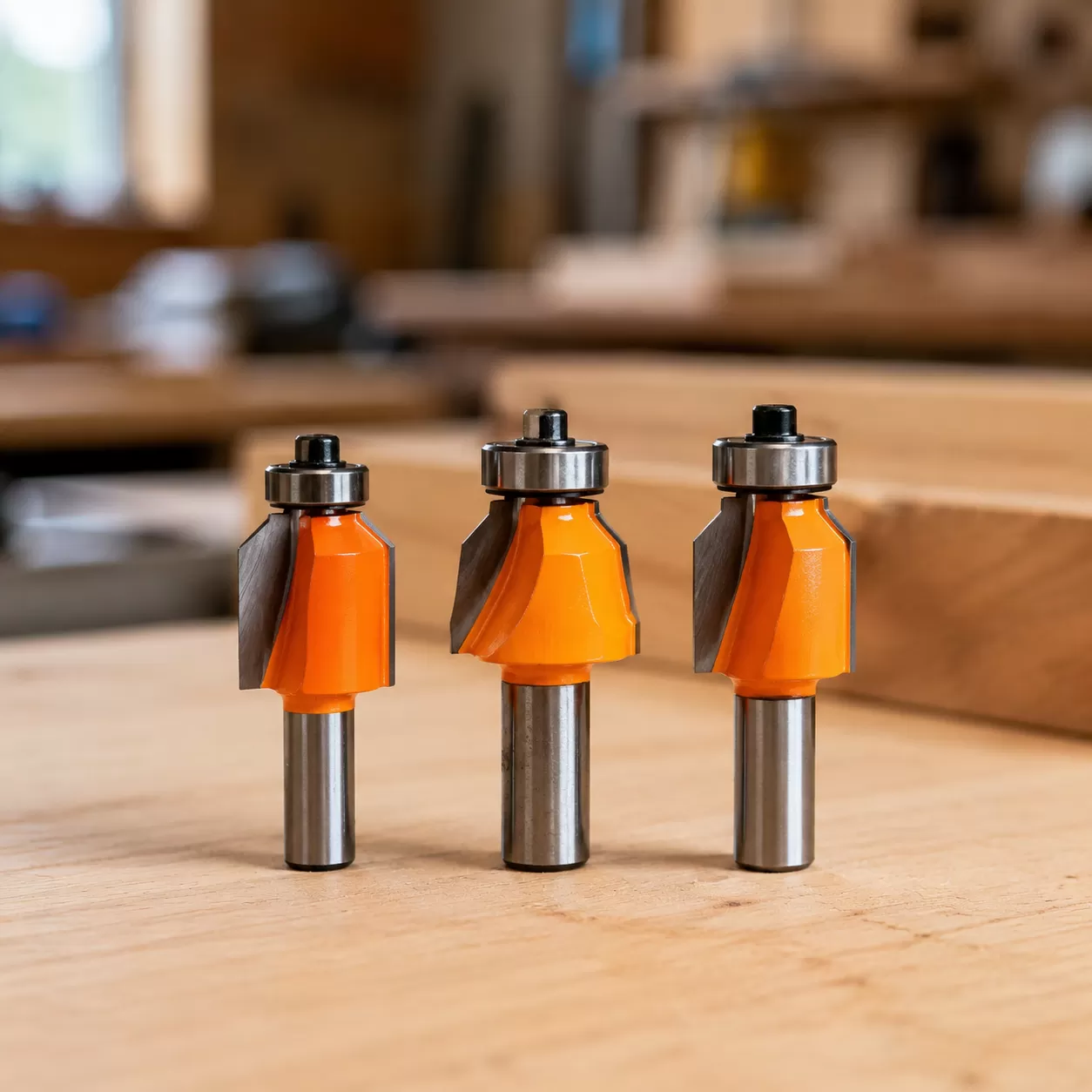
For these demanding toolpaths, maintaining your machine's motion components is critical. Upgrading to high-quality CNC router parts ensures your machine maintains the rigidity and axis accuracy needed to execute these precise CAM techniques perfectly.
Critical Workholding and Wasteboard Setup for 3/4" Wood
Securing your material is just as important as choosing the right router bit or calculating the proper feed rate. When cutting completely through 3/4-inch woodworking sheets, any shifting will ruin your part accuracy and destroy your tooling.
Spoilboard Preparation
To get a clean through-cut on 3/4-inch stock, you must configure a sacrificial MDF spoilboard. Setting the cut depth to over-cut into the spoilboard by roughly 0.015 to 0.020 inches ensures that the spiral flute bit or straight bit cleanly severs the bottom fibers of the wood, leaving no fuzzy skins behind.
Secure Hold-Down Methods
The right hold-down method depends entirely on your machine type and production scale:
- Hold-Down Vacuum System: The gold standard for professional production. High-volume pumps hold large sheets of Baltic birch plywood completely flat without clamps, allowing uninterrupted tool paths.
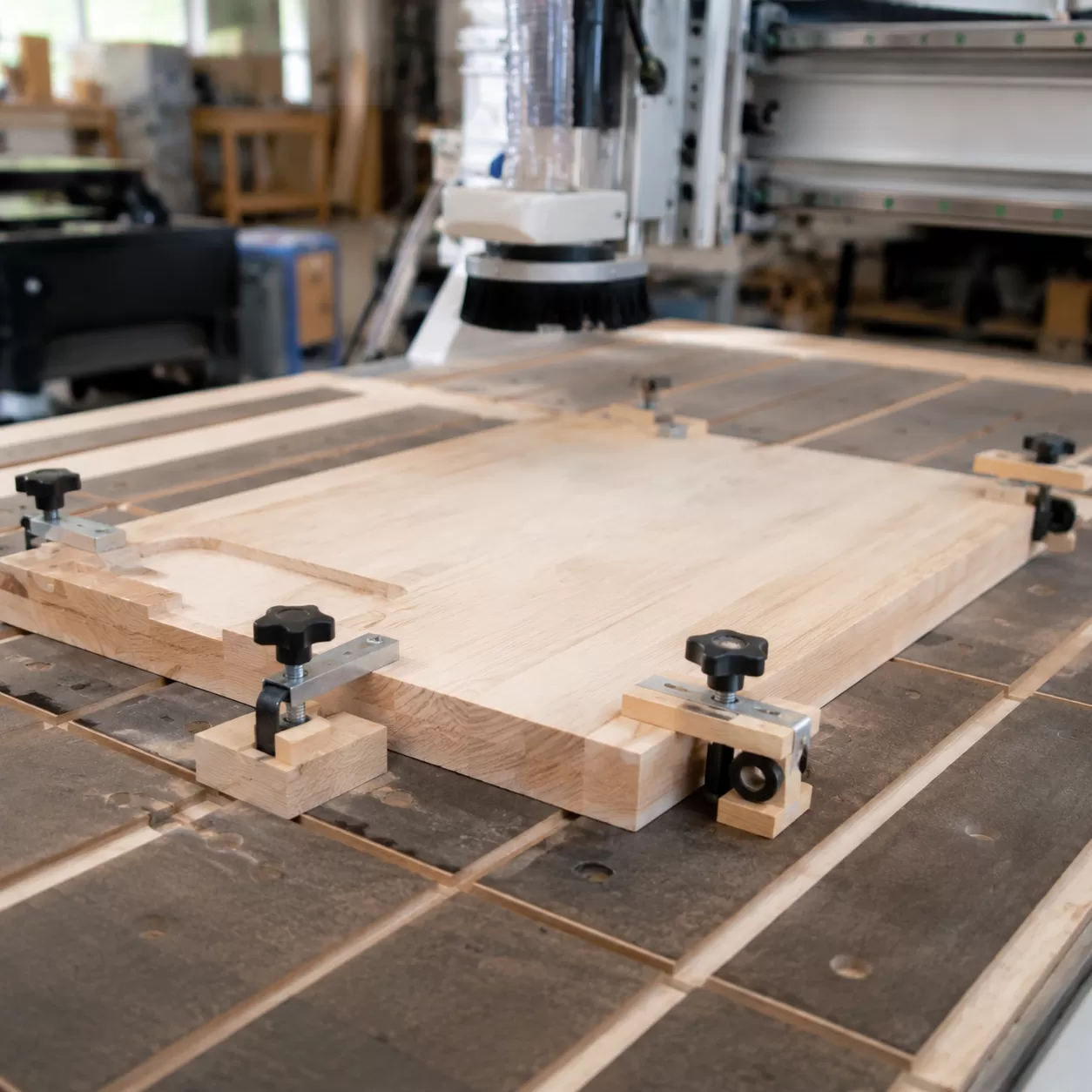
- Mechanical Clamps and Screws: Best for heavy, thick solid hardwoods. Screwing directly into the wasteboard provides maximum mechanical resistance against lateral forces, though you must plan toolpaths to avoid collisions.
- Painter's Tape and CA Glue: Ideal for smaller DIY or Maslow CNC setups. Applying tape to both the spoilboard and the workpiece, then bonding them with cyanoacrylate glue, provides incredible lateral holding power without reducing pass depth efficiency or risking bit damage.
Troubleshooting Common Mistakes When Cutting 3/4" Wood
Even with a high-performance machine, slicing through thick 3/4-inch lumber or Baltic birch plywood can throw a few curveballs. If you run into issues, use this quick troubleshooting guide to dial in your settings and get clean results.
Heavy Burn Marks on the Edges
Seeing smoke or dark burn marks means your router bit is rubbing against the wood instead of cutting it. This happens when the feed rate is too slow or the spindle RPM is too high, causing excessive heat buildup.
- The Fix: Increase your feed rate or lower your spindle speed to ensure the tool takes proper bites out of the material. If you are trying to figure out how to dial in these settings before sending the job to the machine, mastering how to program a CNC machine properly in your CAM software will help you calculate the correct chip load from the start.
Extreme Noise or Vibration During Cuts
Loud chattering, screaming, or violent vibrations mean the machine is under too much stress. This usually happens when the pass depth is set too deep for the rigidity of your chassis or the torque of your spindle.
- The Fix: Reduce your cut depth per pass. For hobbyist or desktop setups, a conservative pass depth (like 1/8 inch or less per pass) relieves structural strain, protects the motor, and prevents the bit from snapping.
Rough or Splintered Bottom Edges
If the top face looks great but the bottom edge of your 3/4" plywood is tearout-heavy and splintered, you are likely using the wrong tool geometry for a single pass blowout or final through-cut.
- The Fix: Switch your standard straight bit or spiral flute bit to a high-quality compression bit. Compression geometry pulls chips upward at the bottom and pushes downward at the top, delivering perfectly crisp, sandwich-clean edges on both sides of thick panels.
Need a rigid CNC wood router sized for 3/4-inch sheet production? Request a quote with sheet size, spindle spec, and daily shift hours.