What is a CNC Router ?
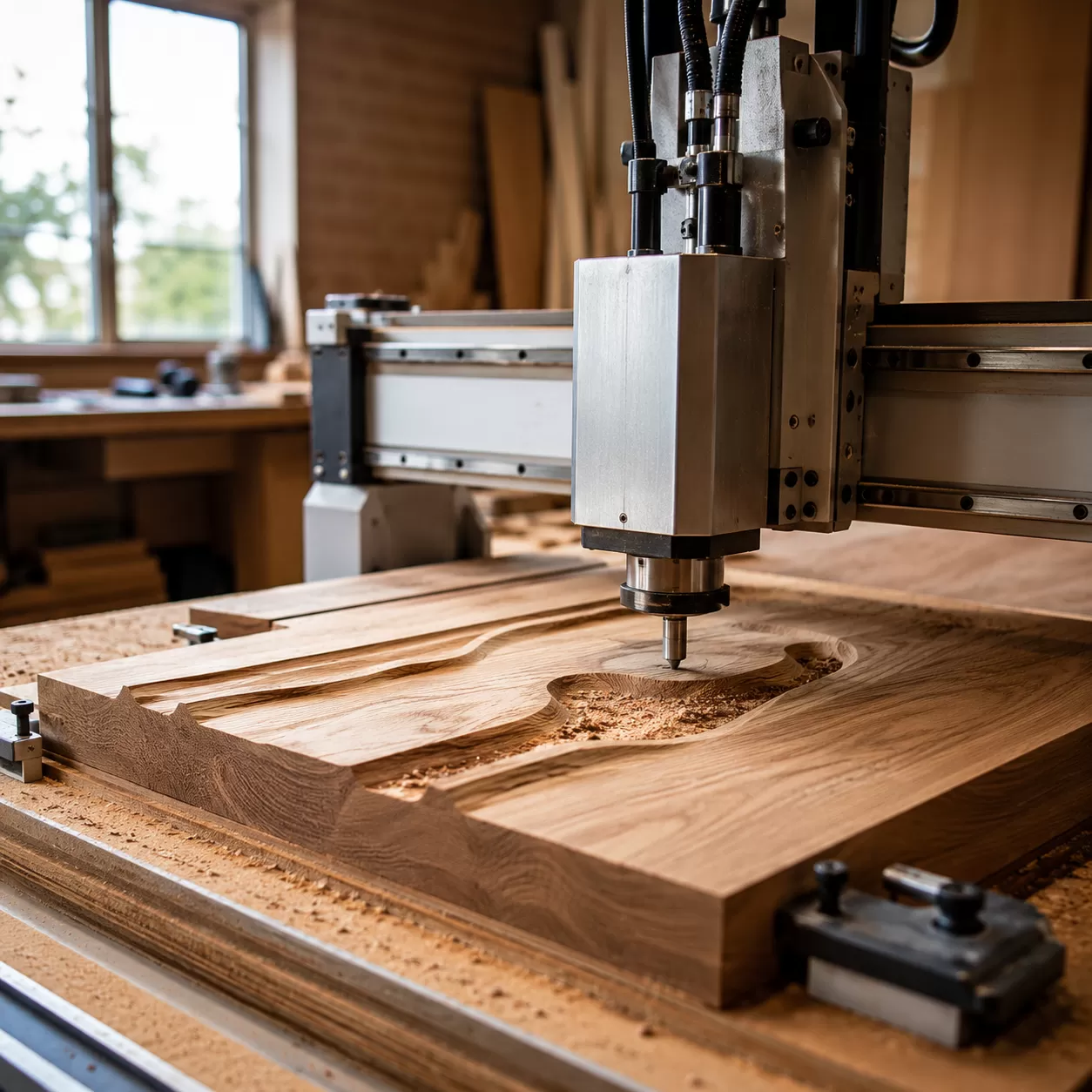
A CNC (Computer Numerical Control) router is an automated cutting machine that uses computer software and high-precision motors to drive a cutting tool. Instead of guiding a router by hand, the machine reads a digital design and precisely carves, engraves, or cuts the material automatically. For woodworkers, a CNC router for wood transforms raw timber into intricate designs with flawless accuracy.
To understand how these machines handle heavy-duty woodworking, it helps to look at the core components that drive our ProMach models:
- The 3-Axis System: The machine moves along three directions: X-axis (left to right), Y-axis (front to back), and Z-axis (up and down). This 3-axis CNC router setup allows for complex 3D contouring and deep carving in thick timber.
- Spindle Speed: The spindle holds and spins the cutting tool. High-quality solid wood cutting requires adjustable spindle speeds to prevent the wood from burning.
- Feed Rate: This is the speed at which the machine moves the cutting tool through the wood. Finding the right balance between feed rate and spindle speed is critical to preventing tool wear and achieving smooth edges.
Traditional woodworking with hand tools or standard table saws takes time, creates immense waste, and leaves room for human error. A dedicated CNC router for woodworking eliminates these pain points. By automating the fabrication process, our machines maximize material yields, drastically reduce waste, and deliver identical, highly precise parts every single time.
Can CNC Routers Cut Solid Wood?
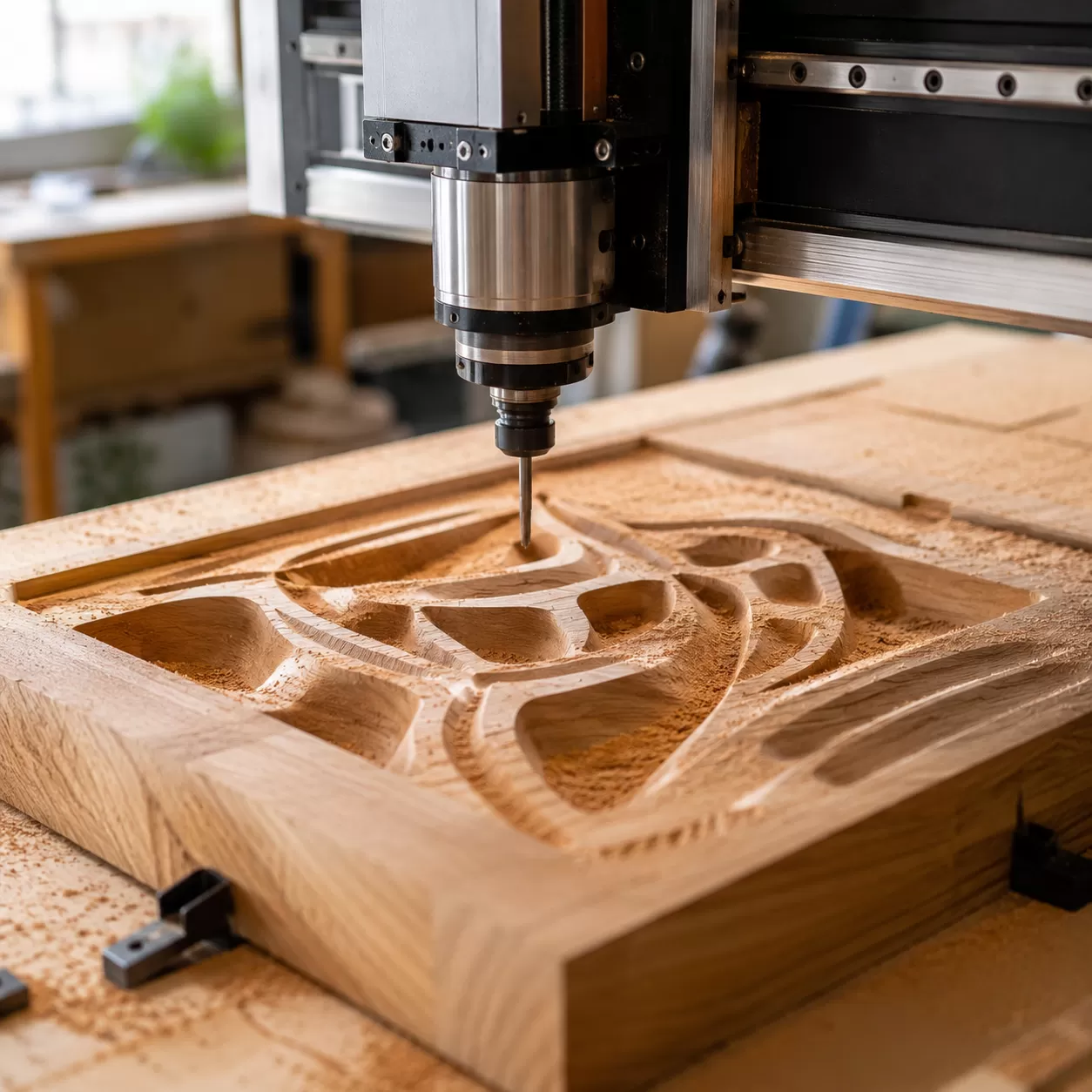
At ProMach, we have years of hands-on experience engineering machines that seamlessly process both dense hardwoods and flexible softwoods. While engineered boards like MDF are uniform and predictable, natural timber brings its own unique character to the workshop.
Solid Wood vs. Engineered Panels
Cutting solid wood with a CNC machine requires a deeper understanding of your material compared to processing standard panel stock.
- Engineered Wood (MDF/Plywood): Consistent density, no grain direction, and low risk of warping.
- Solid Wood: Features natural grain lines, knots, and varying densities. It is highly feasible for CNC routing but demands precise machine adjustments to handle the natural grain resistance.
Vibration and Tool Wear
A common misconception is that solid timber causes excessive wood vibration and rapid tool wear. This only happens if you use an underpowered machine or the wrong settings. When cutting hardwoods like oak or walnut, dense fibers naturally resist the cutter more than MDF does. However, using heavy-duty 3-axis CNC router setups eliminates stability issues, ensuring clean passes without ruining your bits.
The ProMach Advantage for Solid Wood
We design our ProMach CNC wood routers specifically to conquer the challenges of natural timber. Our machines feature powerful, variable-speed spindles that let you fine-tune your cuts. By adjusting the spindle speed and feed rate on the fly, you can prevent friction burns on hardwoods and stop splintering on softwoods, delivering a flawless finish every single time.
Key Factors to Consider for Cutting Solid Wood
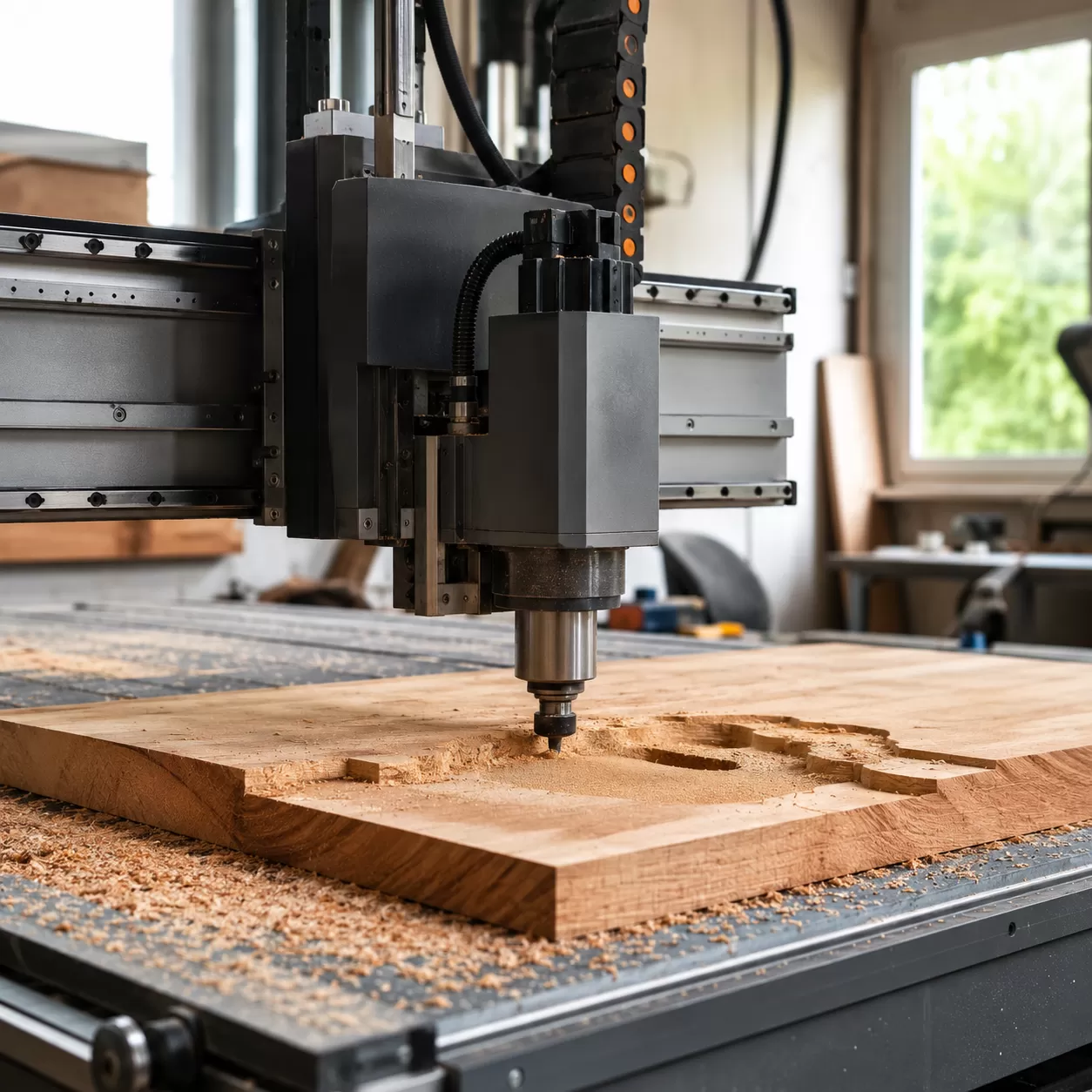
If you want clean results without taxing your equipment, you need to look closely at a few critical variables.
Machine Power and Rigidity
Solid lumber puts much more stress on a machine than plywood or foam. To cut natural timber successfully, a robust 3-axis CNC wood router is essential.
- Spindle Power: You need at least a 2 to 3 HP spindle. Anything less risks stalling or binding when plowing through dense grains.
- Frame Construction: Heavy-duty steel frames absorb wood vibration effectively, preventing chatter marks on your finished piece.
Wood Variables
Unlike engineered panels, natural wood is unpredictable.
- Grain Direction: Always plan your toolpaths to account for grain direction to prevent tear-out, especially on edge profiles.
- Moisture Content: Keep your stock between 6% and 8% moisture. Wet wood causes fuzzy cuts and gums up your tooling.
- Species Stability: If you are looking for clean consistency, stable hardwoods like cherry or walnut are highly forgiving. Dense species like white oak or maple require slower, more deliberate passes.
Essential Cutting Tools and Accessories
Your machine is only as good as the edge hitting the wood. Using generic bits will lead to burnt edges and snapped tooling.
- Carbide Cutters: Always use high-grade solid carbide cutters for woodworking. They hold an edge significantly longer than high-speed steel when dealing with abrasive wood glues and tight natural fibers.
- Bit Selection: Spiral down-cut bits are ideal for clean top surfaces on shallow pockets, while up-cut spirals clear chips fast during deep mortising. For a deeper look at specific geometries, check out our guide on what CNC router bits for hard woods work best.
Operational Settings
Balancing your feed rate and spindle speed keeps your cuts clean and your tooling cool. Based on extensive real-world feedback from our users, we recommend the following baseline settings for solid lumber:
| Material Type | Ideal Feed Rate | Spindle Speed |
|---|---|---|
| Solid Hardwoods (Cherry, Walnut, Oak) | 100 – 200 IPM (inches per minute) | 10,000 – 15,000 RPM |
| Solid Softwoods (Pine, Cedar, Fir) | 150 – 250 IPM | 15,000 – 18,000 RPM |
Pro Tip: If you see smoke or blueing on the wood, your feed rate is too slow or your spindle speed is too high. Increase the movement speed or lower the RPMs to maintain a proper chip load and prevent heat buildup.
Step-by-Step Guide to Cutting Solid Wood with a CNC Router
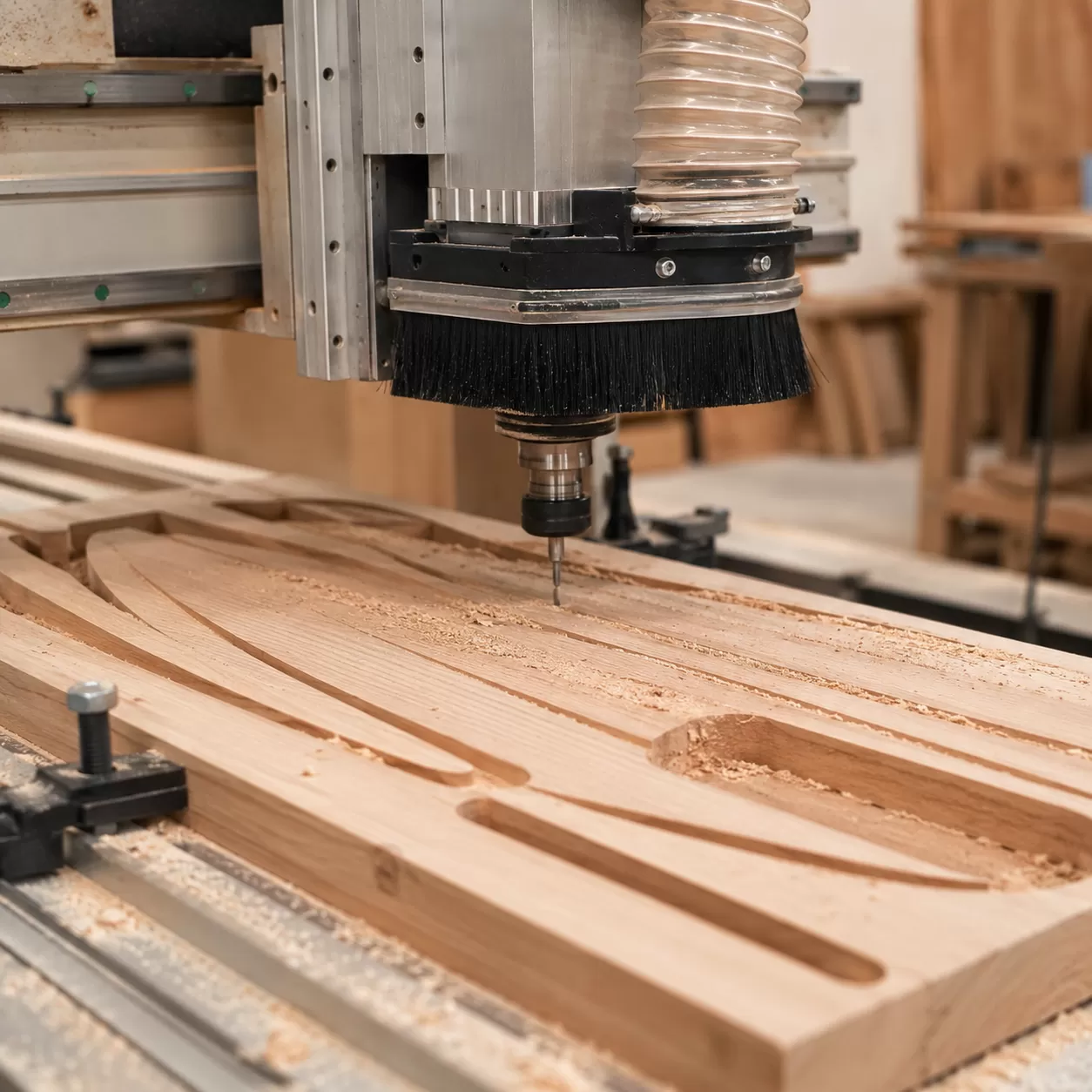
Getting flawless results when cutting solid wood with a CNC machine comes down to an organized workflow. By combining proper prep work, precise machine setup, and solid safety habits, you can maximize your efficiency and get clean cuts every single time. Here is the exact process we use at ProMach to achieve professional-grade results.
Phase 1: Preparation and Design
Before you turn on your ProMach CNC wood routers, you need to prep both your digital files and your physical workspace.
- Design and Toolpathing: Create your 3D model or 2D profile in software like Fusion 360. Make sure to input your specific feed rate for wood cutting and correct depth passes based on the density of your wood.
- Material Selection: Choose a flat, stable piece of wood stock. If you need to flatten or prep a rough slab before starting your project, check out our guide on how to flatten wood on a cnc router to ensure a perfectly level surface.
- Securing the Stock: Clamp your solid wood firmly to the CNC bed. Dense hardwoods can shift under heavy cutting forces, so use strong mechanical clamps, a vacuum table, or double-sided woodworking tape to prevent any part movement.
Phase 2: Machine Setup and Execution
Once your stock is locked down, it is time to configure your 3-axis CNC router capabilities for the actual cut.
- Load the Material and Bit: Insert the proper carbide cutters for woodworking into your spindle collet and tighten it securely.
- Zero the Axes: Move your spindle to the starting position on your workpiece. Set your X, Y, and Z-axis zeros precisely using a touch plate or manual positioning.
- Run a Test Cut: If you are working with an expensive hardwood like walnut or white oak, run a quick test cut on a piece of scrap material first. This allows you to verify that your spindle speed for solid wood is properly tuned.
- Execute and Monitor: Start the program. Stay by the machine to watch and listen. Keep an eye out for excessive wood vibration in CNC routing or signs of strain on the spindle, adjusting your feed rate override if necessary.
Phase 3: Safety Standards during Operation
At ProMach, our manufacturing standards always prioritize operator safety. Solid wood cutting generates high friction and fine dust particles, making these precautions mandatory:
| Safety Focus | Action Required |
|---|---|
| Dust Collection | Always run a high-volume dust boot to remove chips immediately. This keeps the cut path clear and prevents fire hazards from packed sawdust. |
| Personal Protection | Wear certified safety glasses and hearing protection. CNC machining dense hardwoods can be exceptionally loud. |
| Emergency Preparedness | Keep your hand near the emergency stop button during the initial pass to halt operation immediately if a bit binds or a clamp slips. |
Phase 4: Post-Cutting and Finishing
Your job is not quite done when the machine stops moving. Clean post-processing is what separates amateur projects from professional products.
- Vacuum and Unclamp: Clean off the remaining dust before releasing your clamps to ensure no debris scratches the finished face.
- Tabs and Tabs Removal: If you used tabs to hold small parts in place, carefully cut them free using a flush-trim saw or a handheld router.
- Sanding and Inspection: Inspect the edges for any minor fuzzing or tool marks. Run through a progressive sanding grit sequence (typically 120 to 220 grit) along the natural grain direction to prep the wood for its final stain or clear coat.
Benefits of Using a CNC Router for Solid Wood Projects
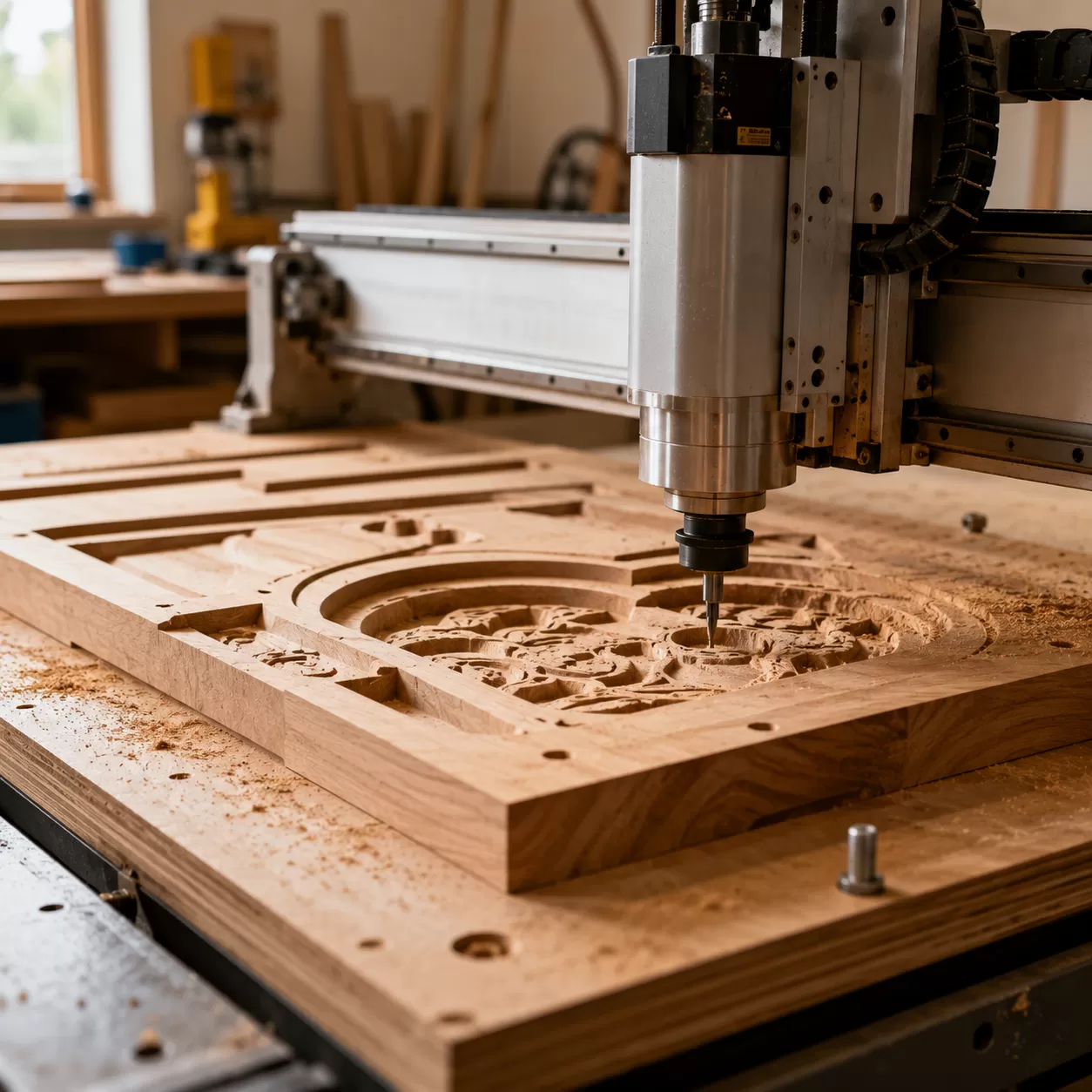
When processing natural timber, the standard woodworking CNC machine benefits include unmatched execution speed, absolute repeatability, and the ability to run highly complex paths that are impossible to replicate by hand.
Why CNC Outperforms Traditional Woodworking
Manual cutting introduces human error, wood grain deflection, and significant material waste. Our computer-controlled systems eliminate these bottlenecks entirely.
| Feature | Traditional Hand Tools | ProMach CNC Wood Routers |
|---|---|---|
| Accuracy | Dependent on operator skill and fatigue | Consistent down to a fraction of a millimeter |
| Production Speed | Slow, manual layout and multi-step cutting | High-speed, single-setup automated execution |
| Intricate Carving | Requires hours of specialized hand-chiseling | Completed in minutes via programmatic paths |
| Material Yield | Higher waste due to marking and cutting errors | Optimized nesting software minimizes timber scrap |
Key Advantages for Your Workshop
- Precision for Intricate Designs: Easily execute complex 3D carving, crisp mortise-and-tenon joints, and flawless engravings without splintering the wood face.
- Time Savings on Repetitive Tasks: Program the machine once to cut ten, fifty, or one hundred identical furniture components back-to-back with zero dimensional drift.
- Massive Customization Versatility: Shift from processing softwoods to dense hardwoods instantly by adjusting your tooling profiles and feed rates in the software control panel.
ProMach Real-World Success Stories
Our global clients consistently scale their production capacity after integrating a ProMach CNC router into their daily operations.
Custom Furniture Production: A commercial furniture workshop in North America reported a 40% increase in monthly output after switching from manual band saws to our heavy-duty 3-axis systems. They eliminated manual template making, allowing them to deliver custom solid oak dining tables in half the standard lead time.
Architectural Signage: A boutique carving business utilized our high-torque spindles to run continuous deep-pass engraving on thick walnut stock. The rigid frame design eliminated wood vibration issues, delivering clean, crisp edges straight off the machine bed without requiring hours of manual post-process sanding.
Potential Challenges and Solutions When Cutting Solid Wood
Cutting solid wood with a CNC machine delivers incredible results, but natural timber brings unique challenges like grain variations and density shifts. Understanding how to handle these hurdles keeps production moving smoothly.
Common Issues and Quick Fixes
When processing dense hardwoods, certain issues can pop up if the settings or tools are not optimized:
- Tool Deflection: Heavy resistance from dense wood grains can cause the router bit to flex. To fix this, reduce your pass depth and ensure you are using premium carbide cutters for woodworking to maintain rigidity.
- Wood Vibration in CNC Routing: Unwanted movement ruins finish quality. Always secure your panel stock firmly to the bed using robust clamping or a strong vacuum grid.
- Burn Marks: Burning happens when the bit rubs against the wood instead of cutting it. Increase your feed rate for wood cutting or lower your spindle speed for solid wood to keep the tool moving quickly through the material.
Material-Specific Troubleshooting
Different woods react uniquely to the cutting edge:
| Wood Type | Common Problem | Actionable Solution |
|---|---|---|
| Hardwoods (e.g., Oak, Walnut) | Chipping and tear-out | Use down-shear router bits for hardwood to press wood fibers downward. |
| Softwoods (e.g., Pine, Cedar) | Splintering and fuzzing | Increase spindle RPM and use razor-sharp, up-cut carbide tools to clear chips fast. |
Machine Maintenance and Error Diagnostics
Long-term success relies on keeping your 3-axis CNC router in peak condition. If you notice a sudden drop in cut quality, check for mechanical errors or tool wear immediately.
Regularly inspect your linear guides for debris, lubricate the axes, and replace dull bits before they strain the spindle motor. As your dedicated machinery partner, ProMach builds systems to withstand demanding shop environments, ensuring you have the reliability needed to troubleshoot less and produce more.
Tips for Achieving Optimal Results When Cutting Solid Wood with a CNC Machine
Getting flawless, factory-quality results on natural timber requires balancing machine settings with the unique characteristics of your wood stock.
Essential Tooling and Workholding Strategies
- Match the Bit to the Grain: Always prioritize high-quality solid carbide cutters. For deep pocketing or heavy stock removal in dense hardwoods, an upscale spiral bit pulls chips away efficiently to avoid heat buildup. For clean top surfaces on shallow cuts, a downcut spiral bit pushes fibers down to eliminate splintering.
- Secure Mechanical Clamping: Solid wood moves and contains internal stresses that release during cutting. Relying solely on a vacuum table can lead to parts shifting due to minor wood warping. Supplement your setup with physical edge clamps or mechanical fixtures to completely isolate wood vibration.
Optimal Operational Settings
Never try to cut through thick hardwoods in a single pass. Implementing layering cuts (multiple shallow passes) prevents tool deflection and saves your spindle from stalling.
The baseline settings below serve as a proven starting point for clean edges and reduced tool wear:
| Wood Type | Recommended Spindle Speed | Target Feed Rate | Pass Depth (Per Layer) |
|---|---|---|---|
| Dense Hardwoods (Maple, Oak, Walnut) | 14,000 – 16,000 RPM | 100 – 140 IPM | 50% of tool diameter |
| Standard Softwoods (Pine, Cedar, Fir) | 16,000 – 18,000 RPM | 150 – 200 IPM | 100% of tool diameter |
ProMach Best Practices for Equipment Longevity
Maintaining your nesting CNC router guarantees repeatable accuracy and prevents premature mechanical wear.
- Daily Collet Cleaning: Pitch and resin from solid wood bake onto the router bit and inside the collet. Clean these components daily with a wire brush or specialized solvent to prevent bit runout.
- Track Axis Backlash: Periodically check and calibrate your 3-axis drive systems. Solid wood exerts significantly more counter-pressure on the machine frame than engineered panel stock like MDF, making regular belt and ball screw inspections critical.
- Advanced Software Integration: Use CAD/CAM software to program lead-in arcs rather than direct vertical plunges. Entering the grain at a gradual angle eliminates entry burns and extends the life of your carbide cutters.
ProMach CNC Routers in Action
Our clients use ProMach CNC wood routers every day to turn challenging raw materials into high-end products. In commercial shops, these machines handle heavy-duty production schedules for solid wood cabinetry, architectural millwork, and intricate decorative panels. The stability of a heavy frame prevents the tool deflection that usually ruins detailed carvings in dense timbers.
For smaller shops and serious woodworkers, a 3D CNC router handles complex, multi-axis carving tasks like custom furniture legs, relief carvings, and engraved signage with perfect repetition.
Project Ideas for Every Skill Level
Whether you run an industrial factory or a boutique workshop, solid wood CNC machining opens up massive creative options:
- Beginner Projects: Solid walnut serving trays, custom hardwood cutting boards, and flat-packed floating shelves.
- Intermediate Projects: Live-edge signs with deeply engraved lettering, nested cabinet doors, and highly detailed rocking chair components.
- Advanced Projects: 3D religious reliefs, complex joinery for heirloom furniture, and curved architectural mouldings.
When you configure your spindle power, vacuum table, and hold-downs properly, a CNC router eliminates the manual guesswork out of wood processing. We design our machinery to bridge the gap between digital design and traditional craftsmanship, ensuring your final pass yields a smooth finish that requires minimal sanding.
FAQs Regarding CNC Routing Solid Wood
Can you run a CNC router into dense hardwoods like white oak or maple without snapping bits?
Yes, you can confidently cut dense hardwoods like white oak and maple without snapping bits, provided you use a rigid machine with the right settings. The key is avoiding deep single passes. Instead, use a high-quality 3-axis CNC router with a stepped-down depth of cut (usually half the bit diameter per pass) and maintain a proper chip load so the bit clears waste heat quickly.
How do you prevent burning and smoke marks on solid cherry wood or walnut stock?
Burning and smoke marks on cherry or walnut happen when the router bit rubs against the wood instead of cutting it. To prevent this, increase your feed rate or lower your spindle speed. If the machine moves too slowly, friction builds up heat instantly. Keeping your carbide cutters sharp and utilizing a proper dust collection system to remove hot chips immediately will also eliminate burn marks.
What is the ideal spindle speed and feed rate for routing standard solid softwoods versus dense hardwoods?
While exact settings depend on your specific machine and bit diameter, a reliable baseline for solid wood CNC machining includes:
| Wood Type | Spindle Speed (RPM) | Feed Rate (IPM) |
|---|---|---|
| Solid Softwoods (Pine, Cedar) | 16,000 – 18,000 RPM | 150 – 200 IPM |
| Dense Hardwoods (Oak, Hickory) | 10,000 – 14,000 RPM | 100 – 120 IPM |
Which router bits deliver the cleanest edges on solid natural timber without causing splintering?
For the cleanest edges on solid natural timber, down-cut spiral carbide cutters are best for top-surface precision because they push wood fibers downward during the cut. For through-cuts where both the top and bottom edges must be flawless, a compression bit is the ultimate choice, as it pulls upward on the bottom and pushes downward on the top to eliminate splintering entirely.