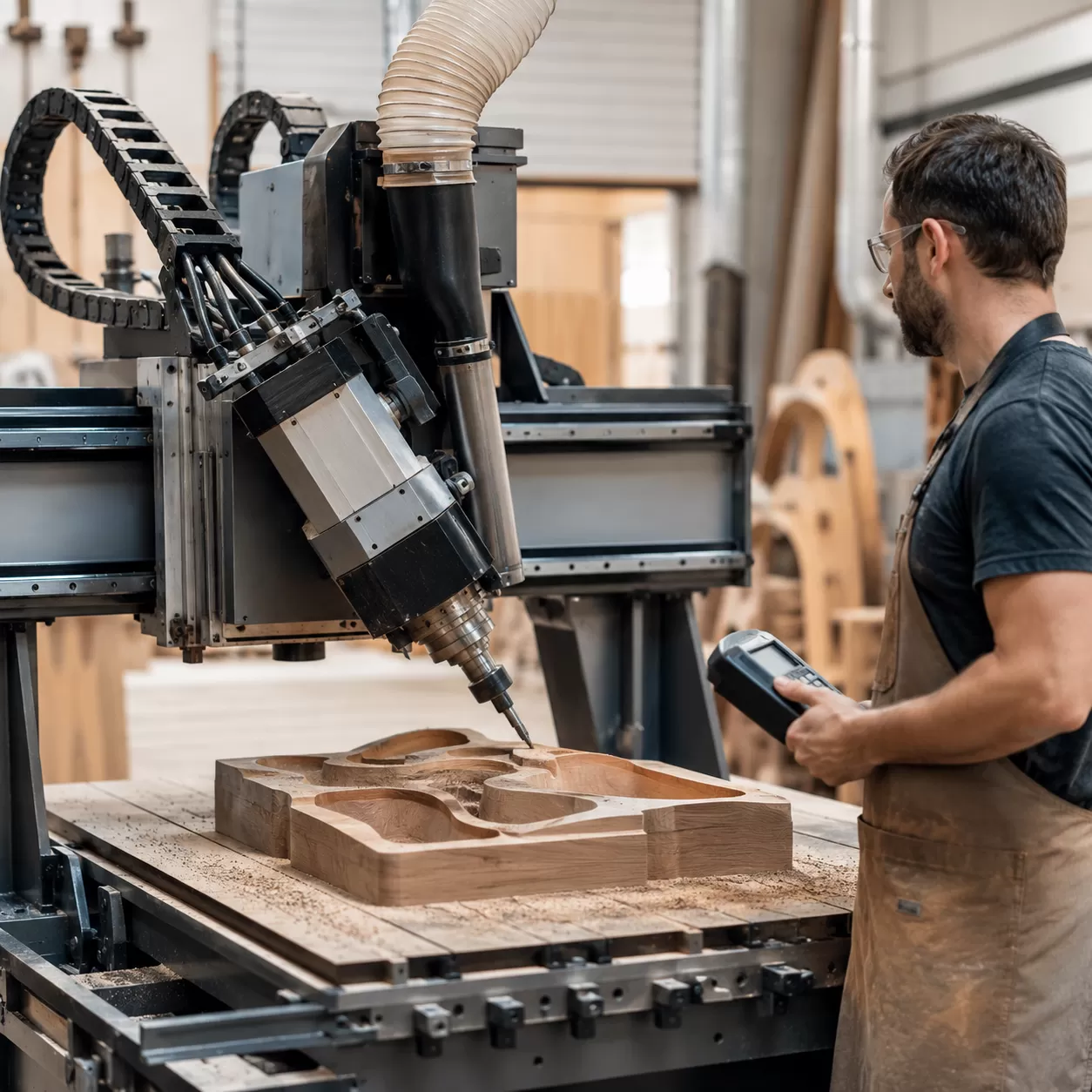
Your 3-axis CNC router is hitting its limit, and your shop floor is becoming a bottleneck of manual repositions and complex jigging.
The question isn’t just about the technology—it’s about the Total Cost of Ownership versus the massive
Is a 5-Axis CNC Router Worth the Investment?
The Reality of the "Setup Trap"
When working with non-planar geometries or complex shapes, a 3-axis machine forces you into the "setup trap."
Because the spindle only moves along the X, Y, and Z axes, machining a 3D part requires manual intervention. Operators must stop the machine, flip the workpiece, flip it again, and recalibrate fixtures for every new face.
- Increased Labor Costs: Every manual flip takes time.
- Accumulated Errors: Repositioning introduces human error, killing your high precision targets.
- Fixture Bloat: You waste hours designing and building dedicated fixtures just to hold odd angles.
The 5-Axis Difference
To break through this ceiling, you need to understand how multi-axis machining redefines tool movement by introducing two additional rotary axes (typically chosen from A, B, or C).
| Machine Type | Axis Movement | How It Works |
|---|---|---|
| 3+2 Positional | 5 Axes (Locked) | The rotary axes position the workpiece or spindle at a fixed angle, then a standard 3-axis program cuts the material. |
| Simultaneous 5-Axis | 5 Axes (Continuous) | X, Y, Z, and two rotary axes move dynamically at the same time, keeping the tool perfectly perpendicular to the surface. |
Simultaneous motion allows our machinery to execute complex sweeping cuts, fluid transitions, and continuous toolpathing that a 3-axis setup simply cannot replicate.
Unlocking Geometric Freedom
Transitioning to a 5-axis setup eliminates design limitations. It moves your production capability beyond flat-panel processing into a realm of extreme geometric complexity.
With continuous multi-surface carving, the spindle tilts deep into the workpiece to handle severe undercuts, compound curves, and deep pockets effortlessly. This capability transforms your workflow, allowing you to manufacture advanced aerospace components, intricate architectural elements, and complex molds with absolute accuracy and unmatched production speed.
Where 5-Axis Routing Delivers High-Precision Returns
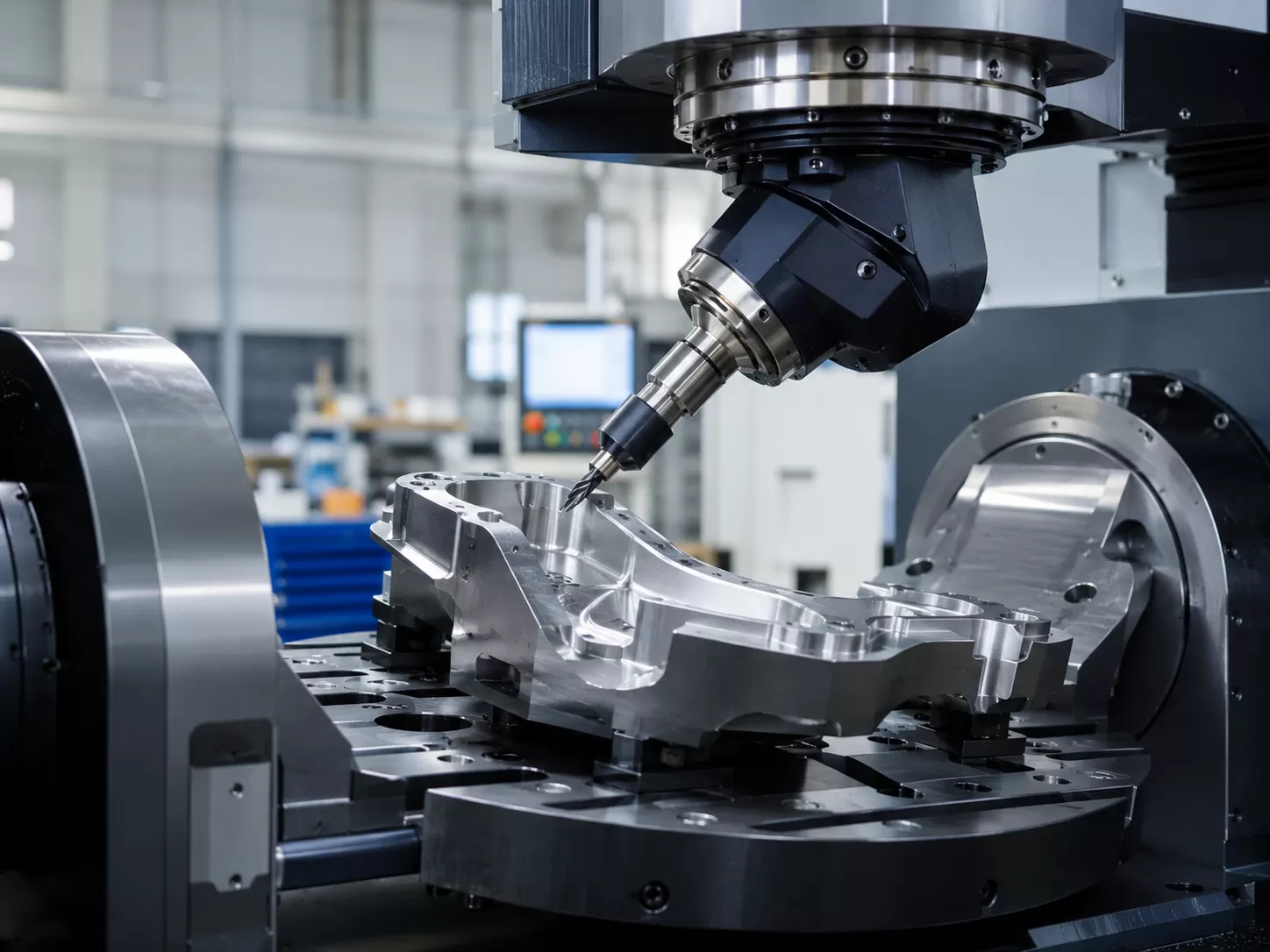
When you move to 5-axis machining, you aren't just buying a machine; you are investing in a fundamental shift in manufacturing efficiency. The return on investment is driven by specific, measurable gains in your production workflow.
The Financial Power of Single-Setup Processing
The most significant cost-saver is the ability to complete complex parts in one cycle. By eliminating the need to manually move or flip a workpiece, you slash labor costs and remove the risk of human alignment errors. This single-setup processing ensures that your high-precision parts maintain perfect registration from start to finish, which is a massive advantage when integrating with automated edge banding machines for downstream finishing.
Drastic Reductions in Setup and Cycle Times
Optimized 5-axis tool pathing allows the cutter to approach the material from the most efficient angle. This reduces the time spent on machine setup and accelerates overall production speed. Instead of stopping the machine to re-clamp a part for different angles, the rotary axes handle the orientation, keeping the spindle running and the parts moving through your shop.
Superior Surface Finish Quality
5-axis routing maintains continuous tangential contact between the tool and the workpiece. Because you can use shorter, more rigid cutting tools, you minimize harmonic vibration—the primary cause of chatter marks. This results in a superior surface finish that often eliminates the need for manual sanding or secondary refining, saving hours of post-processing labor.
Extended Tooling Life
Traditional 3-axis routing often relies on the zero-velocity tip of a ball-nose cutter, which wears out quickly due to friction and heat. A 5-axis system allows you to tilt the tool, shifting the cutting stress away from the fragile tip and onto the stronger, more durable side edges of the cutter. This simple shift in geometry significantly extends the life of your tooling, lowering your recurring consumable costs.
Is a 5-Axis CNC Router Worth the Investment?
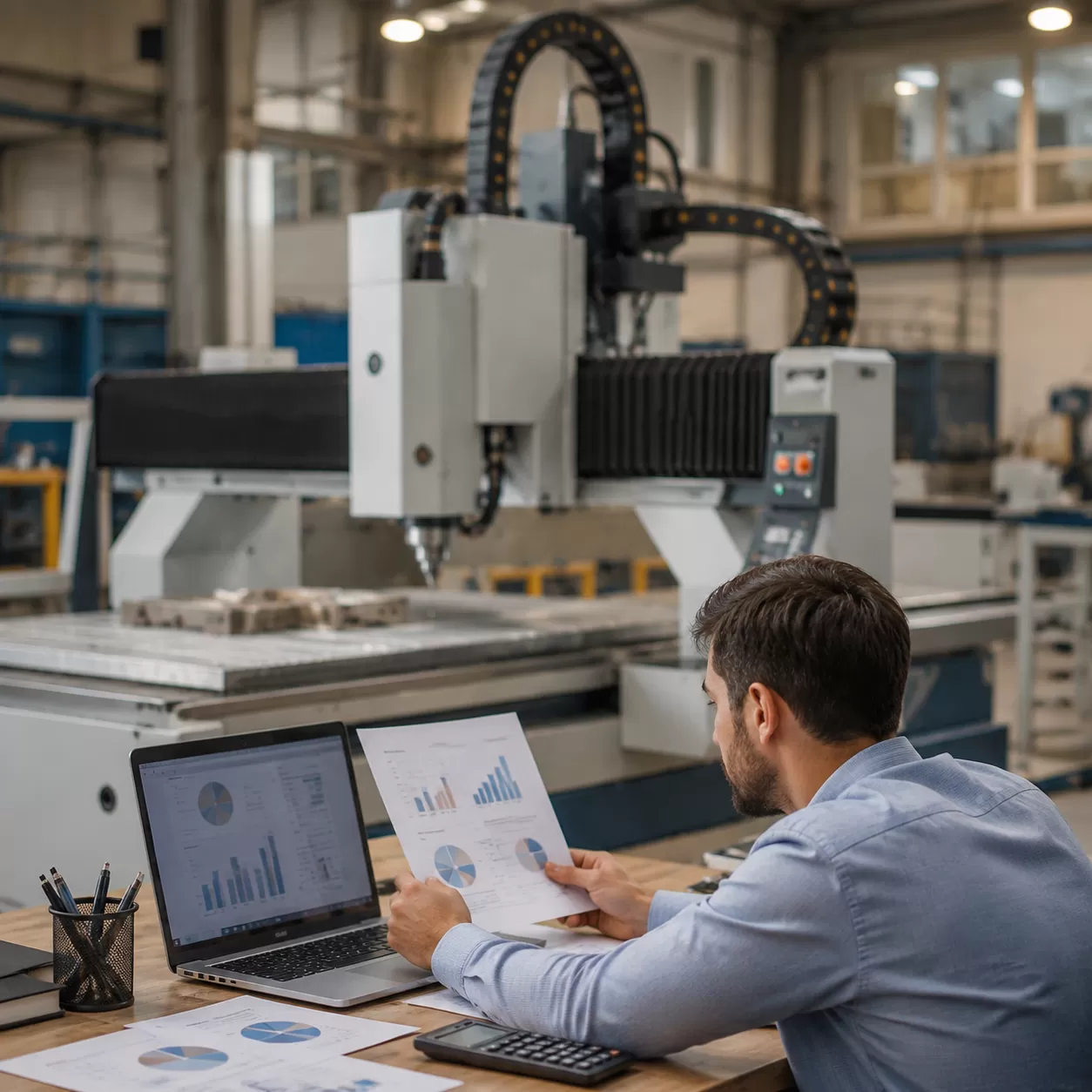
When evaluating whether a 5-axis CNC router is worth the investment, the upfront sticker price is only the starting point. To calculate the genuine total cost of ownership, you must look beyond the machine bed and account for the complete ecosystem required to run multi-axis machinery at peak manufacturing efficiency.
The Capital Investment Baseline
The initial capital investment for a 5-axis system varies wildly based on construction rigidity, spindle power, and accuracy tolerances.
| Machine Tier | Typical Price Range | Target Applications |
|---|---|---|
| Entry-Level / Light Industrial | $50,000 – $90,000 | Light plastics, foam prototyping, softwoods |
| Mid-Tier Industrial | $100,000 – $250,000 | Heavy-duty woodworking, composite edge trimming, non-ferrous metals |
| High-End Custom / Aerospace | $250,000+ | High-precision mold making, continuous simultaneous aerospace components |
The Software Stack Integration
A 5-axis machine is only as smart as the code driving it. Traditional 3-axis software cannot handle the complex collision avoidance and rotational calculations required for true multi-axis machining.
- CAM Software Licenses: Budgeting for advanced CNC software licenses (like Mastercam, Autodesk Fusion with Machining Extension, or Alphacam) adds thousands to your initial setup.
- Post-Processor Configuration: You will need custom post-processors tailored to your specific machine controller. Without a perfectly tuned post-processor, your machine will not translate code into fluid, safe toolpaths.
The Learning Curve and Labor Allocation
The biggest hidden cost is often human capital. Stepping up to 5-axis operations changes your labor dynamics completely:
- Advanced CAM Programmers: Finding or training a programmer who understands simultaneous 5-axis toolpaths is difficult and expensive.
- Operator Skill Requirements: Operators must understand complex work coordinate systems (G54.2 or TCPM) to prevent catastrophic machine crashes.
- Structural Training Times: Expect a 3 to 6-month learning curve before your shop floor achieves optimal production speed and machine utilization.
Shop Infrastructure Upgrades
A 5-axis router demands more physical and structural support than standard CNC router machines. Before delivery, your shop floor must adapt to several infrastructure realities:
Footprint & Enclosures: Due to the massive travel range of the articulated head, these machines require a much larger safety enclosure footprint than a standard 3-axis CNC router.
Dust Collection Adaptations: Capturing chips from a head that constantly changes angles requires specialized, flexible dust hoods or high-vacuum collection systems.
Advanced Calibration Routines: To maintain high precision, your team must perform regular kinematics calibration loops using precision spheres and probes to correct minor axis misalignments.
Do You Actually Need a 5-Axis Setup?
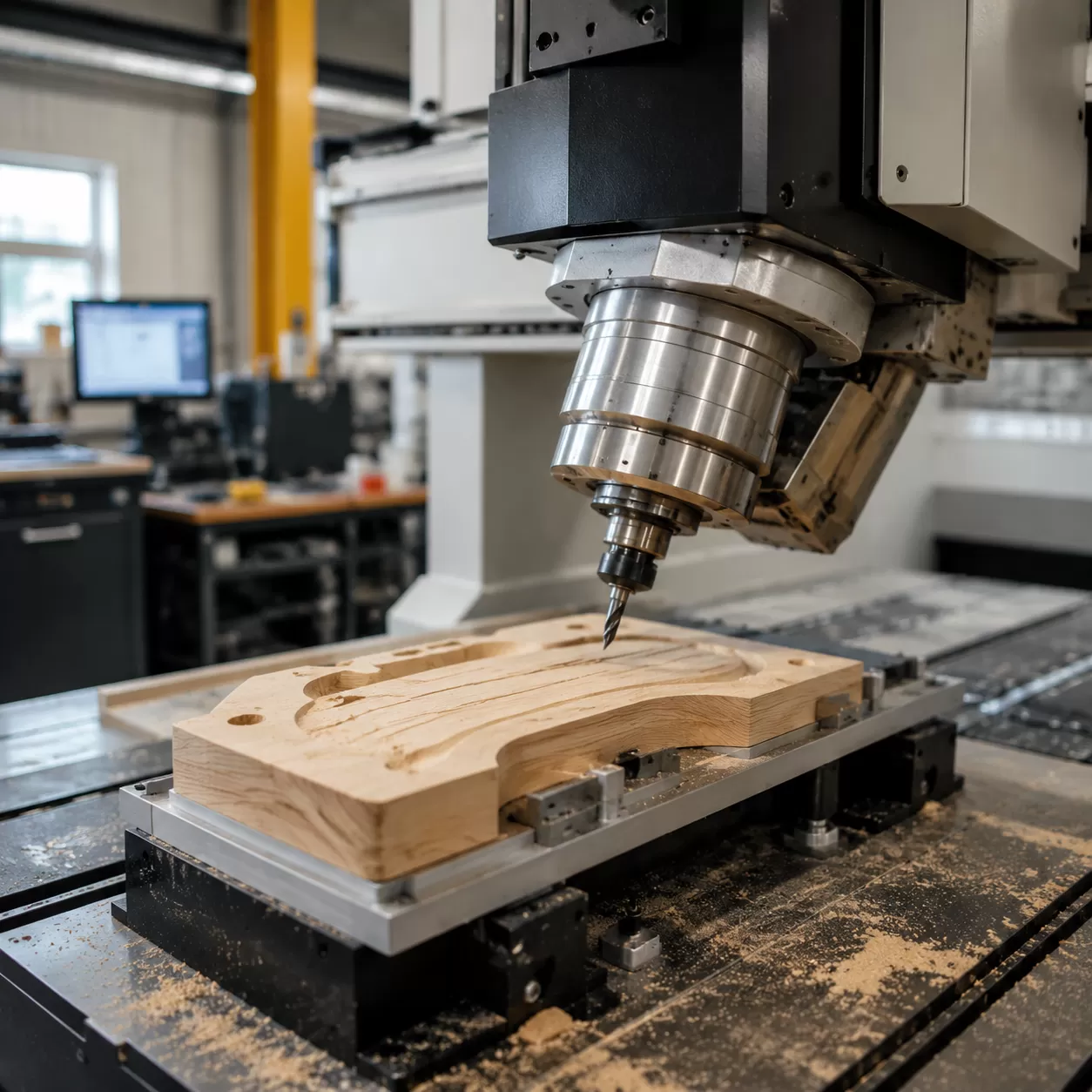
Deciding whether a 5-axis CNC router is worth the investment comes down to your specific production floor needs. It isn't just about having the flashiest tech; it’s about matching the machine’s capabilities to your daily output.
When a 5-Axis Investment is Highly Profitable
For shops pushing the boundaries of design, a 5-axis CNC router is a game-changer. The investment pays off rapidly in sectors where geometric complexity is a requirement, not an option:
- High-End Furniture: Carving organic shapes, complex joinery, and curved chair legs in a single pass.
- Mold Making & Prototyping: Creating deep cavities and undercuts for automotive or aerospace patterns.
- Composite Edge Trimming: Precise finishing of 3D-formed carbon fiber or plastic parts.
- High-Precision Sectors: Any application where manual repositioning would ruin the tight tolerances of a multi-sided part.
When a Premium 3-Axis Router is the Smarter Choice
More axes don't always mean more profit. If your business focuses on high-volume flat panel processing, cabinetry, or 2D signage, a high-performance 3-axis CNC wood router is often the superior financial move.
Pro Tip: A heavy-duty, industrial-grade 3-axis machine will consistently outperform an under-budgeted, flimsy 5-axis alternative. If you don't need to reach under or around a part, stick to the rigidity and speed of a premium 3-axis build to maximize your ROI.
Decision Matrix: 5-Axis vs. 3-Axis
| Feature | 5-Axis Router | 3-Axis Router |
|---|---|---|
| Primary Use | Complex 3D shapes & undercuts | Flat panels & 2.5D carving |
| Setup Time | Minimal (Single-setup) | Can be high (Multiple fixtures) |
| Operator Skill | Advanced CAM knowledge | Standard CNC training |
| Best For | Custom furniture, Molds, Aerospace | Kitchen cabinets, Doors, Signage |
Payback Timelines and Value Creation
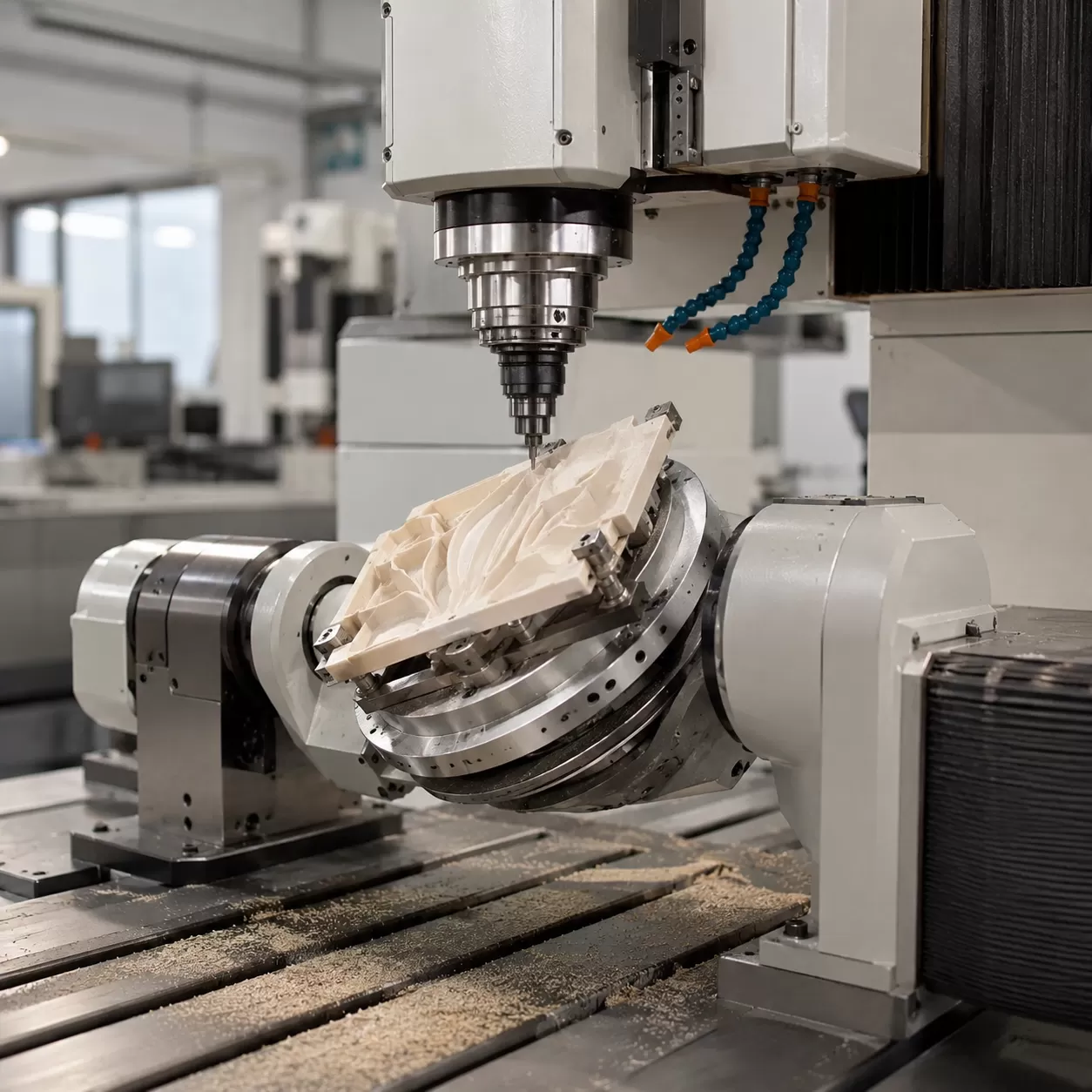
Investing in a 5-axis CNC router is a major financial decision, but calculating the return on investment (ROI) comes down to clear math, shop floor utilization, and long-term value creation.
Quantifying Your Choice (The Decision Scorecard)
To determine if a 5-axis setup makes sense for your business, you need to score your current and upcoming production parts. High geometric complexity demands a machine that can handle multiple angles simultaneously.
| Factor | High 5-Axis Potential | 3-Axis Priority |
|---|---|---|
| Machinable Faces | 4 to 5 sides requiring intricate detail | 1 to 2 flat or shallow faces |
| Batch Sizes | Small to mid-run complex shapes, high-mix | Massive runs of flat panel processing |
| Scrap Risks | High risk due to manual flip errors | Low risk, straightforward flat nesting |
| Edge Trimming | Curved, multi-axis composite/molded edges | Straight, square, or simple beveled edges |
The Hidden Value of Part Consolidation
One of the biggest financial drivers of multi-axis machining is part consolidation. Instead of designing a complex component as a four-piece assembly—which requires separate cutting, gluing, fastening, and manual alignment—a 5-axis system cuts the entire structure from a single, monolithic block.
- Lower Downstream Costs: Eliminates the labor-intensive assembly line phase.
- Structural Integrity: Monolithic components are significantly stronger than glued or fastened joints.
- Reduced Inventory: Fewer individual part numbers to track, store, and manage.
- Eliminated Tolerance Stack-up: Cutting everything in one go guarantees absolute high precision across all faces.
The 18-to-24 Month Payback Benchmark
For an industrial-grade 5-axis router, the realistic market payback benchmark is 18 to 24 months. To hit this window, your shop needs to maintain a consistent machine utilization rate of roughly 60% to 70%.
By compressing your machine setup time, boosting overall production speed, and eliminating the need for manual post-processing sanding, the machine essentially pays for itself through drastic labor savings and increased throughput. This shift transforms a high initial capital expense into a massive, long-term competitive advantage that allows you to win high-margin contracts your competitors simply cannot bid on.
Frequently Asked Questions (FAQs)
What is the difference between simultaneous 5-axis and 3+2 axis machining?
The main difference comes down to continuous movement versus positional locking:
- Simultaneous 5-Axis: The cutting tool moves across the X, Y, and Z axes while the table or spindle rotates along the A and B axes all at the same time. This is essential for sculpting complex shapes, deep organic curves, and highly detailed molds.
- 3+2 Axis (Positional): The machine uses the 4th and 5th axes to tilt and lock the workpiece into a fixed position. Once locked, the tool cuts using only the standard 3 axes. It eliminates the manual setup trap for multi-sided parts but cannot handle complex, continuous multi-surface carving.
Can I upgrade my existing 3-axis CNC router to a 5-axis system?
No, you cannot practically upgrade a standard 3-axis machine into a true 5-axis system. A 5-axis router requires a completely different, highly rigid structural frame, advanced servo drives, a specialized CNC controller, and a flexible tilting spindle head or rotary table. If you want to expand your capabilities without jumping straight to a massive 5-axis investment, a smart intermediate step is utilizing a high-performance 4-axis CNC router to handle rotary carvings and aggregate heads.
How long does it take for a shop floor to get fully up to speed on a new 5-axis machine?
Achieving profitable production speeds usually takes 3 to 6 months.
| Timeline | Milestone | Focus Area |
|---|---|---|
| Weeks 1–4 | Basic Operation | Machine calibration, basic 3+2 positioning, and safety protocols. |
| Months 2–3 | Advanced CAM | Multi-axis toolpath programming, collision avoidance simulation, and fixture design. |
| Months 4–6 | Full Optimization | Simultaneous 5-axis processing, fine-tuning surface finish quality, and maximizing tool life. |
What specific CAM software is required to run a 5-axis CNC router efficiently?
To generate clean, collision-free multi-axis toolpaths, you need high-end industrial CAM software. Standard entry-level design programs cannot handle the geometric complexity of 5-axis routing. The industry standards include:
- Mastercam (with multi-axis add-ons)
- Autodesk Fusion 360 / PowerMill
- Hypermill
- SolidCAM
Note: Your software stack must include a dedicated post-processor configured precisely for your machine's controller to prevent catastrophic machine crashes during complex shapes processing.