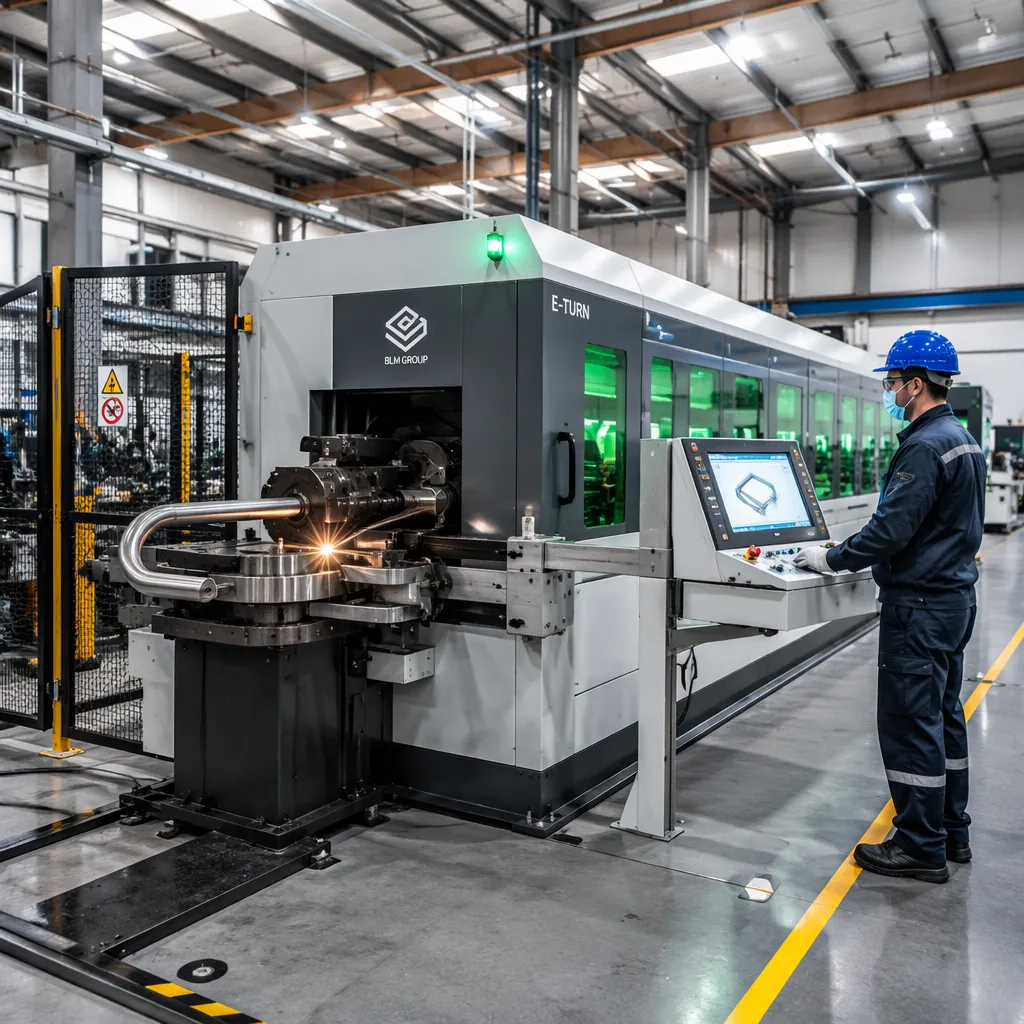
Overview
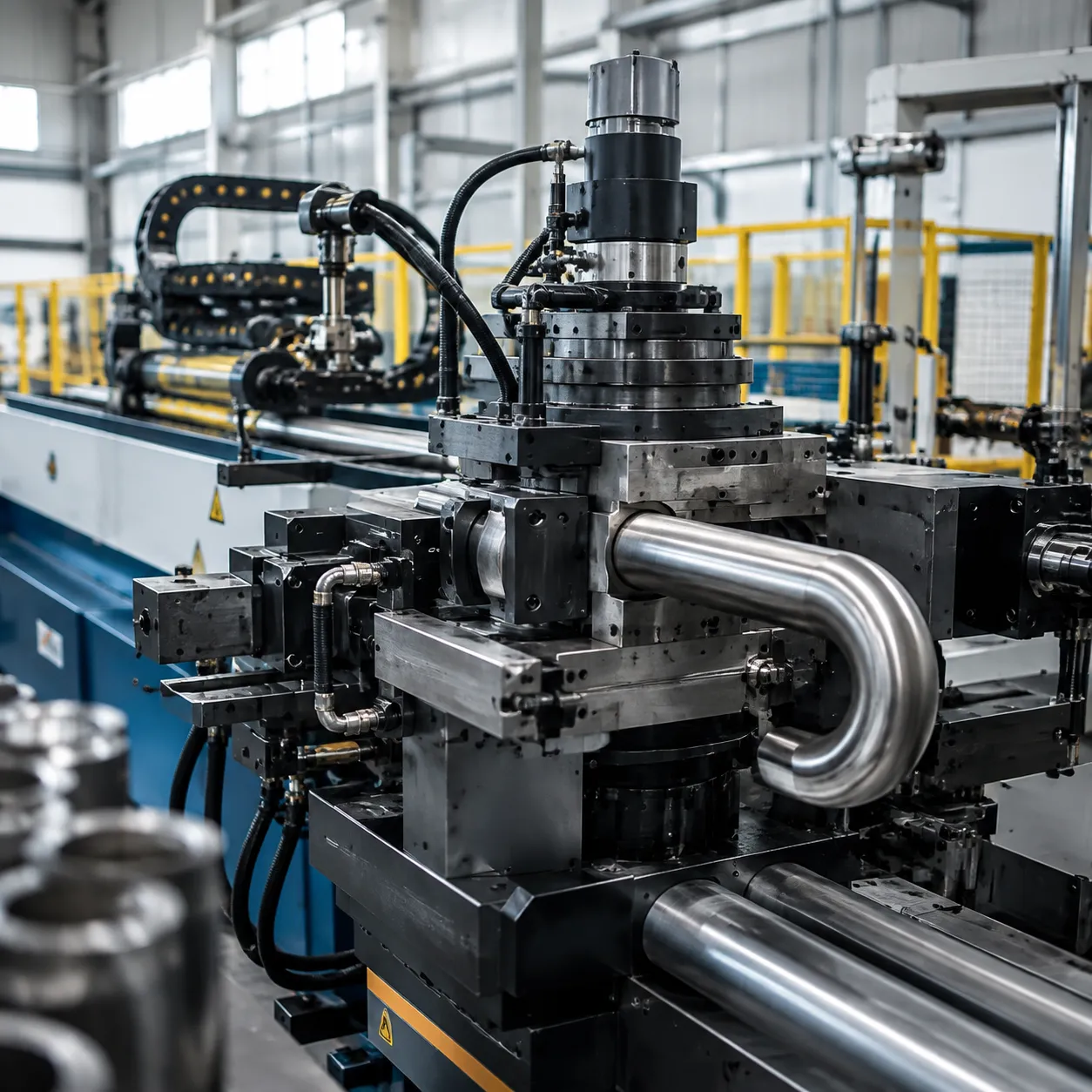
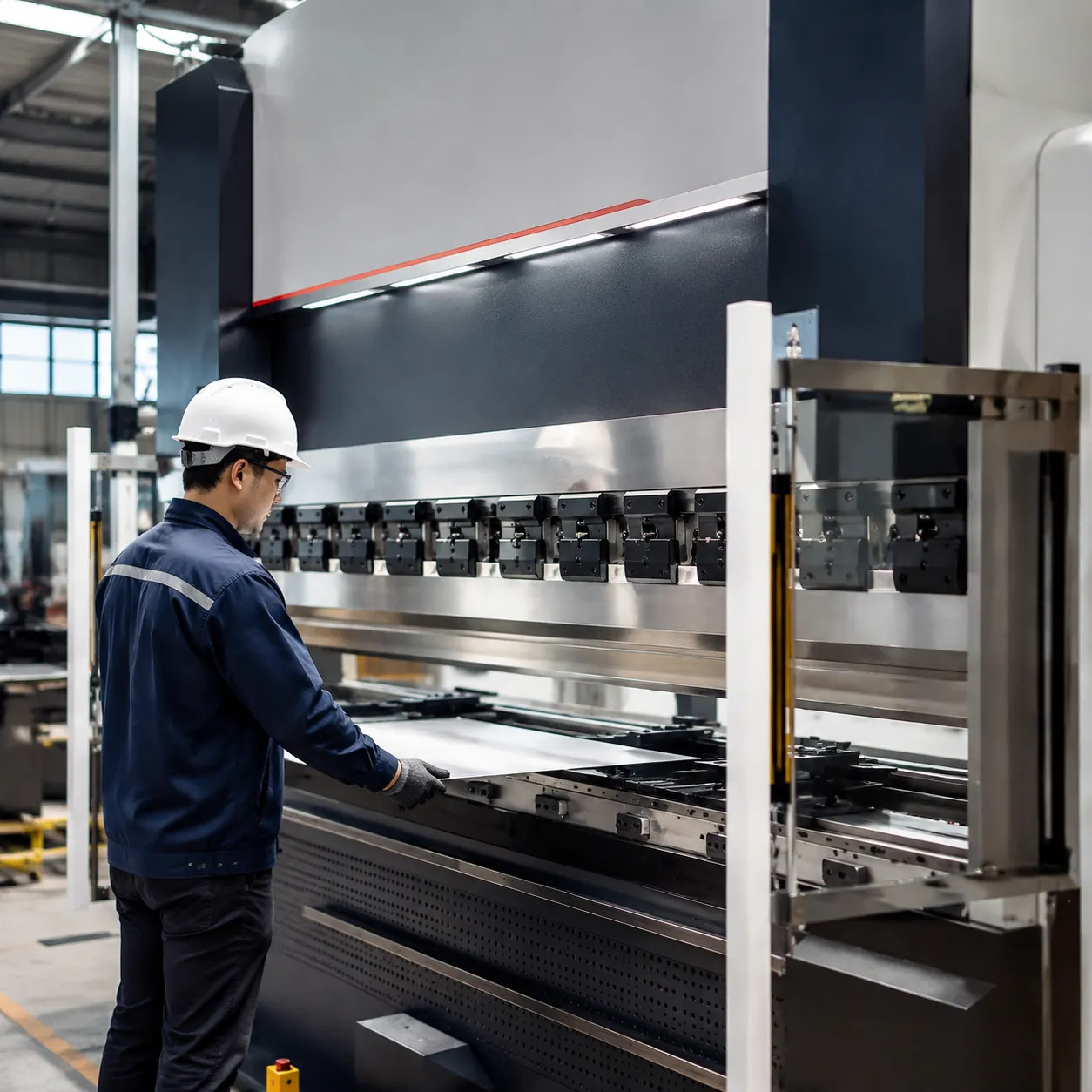
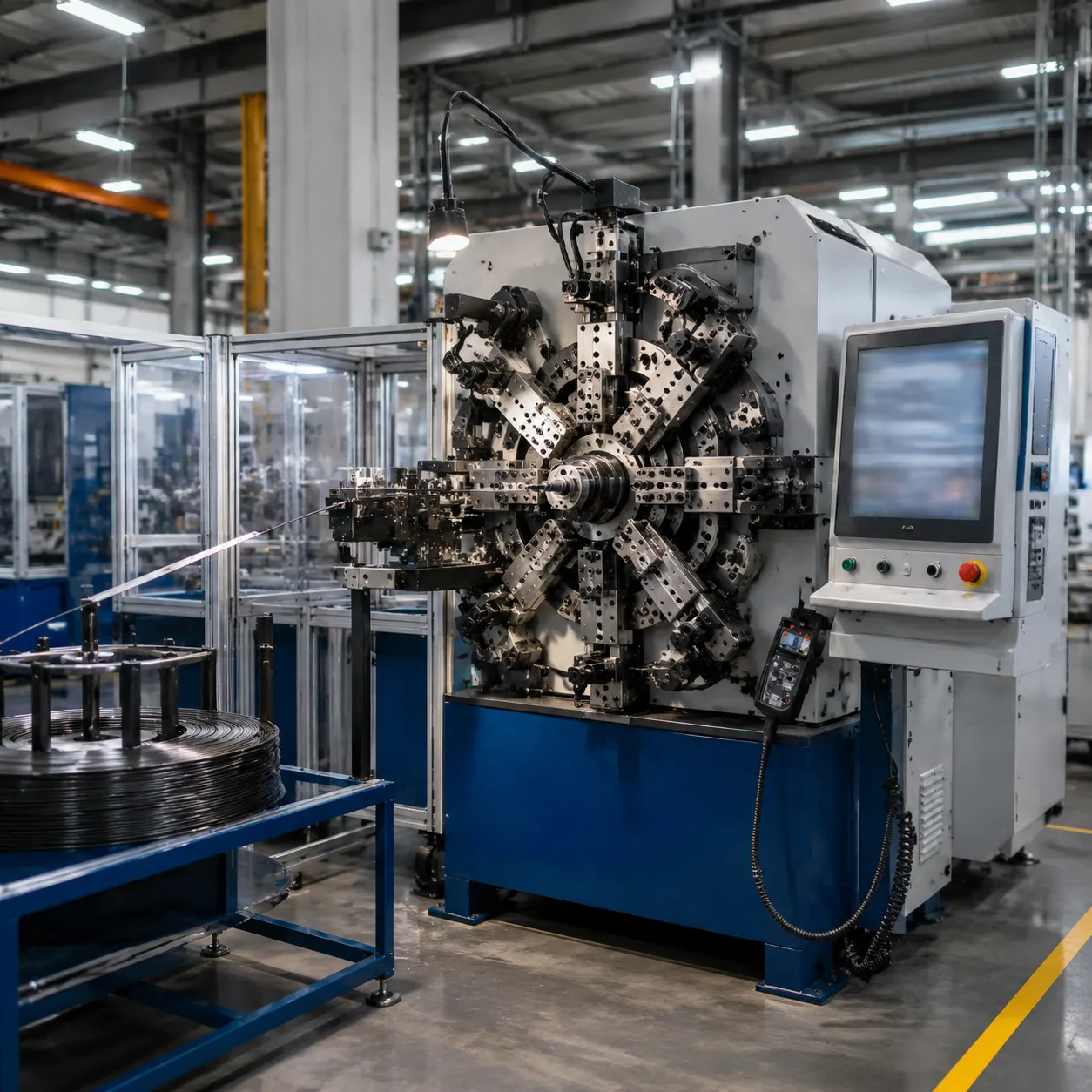
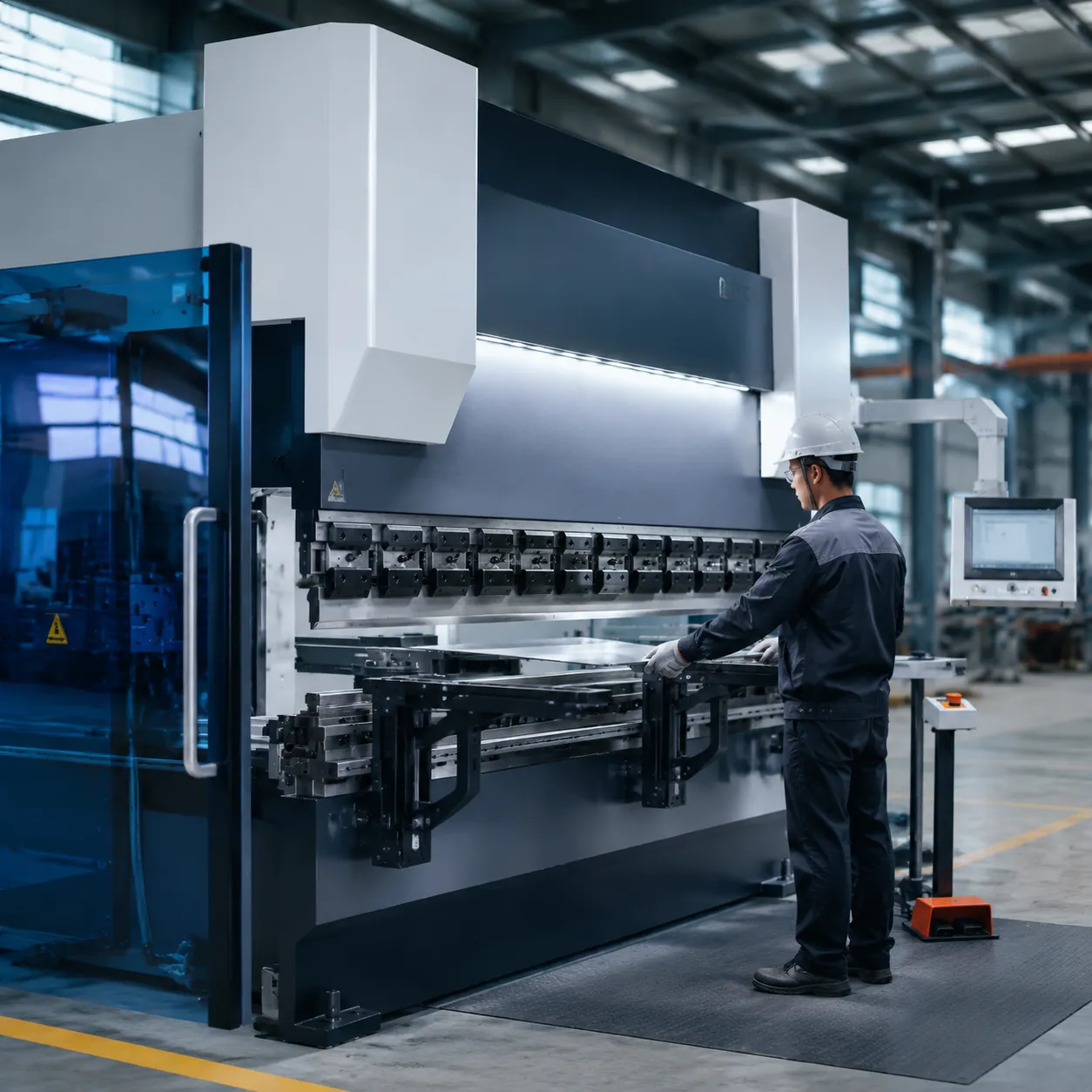
This aluminum cnc bending machine pairs 40T–1000T+ press-brake frames with a servo driven bender or electro-hydraulic drive, ±0.01 mm ram control, and direct DXF STEP import for aluminium profile bending and sheet blanks—holding tight tolerances on thermal break profiles, curtain-wall channels, and custom extrusions that need clean flanges without surface marks.
Technical Specifications & Performance Matrix
Machine Highlights
The aluminum cnc bending machine lineup is engineered to deliver high-precision forming for demanding US industrial applications. By integrating advanced automation with rigid mechanical design, these systems ensure structural integrity and tight tolerances across all production runs.
- Tonnage Range: Flexible configurations from 40T up to 1000T+ to handle both thin-gauge sheet metal and heavy structural extrusions.
- Ram Positioning Accuracy: Exceptional precision down to ±0.01 mm for reliable bending radius repeatability.
- Drive Options: Choose between full servo driven bender configurations for high energy efficiency or electro-hydraulic hybrid drives for maximum force.
- CNC Controller: Intuitive multi-axis interface with real-time 3D graphic visualization and collision detection.
Engineering Specification Table
Core capacities below guide configuration of each cnc aluminum bending machine for bed length, axis package, and CAD workflow—see also the broader CNC bending machine for sheet metal series when a general steel/aluminum mixed line is preferred.
| Engineering Parameter | Technical Specification |
|---|---|
| Bending Force | 40T – 1000T+ (Custom options available) |
| Max Bending Length | 1200 mm to 6000 mm+ |
| Axis Configuration | Fully programmable Y1, Y2, X, R, Z1, Z2 setup |
| Ram Accuracy | ±0.01 mm |
| Backgauge System | High-speed, multi-axis servo-driven backgauge |
| Springback Control System | Real-time automatic angle measurement and compensation |
| File Import Compatibility | Direct DXF STEP import via offline programming software (DXF/STEP/IGES) |
Precision Technology for Aluminum Fabrication
Aluminum presents specific challenges on the shop floor—it springs back unpredictably, varies across heat lots, and mars easily. The aluminum cnc bending machine line uses specialized control technologies to tackle these material quirks head-on, ensuring consistent parts without extra setup time.
Real-Time Springback Compensation
Different aluminum alloys and tempers exhibit varying yield strengths, leading to unpredictable springback. The automated springback compensation system calculates and adjusts for material behavior during the bend cycle.
- Laser Angle Measurement: In-process sensors measure the actual bend angle in real time and signal the controller to adjust ram depth on the fly, maintaining tight tolerances within ±0.1°.
- Dynamic Crowning: Advanced hydraulic or mechanical crowning systems dynamically compensate for bed deflection under load, guaranteeing uniform angles along the entire bend length.
- Alloy Adaptability: Automatically compensates for hardness variations in common alloys (such as 5052-H32 or 6061-T6) without requiring manual sample testing.
Non-Marking Tooling & Surface Protection
Anodized, architectural, and powder-coated aluminum profiles demand scratch-free handling to prevent expensive scrap and rework.
- Polyurethane Die Inserts: Synthetic die liners cushion the work surface during forming to eliminate tool marks on cosmetic faces.
- Polished Tooling: Micro-finished, specially coated punch-and-die sets prevent aluminum pickup and galling on high-friction bend radii.
- Protective Film Compatibility: Optimized tool geometry forms tight radii cleanly without tearing protective surface tape.
Multi-Axis Backgauge Control
Handling asymmetrical extrusions, thin-gauge sheet metal, and complex profile shapes requires high-precision part positioning. Servo driven bender units utilize flexible multi-axis backgauge configurations.
| Axis | Operational Function | Typical Application |
|---|---|---|
| Y1 / Y2 | Independent left/right cylinder control (±0.01 mm repeatability) | Tapered bends and asymmetrical profile depth |
| X / R | Servo-driven depth and height adjustments | Variable flange heights and multi-stage bends |
| Z1 / Z2 | Automatic finger-stop lateral movement | Multi-station setups and stepped extrusions |
DXF STEP Import & Offline Programming
Setup bottlenecks drop when design files connect directly to the CNC controller via integrated 3D CAD/CAM software.
- Direct File Transfer: Native DXF STEP import brings 3D models straight into the controller without manual data entry.
- Automatic Bend Sequencing: The software automatically calculates flat length dimensions, selects optimal tooling, and sets the bend order.
- 3D Collision Detection: Full graphical simulation identifies potential tool or frame interference before running a single production piece.
Aluminum Profiles & Applications for Aluminum CNC Bending Machines
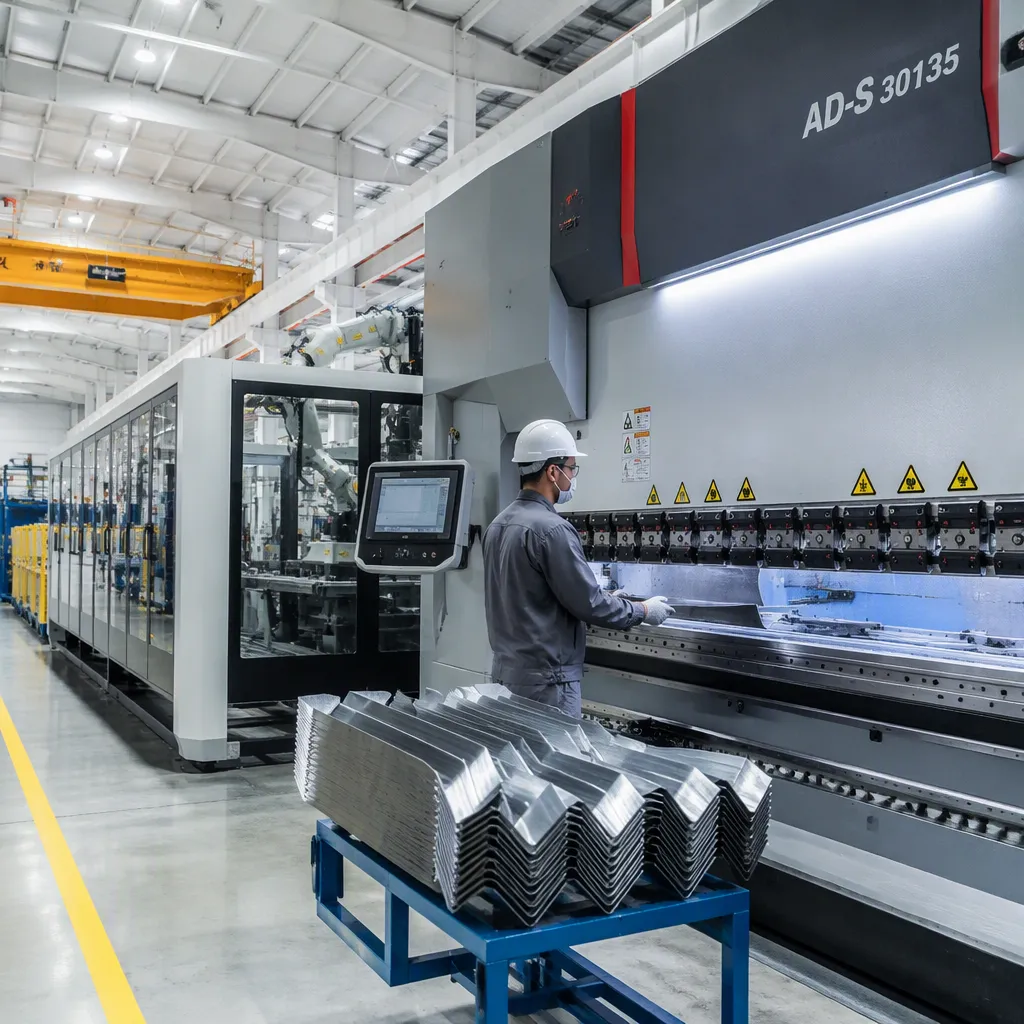
Each aluminum cnc bending machine processes a wide range of aluminum alloys and profile geometries without cracking, surface scoring, or structural deformation—supporting aluminum alloy fabrication programs that mix sheet blanks with complex extrusions.
Compatible Aluminum Alloys & Extrusions
The cnc aluminum bending machine handles both sheet metal stock and complex extrusions across various temper conditions:
- 1000 & 3000 Series: Highly ductile grades ideal for intricate architectural trims, lightboxes, and deep-drawn enclosures.
- 5000 Series (5052 / 5083): Marine-grade alloys requiring precise springback control during structural forming.
- 6000 Series (6061-T6 / 6063-T5): High-strength structural extrusions and aircraft-grade aluminum that require adaptive pressure curves.
- Complex Profile Geometries: Hollow profiles, thermal break profiles, curtain wall channels, non-symmetric extrusions, and heavy structural beams suited to controlled flange work and selected metal beam bending tasks on press-brake tooling.
Key Industry Applications
| Industry Sector | Typical Components Manufactured | Performance Advantage |
|---|---|---|
| Architectural & Building | Curtain walls, facade panels, architectural window frames, and structural extrusions for window frame processing | Zero surface marking on anodized or painted finishes |
| Signage & Display | Picture frames, mirror frames, and lightbox frame bending profiles with intricate geometries | Repeatable flange heights across multi-station setups |
| Automotive & EV | Structural frame rails, bumper beams, and EV battery enclosures | Tight tolerances and high repeatability across production runs |
| Electronics & Industrial | Electronics server chassis, heat sinks, and custom enclosures | Rapid multi-axis backgauge positioning for complex bends |
| Aerospace & Transit | Aerospace ductwork fabrication, interior trim, and curved structural ribs requiring controlled 3D curve bending | Precise springback compensation on high-strength alloys |
Custom tooling setups match alloy temper and geometry so throughput stays high and scrap stays low—read how a CNC bending machine works when training new operators on axis motion and bend sequencing.
Custom OEM Builds for Aluminum CNC Bending Machines
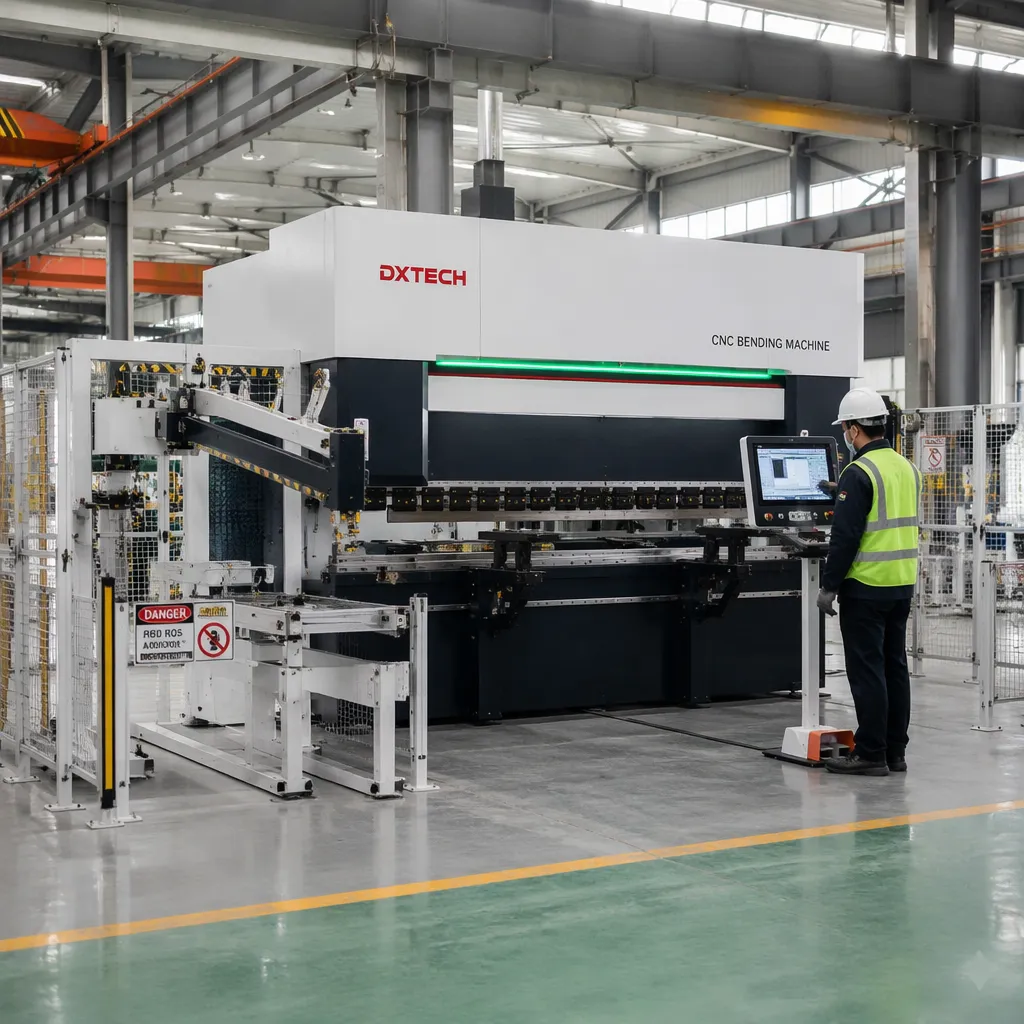
Tailored Bending Solutions
Every aluminum CNC bending machine can be built to match the production footprint. Off-the-shelf equipment often fails when processing complex extrusions or deep channels. Frame geometry and hydraulic systems are engineered around specific parts, ensuring maximum clearance and structural stiffness for high-precision aluminium profile bending.
- Custom Throat Depth & Daylight Height: Expand frame clearance to handle oversized structural extrusion bending and deep-flange profiles without material interference.
- Extended Stroke Lengths: Tailored cylinder travel engineered specifically for deep-draw parts and complex 3D curve bending.
- Multi-Radius Tooling: Dedicated, multi-radius tooling packages engineered for custom thermal break profiles, hollow extrusions, and sensitive window frame profiles.
Power Standards & Robotic Cell Integration
Integrating a new cnc aluminum bending machine into an existing facility requires reliable power and seamless workflow automation. Machines ship configured for the local grid and prepared for automated production lines.
- US Industrial Voltage Setup: Pre-wired for standard 480V 3-Phase US industrial power, with options for 220V or 380V setups to match the facility.
- Robotic I/O Interfacing: Open-architecture communication protocols designed for quick connection to industrial robot arms for automated loading and unloading.
- Smart Cell Synchronization: Plug-and-play capability with automatic panel benders, material conveyors, and downstream quality checks.
Quality Assurance and Compliance Standards
Every aluminum cnc bending machine is built to deliver tight tolerances and long-term reliability under continuous production demands. From raw steel selection to final factory inspection, quality protocols eliminate operational downtime and maintain maximum frame stability.
Heavy-Duty Frame Rigidity and Factory Testing
Structural flex compromises precision. Machine frames absorb high tonnage forces while holding exact geometric tolerances across full-length bends.
- Stress-Relieved Steel Side Frames: Heavy-duty welded side frames undergo thermal stress relief to prevent frame distortion over time, maintaining machine alignment during heavy structural extrusion bending.
- Laser Interferometer Calibration: Every aluminum cnc bending machine undergoes linear and angular alignment checks using high-precision laser interferometers, ensuring precise positioning repeatability.
- 24-Hour Endurance Run: Prior to shipment, each unit runs through a continuous 24-hour full-cycle endurance test under dynamic load conditions to verify hydraulic stability, electrical load capacity, and controller performance.
Global Safety and Certification Standards
Production facilities and machine architectures adhere to strict global manufacturing standards, ensuring complete workplace safety and seamless integration into US fabrication shops.
| Standard / Protocol | Engineering Feature | Operational Advantage |
|---|---|---|
| ISO9001 Certification | Standardized quality management process | Consistent build quality and repeatable component performance |
| CE Safety Compliance | Optical light curtains and dual interlocks | Instant beam stopping during operator zone breaches |
| Emergency Protocols | Multi-point emergency stops | Fast-acting circuit cutoffs to protect personnel and tooling |
Technical Support & Service for Aluminum CNC Bending Machines
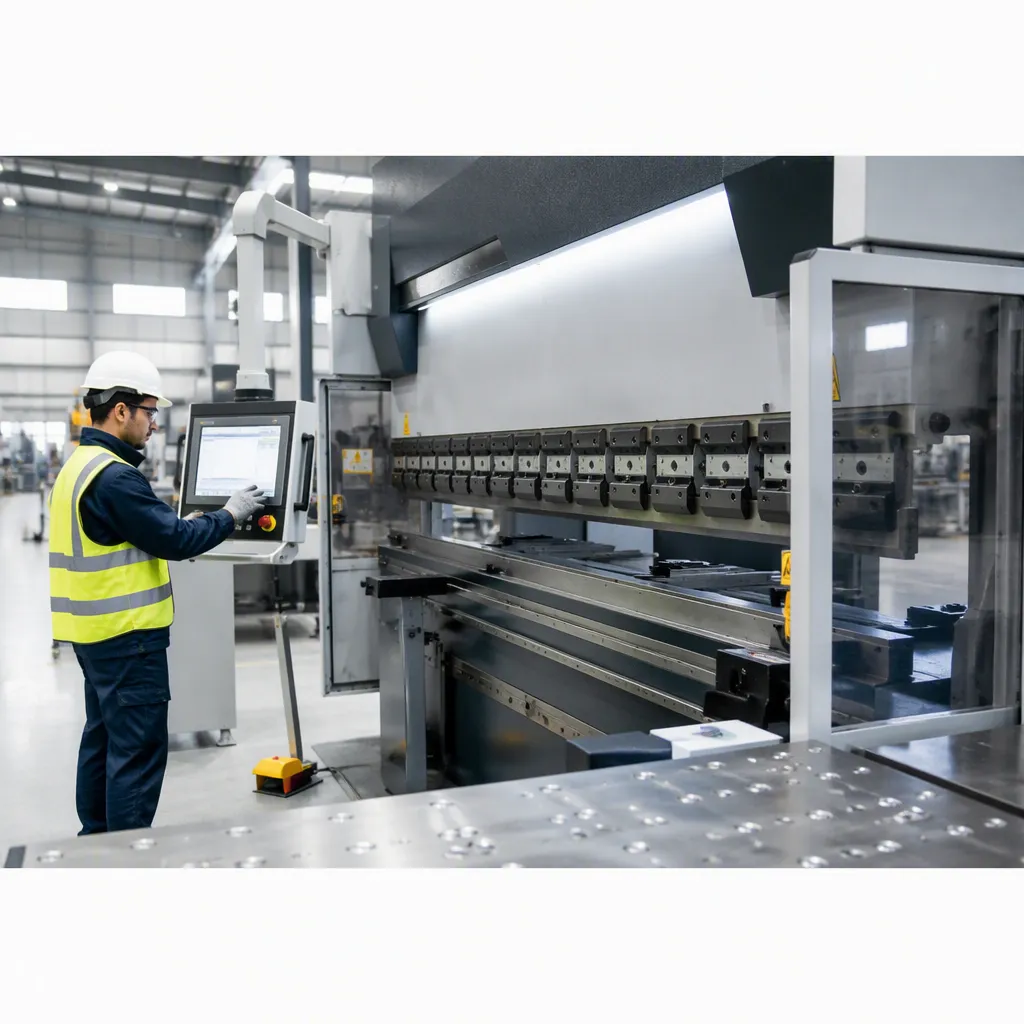
Every aluminum cnc bending machine ships with complete lifecycle support to ensure zero unplanned downtime and maximum precision on the shop floor. From shipping to daily operations, field engineering covers the full rollout.
Delivery & On-Site Installation Support
Global logistics run end-to-end so equipment arrives ready for high-tolerance production.
- Export-Grade Protection: Moisture-proof, anti-vibration, heavy-duty crating for ocean and air freight.
- On-Site Assembly & Leveling: Certified field engineers manage machine positioning, anchor setting, and structural alignment.
- Precision Calibration: Real-time laser interferometer testing to verify ram positioning accuracy and backgauge alignment on site.
Training & Lifetime Technical Service
Support continues long after setup. Operator teams receive the technical skills and instant support required to run complex aluminium profile bending tasks efficiently.
- Operator Training: Hands-on training covering 3D controller setup, tool changeovers, and bend sequence optimization.
- Remote Diagnostics: Direct online troubleshooting for controller parameters, DXF/STEP file imports, and software updates.
- Lifetime Spare Parts Supply: Fast-track delivery of genuine OEM components to keep the servo driven bender running at peak performance.
Lifecycle Service Matrix
| Service Phase | Scope & Key Deliverables | Operational Advantage |
|---|---|---|
| Logistics & Setup | Export packaging, factory leveling, operational calibration | Plug-and-play machine readiness |
| Team Training | Controller setup, maintenance protocols, safety procedures | Rapid operator onboarding |
| Ongoing Support | 24/7 remote diagnostics, dedicated spare parts inventory | Near-zero downtime risk |
Ordering Information for Aluminum CNC Bending Machines
As a CNC machine manufacturer and supplier, ProMach supports single-unit fab shops and multi-machine OEM rollouts for the aluminum cnc bending machine line with clear MOQ and lead-time windows.
| Order Item | Standard Option | Notes |
|---|---|---|
| MOQ | 1 unit | Prototype cells and production lines |
| Tonnage / Bed | 40T–1000T+ · 1200–6000 mm+ | Quote against part length and alloy temper |
| Drive Package | Servo or electro-hydraulic hybrid | Match energy vs. peak force needs |
| Axis Package | Y1/Y2/X/R + Z1/Z2 options | Asymmetric extrusions and multi-station dies |
| Lead Time | Typically 30–60 days after config lock | OEM frames and custom tooling may extend |
| Compact Alternative | Small CNC bending machine | When floor space favors a 25–40T cell |
Request a quote with alloy temper, flange drawing, target angle tolerance, and preferred voltage so the configuration matches the first production lot.
Aluminum CNC Bending Machine FAQs
How Automated Springback Compensation Works
Each aluminum cnc bending machine model can be equipped with real-time optical or mechanical angle-measuring systems. Soft alloys (like 1100 or 3000 series) bend easily, whereas hardened alloys (like 6061-T6) exhibit severe springback. The controller measures the live bend angle during deformation, automatically recalculates springback parameters, and adjusts ram penetration on the fly to hit tight tolerances on the very first try.
Non-Marking Tooling Options
To prevent surface scratches on anodized, polished, or powder-coated aluminium profile bending parts, specialized protection tooling is available:
| Tooling Option | System Description | Recommended Application |
|---|---|---|
| Polyurethane Die Inserts | Replaceable synthetic lower die pads | Delicate sheets & polished aluminum extrusions |
| Non-Marking Dies | Specially contoured, polished radius tooling | Anodized architectural frames & trim |
| Protective Buffing Film | Heavy-duty non-marking film layers | High-gloss painted or clear-coated panels |
Direct CAD File Import Support
CNC controllers feature built-in offline software supporting direct DXF STEP import alongside IGES files. 3D models upload via USB or local network. The controller automatically generates the optimal bending sequence, calculates flat length development, and simulates 3D collision detection before cycling the machine.
Tonnage Ranges & Configurations
Machine setups cover everything from lightweight sheet metal up to heavy structural extrusions:
Tonnage Capacity: Standard models range from 40T up to 1000T+.
Drive System: Choose between an all-electric servo driven bender for fast, clean operations or electro-hydraulic hybrid systems for maximum power.
Backgauge Setup: Advanced multi-axis backgauges (Y1, Y2, X, R, Z1, Z2) manage asymmetric profiles and intricate 3D curve bending.
Custom Framework: Scalable daylight heights, deep throat depths, and custom multi-radius tooling engineered for complex extrusions.
Press Brake vs 3 Roller, Draw Bending, Stretch Bending & Arc Forming
This page covers a CNC press-brake style aluminum cnc bending machine for flange bends, channel work, and selected profile forming with punch-and-die tooling. A dedicated 3 roller bender is the better fit for continuous large-radius arc forming of long extrusions. A rotary draw bending machine suits tight-radius tube/profile paths, while stretch bending is preferred when large structural arcs must hold section shape under tension. Shops that need mixed capabilities often keep this press-brake cell for flanges and brackets, then quote roller or stretch cells separately for full-length arcs—share drawings so the process match is clear before PO.