Can a CNC Wood Router Cut Steel?
You have a solid CNC wood router in your shop, and you are wondering if it can handle a piece of steel. It is a common question, especially when you want to expand your shop's capabilities. The short answer is no—not safely, and not without risking serious damage to your machine.
To understand why, we have to look at how wood and steel differ on a microscopic level.
Cutting Physics
Wood is a fibrous, relatively soft material. When your router bit spins, it easily shears through these natural fibers, producing sawdust and light chips.
Steel is completely different. It is a ferrous metal with a dense, rigid crystalline structure. Instead of shearing away easily, machining mild steel requires your cutting tool to physically plow through a tough molecular lattice to force the metal to yield and form a chip.
Cutting Forces
Because of this structural difference, the cutting forces required to process steel are exponentially higher than those needed for wood.
- Wood Routing: Relies on high speeds to cleanly slice through soft fibers with minimal resistance.
- Steel Machining: Demands immense mechanical force to push the tool through the material.
A standard gantry-style wood router simply lacks the structural design to generate or withstand these massive forces without flexing, bending, or breaking the tool.
The Heat Factor
The way heat behaves during the cutting process is the final dealbreaker.
| Material | Where the Heat Goes | Impact on the Tool |
|---|---|---|
| Wood | Most heat escapes into the air or carries away in the wood chips. | The router bit stays relatively cool. |
| Steel | High friction concentrates intense thermal energy directly at the cutting edge. | The tool absorbs the heat, quickly dulls, and can literally melt or snap. |
Without massive industrial rigidity and specific torque adjustments, trying to force a wood router to cut steel results in friction, extreme heat, and catastrophic tool failure.
Can a CNC Wood Router Cut Steel?
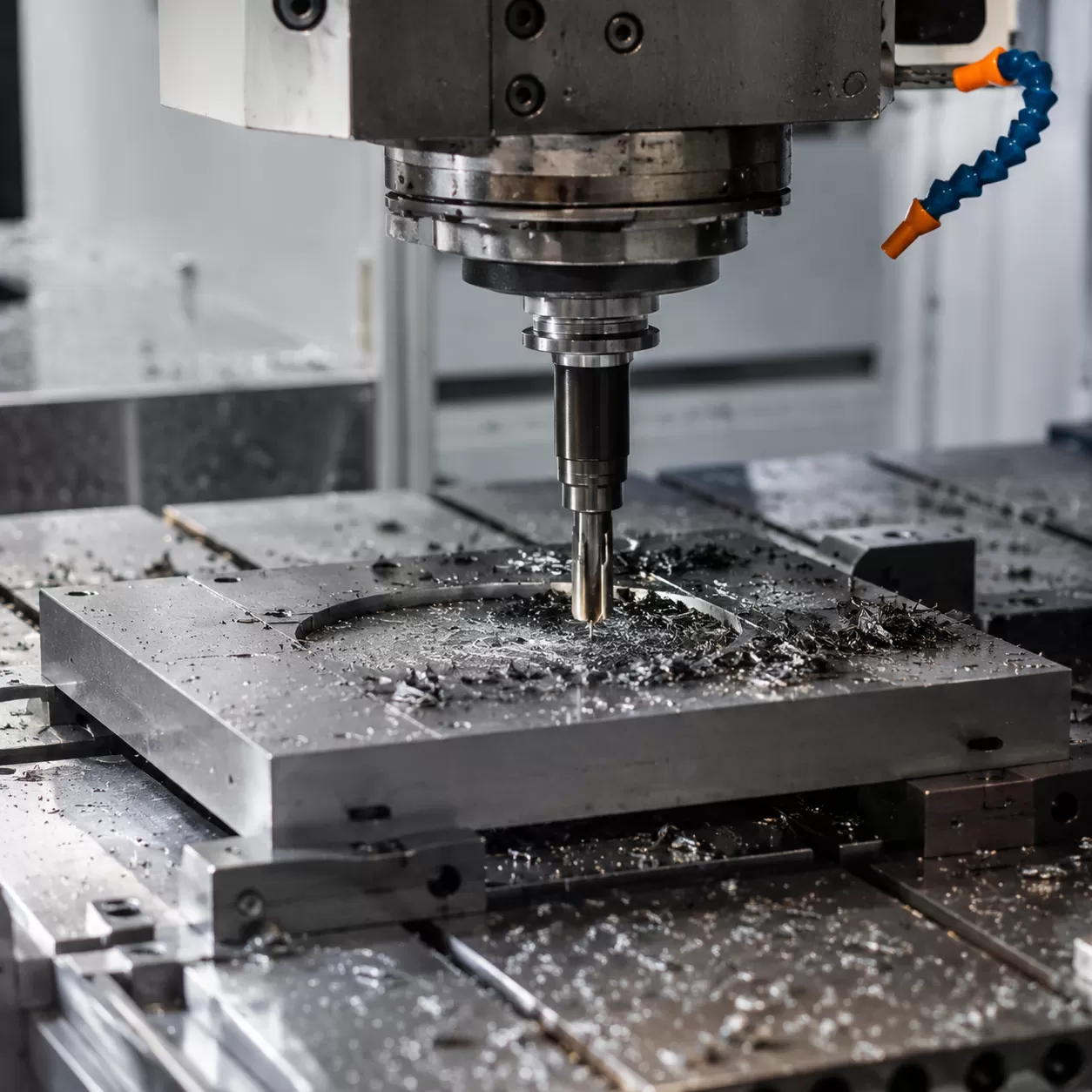
When operators ask, "can a cnc wood router cut steel," the answer always comes down to the machine's physical limits. Pushing a standard router into ferrous metals introduces extreme mechanical stress. Here are the four massive roadblocks you will face.
1. Machine Rigidity and Frame Stiffness
Wood routers are engineered for rapid movements through softer materials, not for fighting the dense crystalline structure of steel.
- Gantry Flex: Standard gantry-style frames lack the heavy cast-iron mass needed to resist heavy cutting forces. When the bit hits steel, the entire gantry attempts to bend backward.
- Tool Chatter: This lack of frame stiffness results in violent, high-frequency vibrations known as tool chatter. Chatter does not just leave ugly gouges on your material finish; it systematically destroys your spindle bearings.
2. Spindle Speed RPM Limitations
The spindles we install on our routers are built to scream through wood, plastics, and softer metals. Steel requires an entirely different approach to rotational force.
- The High-Speed Problem: Wood routing relies on high spindle speed RPM, typically running between 10,000 and 24,000 RPM.
- Burning the Bit: Steel demands the exact opposite—very low RPMs combined with massive, low-end torque. Pushing a high-speed router bit into mild steel will instantly overheat and destroy the tool.
3. Deflection and Accuracy Drop
Even high-quality machines like our heavy-duty 1325 CNC wood router are optimized for specific material resistance profiles.
- Drive System Strain: Steel pushes back hard. Under this heavy load, linear rails, ball screws, and belt drives will physically deflect.
- Ruined Tolerances: The moment your drive systems flex under the load, your dimensional accuracy vanishes, leading to scrapped parts.
4. Chip Evacuation and Cooling Failures
Managing the waste material and thermal energy is arguably the most dangerous hurdle when cutting steel.
- The Threat of Recutting: Steel chips hold intense heat. If you lack the proper evacuation systems to immediately clear the cutting path, your bit will grind into the chips it just created.
- Catastrophic Tool Failure: Recutting hot steel chips transfers immense heat directly back into the carbide. Without industrial cooling setups, the bit will suffer thermal shock and shatter mid-cut.
What Can You Cut?
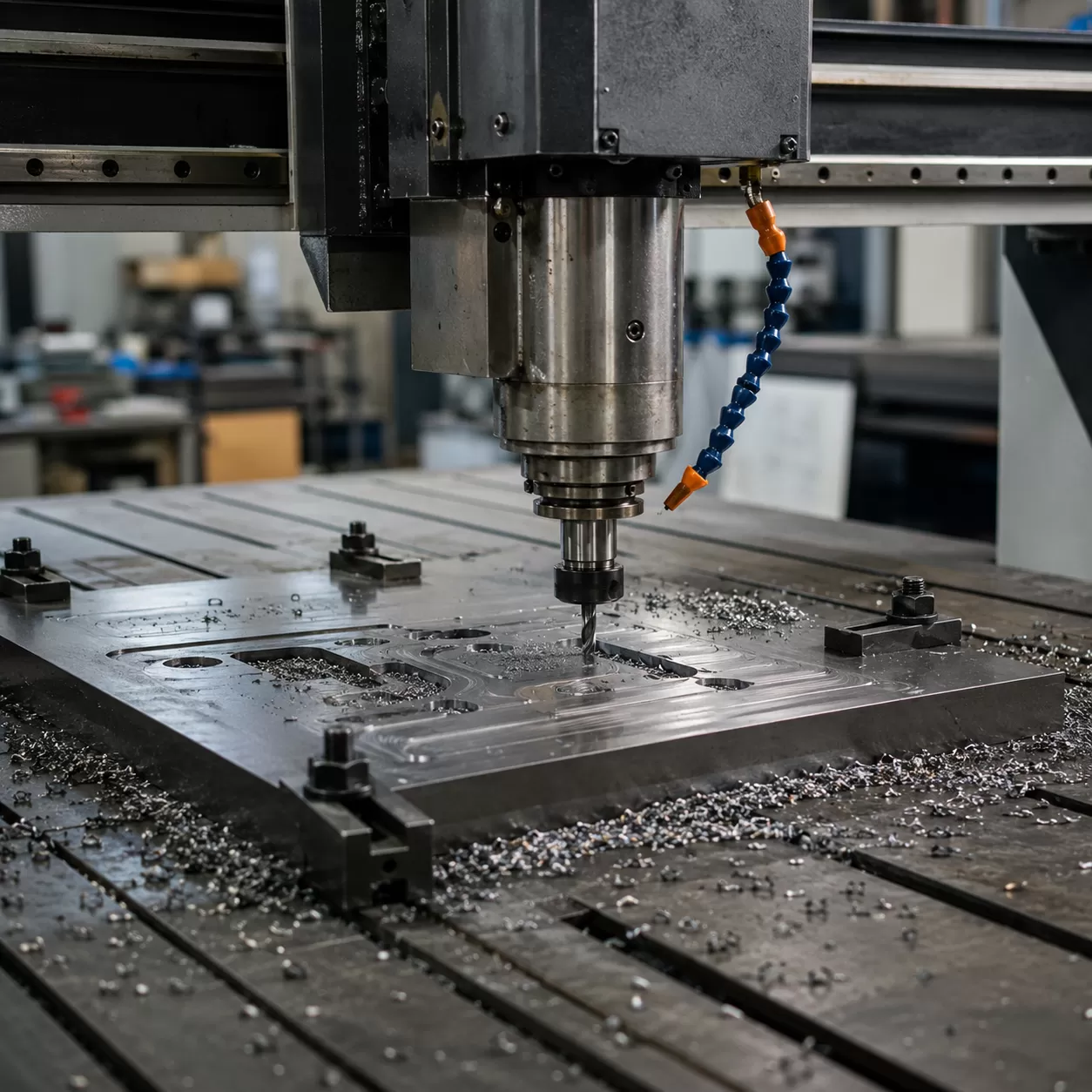
When you look at a standard cnc wood router, the machine is designed to fly through materials that slice easily. But if you want to push past wood and plastics, you have to understand the hard line between non-ferrous and ferrous metals. Can a CNC wood router cut steel? The short answer is that softer metals are a green light with the right setup, while harder metals push wood routers past their breaking point.
The Sweet Spot (Non-Ferrous Metals)
Non-ferrous metals do not contain iron, making them much softer and far more forgiving on a high-quality gantry system. On our ProMach CNC router, these materials represent the ultimate sweet spot for shops looking to expand their capabilities beyond woodworking:
- Aluminum: The most common metal cut on routers. With proper feeds and speeds, it chips cleanly without destroying tool bits.
- Brass: Highly machinable, excellent for sign-making, plaques, and custom hardware.
- Copper: Soft but gummy. It requires careful chip clearance but runs beautifully on a rigid frame.
For shops looking to handle these materials regularly, stepping up to a dedicated metal cnc router ensures you have the structural integrity to hold tight tolerances without risking machine damage.
The Danger Zone (Ferrous Metals)
Ferrous metals contain iron, which changes the physics of machining entirely. If you are asking whether a standard wood router can cut steel, you are stepping into a territory that can quickly destroy your tooling and warp your machine frame.
- Mild Steel: It is technically possible to perform incredibly shallow, slow engraving passes on mild steel using a highly upgraded, ultra-rigid wood router. However, it is highly inefficient and risks severe tool chatter.
- Stainless Steel: A hard "No" for wood routers. Stainless steel work-hardens instantly. If your tool rubs for even a second instead of slicing, the metal gets harder, the heat spikes, and your carbide bit snaps.
- Titanium: Completely off-limits. The extreme cutting forces and heat generation require an industrial milling machine, not a gantry-style router.
The Step-by-Step Guide to Safely Cutting Steel on a High-Quality Router
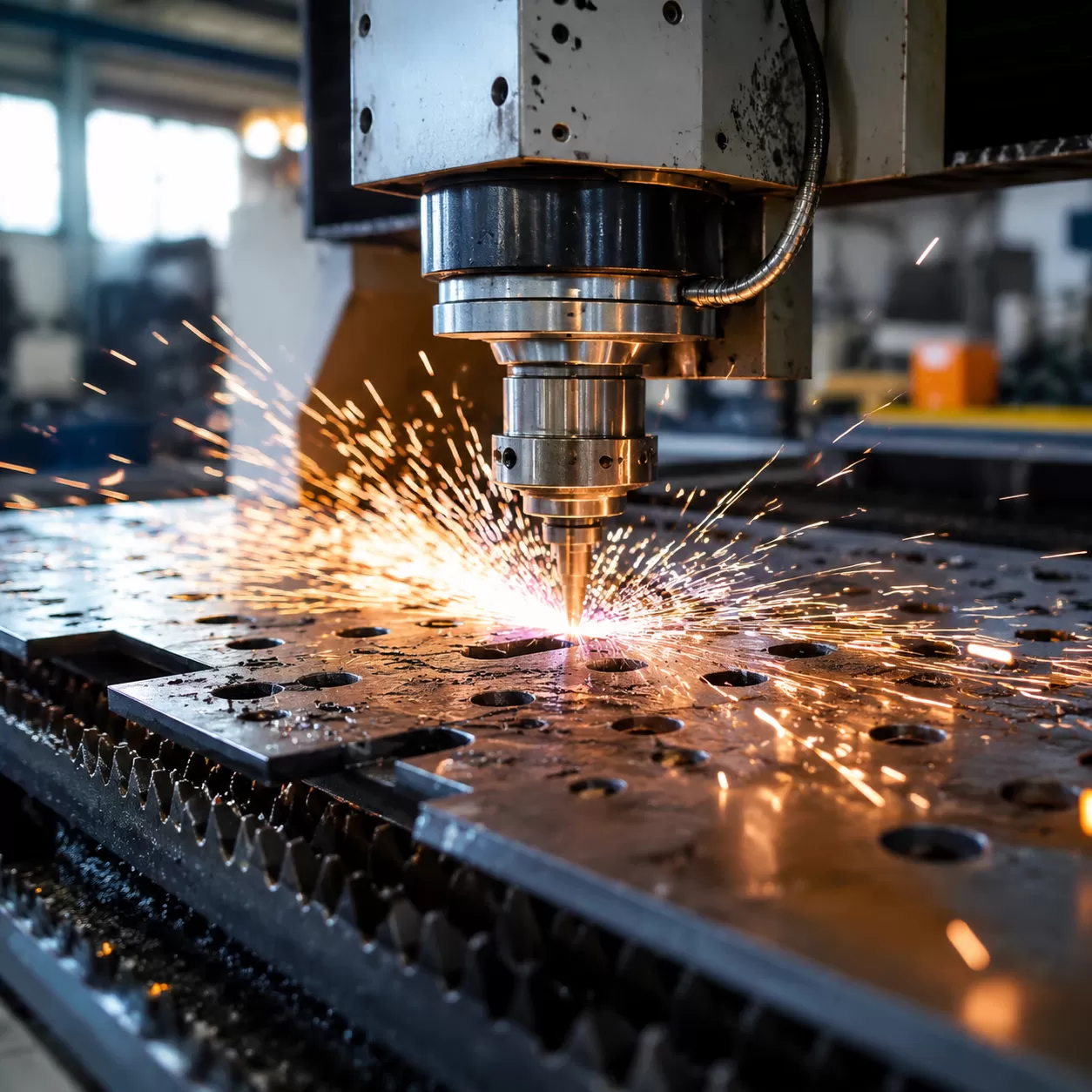
If you are going to push past traditional boundaries and cut steel on a CNC wood router, you cannot just wing it. You need a precise, calculated approach to protect your machine and your tooling.
Step 1: Dialing in Feeds and Speeds
Cutting ferrous metals requires a strict "milling" mindset. You must take incredibly shallow depths of cut while maintaining a proper chip load. If your feed rate is too slow, the tool will rub against the steel, creating friction and instantly dulling the edge. If it is too fast, you will snap the bit.
Step 2: Tooling Selection
Standard routing bits will fail immediately on mild steel machining. You must switch to high-grade, coated carbide end mills.
- Choose stubby bits with short flutes to ensure maximum rigidity.
- Look for TiAlN or AlCrN coatings that thrive in high-heat environments.
- Use 4-flute cutters to increase tool strength compared to standard 2-flute wood bits.
Step 3: Managing Heat
Wood carries away heat in the chips, but steel retains it. Without proper thermal management, the heat transfers directly to your cutting bit, destroying its tempered edge. You must implement a continuous mist coolant system or a high-pressure compressed air blast to cool the cutting zone and blow chips away instantly.
Step 4: Workholding
Steel generates massive cutting forces that will easily dislodge poorly secured stock. Any movement or vibration will cause catastrophic tool failure. Eliminate stock movement by avoiding basic double-sided tape or light fixtures. Instead, use heavy-duty mechanical clamping bolted directly to the t-slots, or specialized vacuum pods backed by solid physical stops. If you are regularly transitioning your shop floor from processing timber sheets on a furniture CNC router to light metal detailing, investing in a dedicated, high-rigidity clamping fixture is essential for safety and accuracy.
ProMach’s Engineering Advantage
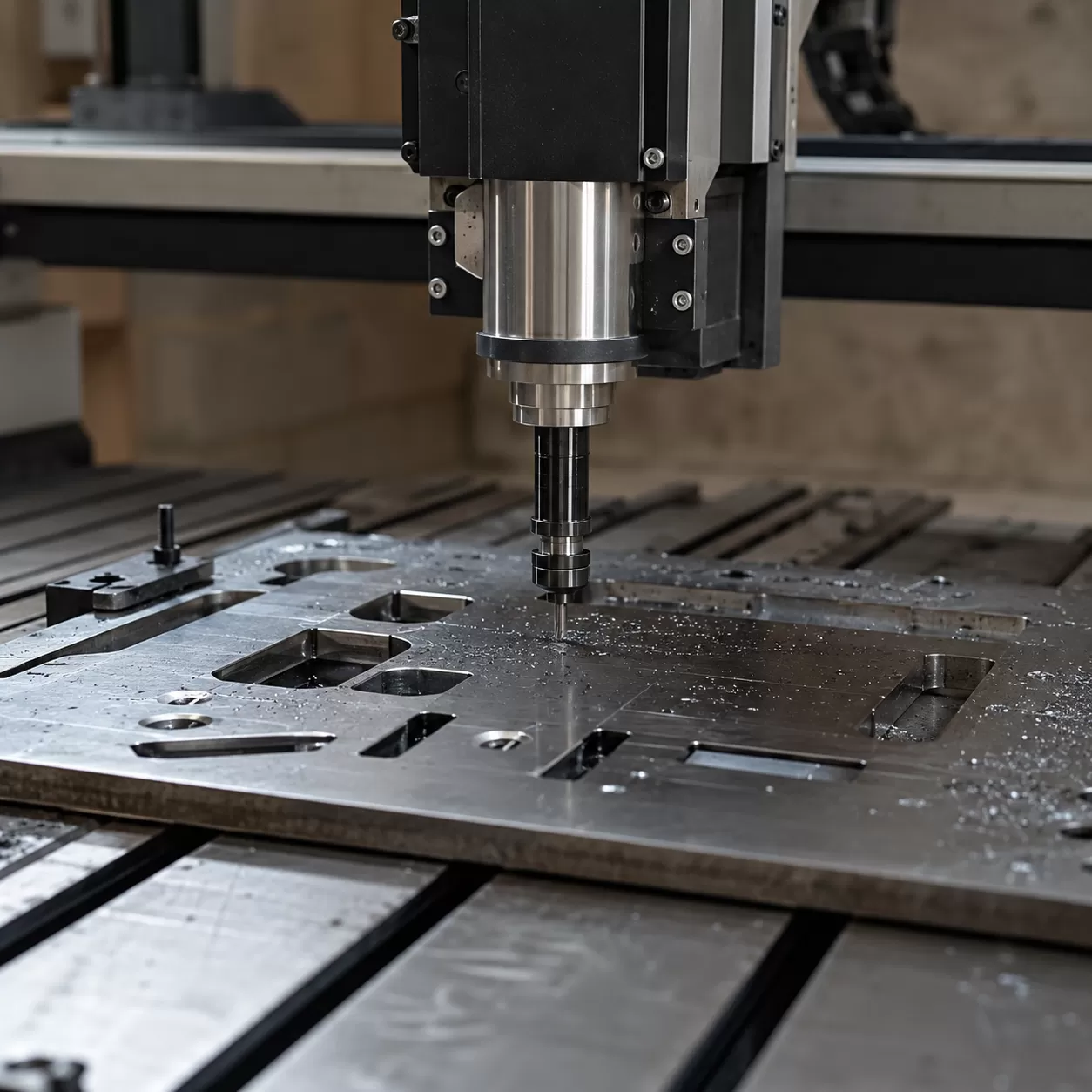
When addressing the question, can a cnc wood router cut steel, machine construction is the ultimate deciding factor. Standard gantry-style routers fail because they cannot handle the intense mechanical resistance. We engineer our ProMach CNC routers with heavy-duty, industrial-grade frame stiffness and reinforced linear rails specifically to eliminate gantry flex and destructive tool chatter. This robust design creates a highly stable platform that easily masters advanced aluminum cutting and light ferrous applications without sacrificing precision.
The Rigidity Rule: Without massive frame stiffness, attempting to cut ferrous metals will instantly deflect the cutting bit, ruining both your surface finish and your spindle bearings.
Spindle Options That Bridge the Gap
To successfully machine tougher materials, a router must move past standard high-speed woodworking configurations. Our specialized spindle packages are engineered to bridge the gap between high-speed operations and high-torque metal detailing:
- Hybrid Torque Delivery: Engineered to maintain high torque even at lower RPM ranges, preventing carbide end mills from burning up in mild steel machining applications.
- Dual-Purpose Calibration: Seamlessly transition from high-speed woodworking (10,000–24,000 RPM) to the disciplined, lower speeds required for non-ferrous and light ferrous metals.
- Vibration Dampening: Heavy-duty spindle mounts absorb residual harmonics, ensuring your depth of cut and chip load remain perfectly consistent.
For shops looking to expand their capabilities from standard cabinetry to light metal fabrication, utilizing a high-rigidity platform like our 3D CNC router designs ensures the structural integrity needed to handle demanding material resistance safely and accurately.
When to Switch from a CNC Router to a Dedicated CNC Mill
While a high-performance CNC router can handle non-ferrous metals and light, occasional mild steel machining with the right settings, it is not a substitute for a dedicated milling machine. When your workshop shifts from woodworking or prototyping to heavy-duty metal fabrication, using the wrong tool compromises both safety and part quality.
CNC Router vs. CNC Vertical Milling Machine
The table below breaks down the fundamental differences in structural capability and material processing between these two platforms:
| Feature | CNC Router | CNC Vertical Milling Machine (VMC) |
|---|---|---|
| Primary Material | Wood, Plastics, Aluminum, Brass | Carbon Steel, Stainless Steel, Titanium |
| Frame Construction | Gantry style (prone to flex under high loads) | Cast iron bed/column (maximum machine rigidity) |
| Spindle Speed & Torque | High RPM (10,000–24,000+), Lower Torque | Low RPM (100–8,000), High Low-End Torque |
| Cutting Force Capacity | Low to Moderate | Extremely High |
| Drive System | Linear rails with belts, rack & pinion, or ballscrews | Ground ballscrews with heavy-duty box ways or linear guides |
Signs Your Production Has Outgrown a Wood Router
Continuing to push a wood router past its engineering limits leads to tool chatter, broken carbide end mills, and premature bearing failure. It is time to transition to a dedicated CNC mill if your operations hit any of the following benchmarks:
- Strict Tolerance Demands: If your projects consistently require precision tighter than $\pm0.005\text{ inches}$ ($\pm0.127\text{ mm}$), the natural frame stiffness and gantry flex of a router cannot reliably deliver.
- Material Thickness: Machining solid steel plates or bars thicker than $0.25\text{ inches}$ ($6.35\text{ mm}$) requires heavy depths of cut that stall out high-speed router spindles.
- Production Volume: If ferrous metal machining makes up more than 15-20% of your total shop throughput, a dedicated mill will drastically cut down cycle times and save thousands in tooling costs.