What direction is the z axis on the cnc machine?
As someone who has spent years on the shop floor, I know that confusing your axes is the fastest way to a costly crash. In this post, you're going to learn the standard conventions, how the Z-axis changes across vertical mills, horizontal configurations, and lathes, and exactly how to troubleshoot common programming errors.
So if you're looking to master your depth control and stop second-guessing your toolpaths, this guide is for you.
Let's dive right in.
Introduction to CNC Machine Axes
The precise coordination of these axes dictates how the cutting tool interacts with the workpiece, ultimately determining the accuracy and quality of the finished product.
Understanding the Coordinate System
CNC machining relies entirely on the Cartesian coordinate system. This mathematical framework translates digital designs into physical spindle movement.
- X-Axis: Controls the horizontal left-to-right movement.
- Y-Axis: Manages the horizontal front-to-back movement.
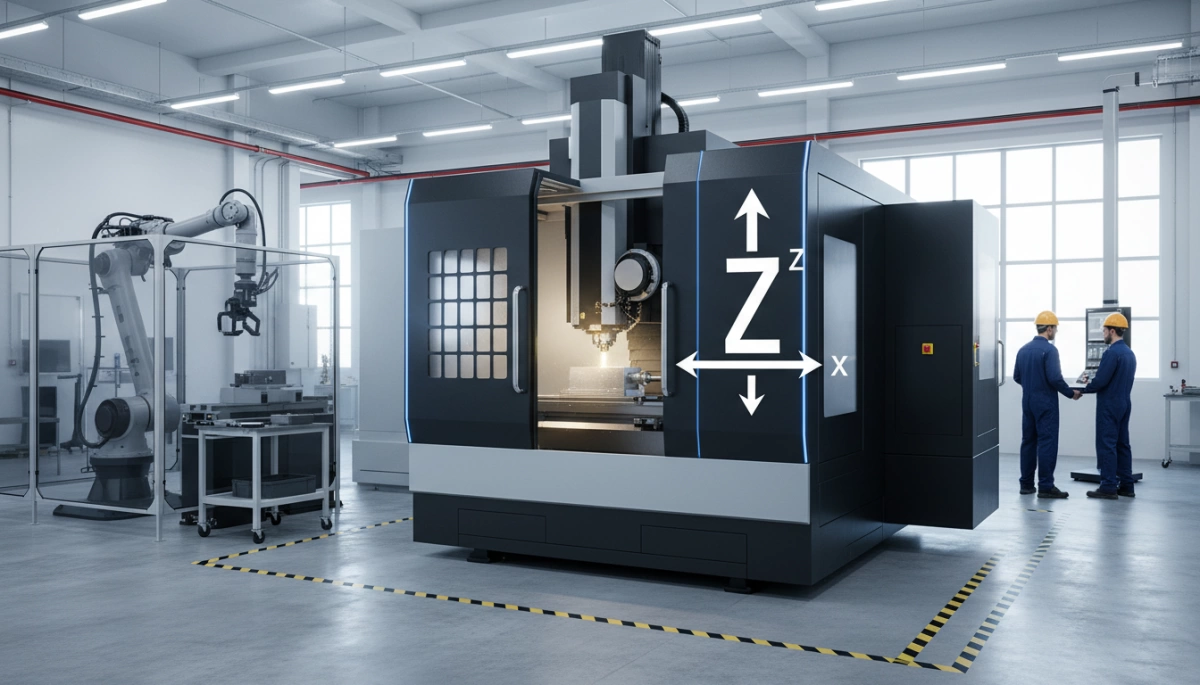
- Z-Axis: Dictates the vertical position. Understanding exactly what direction is the z axis on the cnc machine is the foundational step for controlling cutting depth safely and accurately.
Linear Axes vs. Rotary Axes
To achieve complex machining tasks, modern equipment utilizes different categories of motion to maneuver the tool and the material.
- Linear Axes: The standard X, Y, and Z axes are linear. They govern straight-line travel, such as the basic up and down or side-to-side motions required to shape a part.
- Rotary Axes: Designated as A, B, and C, these axes pivot around the linear axes. They allow the machine to rotate the workpiece or the cutting tool, enabling intricate multi-sided machining without manual repositioning.
What Direction is the Z-Axis on a CNC Machine?
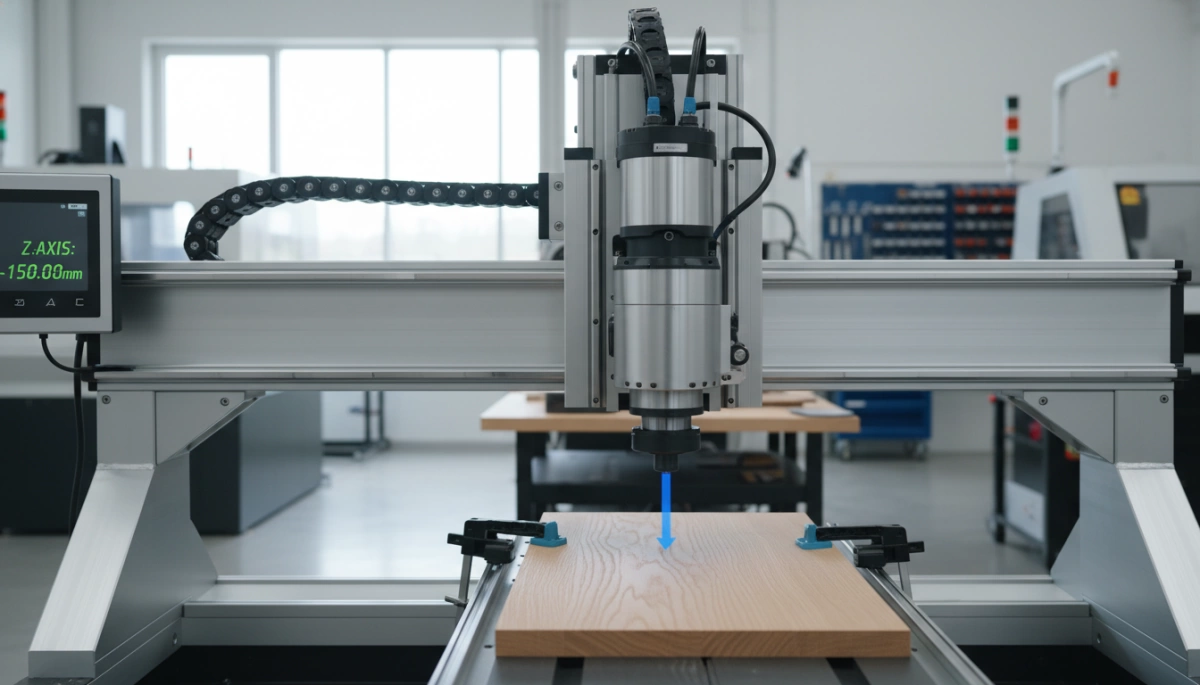
When people ask what direction is the z axis on the cnc machine, the most straightforward answer is that it always aligns with the machine's main spindle.
The Standard Orientation Convention
In standard machining conventions, the Z-axis is dictated by the spindle movement. Whatever axis the spindle rotates on, that is your Z-axis. The universal rule for direction is based on the tool's relationship to the material: moving the cutting tool away from the workpiece is always the positive direction (+Z), while moving it toward the material to cut is the negative direction (-Z). This standard orientation keeps programming consistent, whether you are operating a basic router or a high-precision CNC milling machine.
Up and Down Movements: Retract and Plunge
On most standard vertical setups, the Z-axis handles the up and down vertical movement. This motion is generally broken down into two main actions during a machining cycle:
- Plunge (-Z): The spindle drives the cutting tool downward into the material. This negative movement establishes your exact cutting depth.
- Retract (+Z): The spindle lifts the tool upward and away from the workpiece. This positive movement is used to clear clamps, fixtures, and the material itself before moving to a new coordinate.
Why the Z-Axis Direction Matters
Getting the Z-axis direction right is non-negotiable for successful part production. Misunderstanding this axis leads to costly mistakes on the shop floor.
- Prevents Machine Crashes: Confusing a positive retract with a negative plunge will drive the spindle directly into the machine table or fixture, causing severe damage.
- Controls Cutting Depth: Absolute precision on the Z-axis is what determines the depth of your pockets, holes, and profiles. A slight miscalculation here ruins the workpiece.
- Protects Tooling: Setting the correct clearance height (+Z) ensures the tool does not drag across the raw material during rapid positioning moves, extending the life of your cutters.
Z-Axis Variations Across CNC Machine Configurations
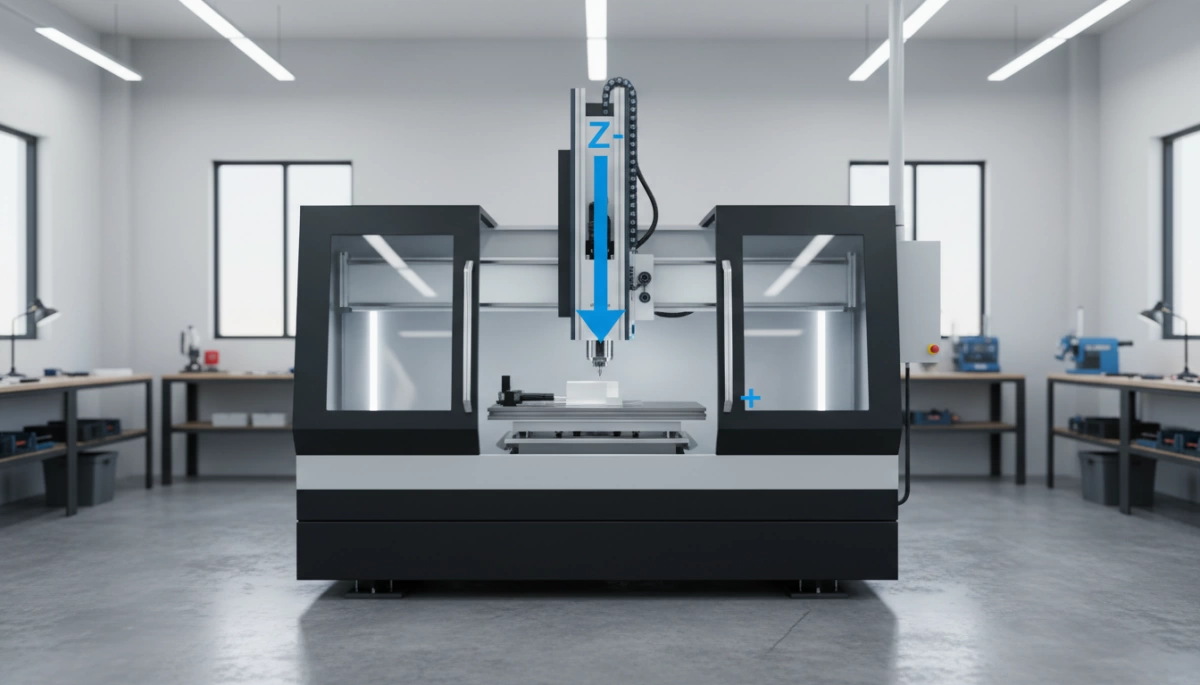
When operators ask exactly what direction is the z axis on the cnc machine, the answer ultimately depends on the equipment's physical layout. While the Z-axis always aligns with the main spindle, its actual orientation in your shop changes based on the machine type. Understanding how the primary linear axes and rotary axes interact with the spindle is essential for accurate setups.
Z-Axis on Vertical CNC Machines
On vertical equipment, the spindle sits in a vertical position. The Z-axis controls the direct up and down motion of the machine head.
- Plunging: Moving the cutting tool down into the workpiece to establish your cutting depth is a negative Z movement.
- Retracting: Moving the spindle up and away from the part represents the positive direction.
When running a vertical CNC machining center, mastering this vertical movement is critical to avoid crashing the tool into the table.
Z-Axis on Horizontal CNC Machines
Horizontal machines flip this orientation by 90 degrees. The spindle is mounted parallel to the floor.
- Movement: The Z-axis moves in and out (back and forth) rather than up and down.
- Alignment: It still dictates the spindle movement toward or away from the face of the workpiece.
- Advantage: This horizontal Z-axis direction allows gravity to pull chips away from the cutting zone, keeping the operation clean.
Z-Axis on CNC Lathe Machines
Lathes operate with a completely different dynamic. Instead of a spinning tool, the workpiece itself rotates in the chuck.
- Orientation: The Z-axis runs horizontally, parallel to the rotation of the spindle (left to right).
- Tool Path: Moving the tool carriage along the length of the spinning part is controlled by the Z-axis.
Because We are a CNC Machines Manufacturer and Supplier, we engineer our precision CNC wood lathes with heavy-duty guide rails to ensure the Z-axis travel remains perfectly rigid and accurate from end to end.
Practical Applications and Operations of the Z-Axis
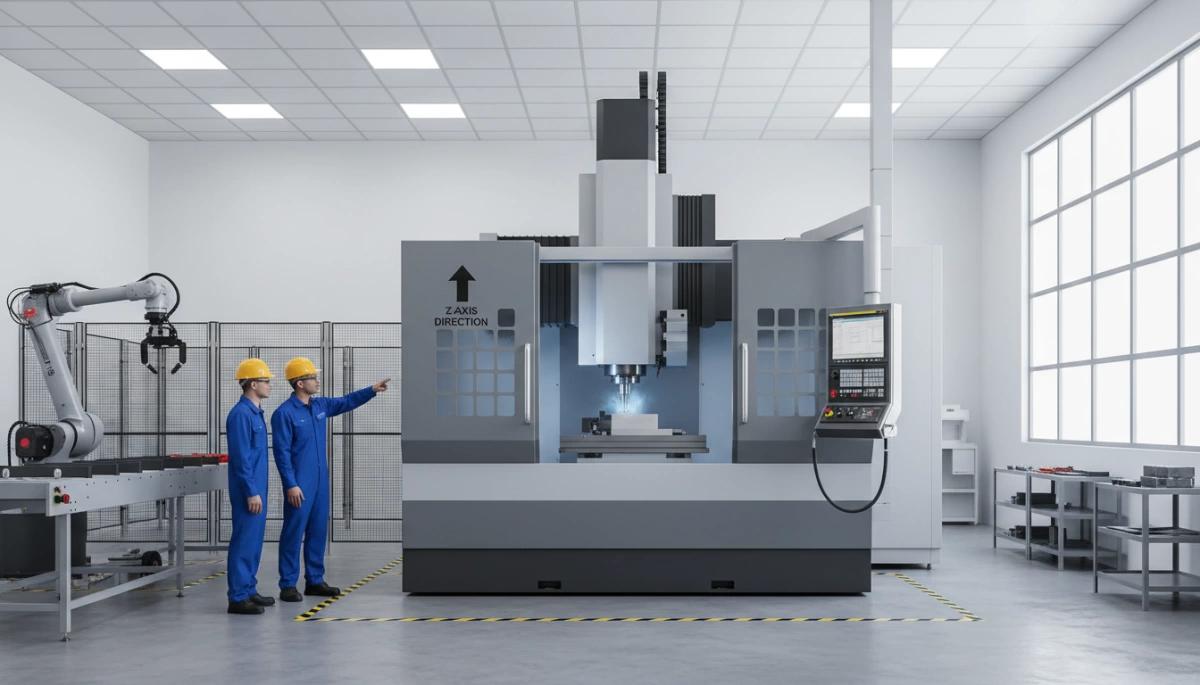
Knowing exactly what direction is the Z axis on the CNC machine is the foundation for executing complex machining operations flawlessly and safely.
Precision Drilling and Tapping
Drilling and tapping operations rely entirely on accurate vertical movement. The Z-axis dictates the spindle movement, driving the cutting tool straight into the material.
- Plunging: Moving in the negative direction drives the drill into the workpiece.
- Retracting: Moving in the positive direction pulls the tool out safely to clear chips.
Maintaining this up and down precision requires rigid mechanics. Upgrading or maintaining your machine with high-quality CNC spare parts ensures your Z-axis ball screws and guides remain perfectly aligned during high-torque drilling cycles.
Depth Control in CNC Milling
In milling, the Z-axis is your ultimate authority on cutting depth. If your depth control is off, the entire part is compromised. Proper Z-axis management involves:
- Surface Zeroing: Establishing the exact top of the workpiece to calibrate the tool height.
- Pass Depth Management: Controlling how much material the tool removes per pass to prevent tool breakage and spindle overload.
- Clearance Height: Returning the spindle to a safe vertical position before making rapid movements across the X and Y axes.
Z-Axis Role in Multi-Axis Machining
When you move beyond basic 3-axis setups, the Z-axis must work in perfect harmony with both linear axes and rotary axes. In 4-axis and 5-axis machining, the Z-axis continuously adjusts its height while the part rotates or tilts. This dynamic coordination allows the cutting tool to maintain a constant, precise depth along complex, multi-dimensional surfaces without crashing into the machine table or fixtures.
Identifying and Troubleshooting the Z-Axis
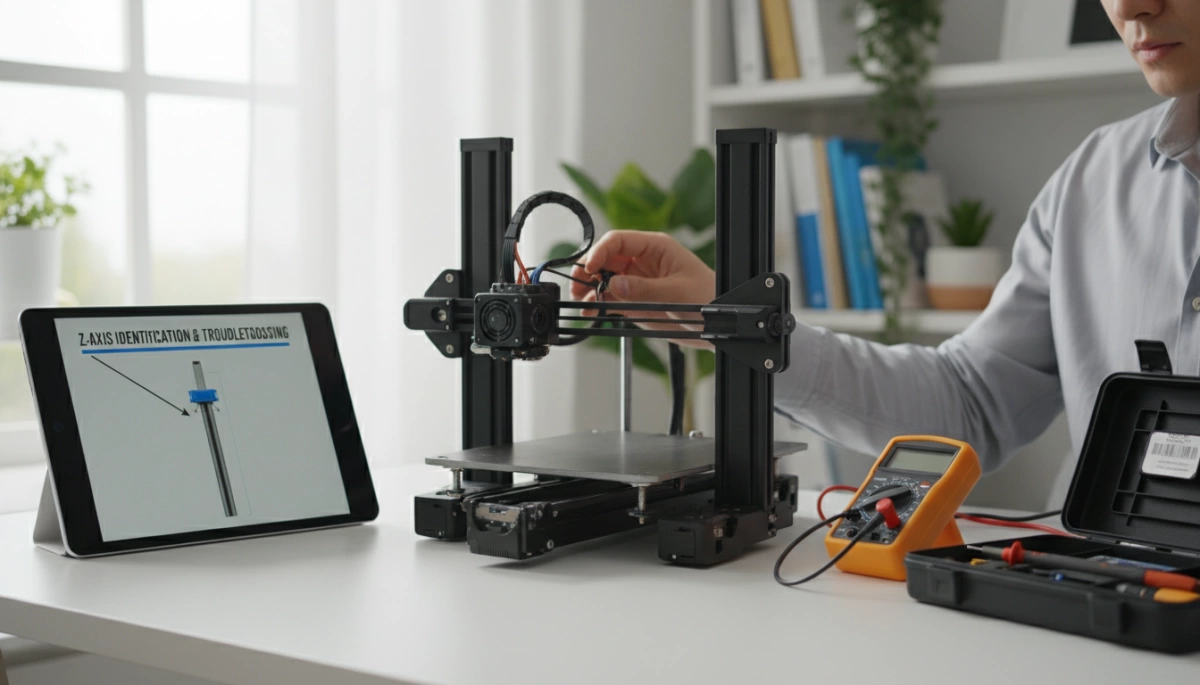
To keep your shop running smoothly, you need to know exactly how to spot and maintain this critical axis. Identifying the what direction is the z axis on the cnc machine is the first step toward avoiding costly mistakes.
How to Visually Identify the Z-Axis
The easiest way to find the Z-axis is to look at the spindle movement. On most equipment, like our high-performance CNC wood router units, the Z-axis is the vertical column that moves the cutting tool up and down. If you see a motor driving a ball screw that lowers the tool toward the workpiece, you’ve found the Z-axis. It is always the axis aligned with the spindle's rotation.
Common Z-Axis Programming Errors
Even pros make mistakes. Here are the most frequent Z-axis blunders we see in the field:
- Incorrect Tool Offsets: Forgetting to touch off the tool leads to "air cutting" or, worse, a table crash.
- Rapid Plunge Errors: Accidentally using a G00 command instead of G01 when entering the material.
- Wrong Signage: Mixing up the positive direction (retract) with the negative direction (plunge).
- Inadequate Clearance: Setting a retract height that is too low to clear clamps or fixtures during rapid moves.
Calibration and Maintenance Tips
Maintaining the vertical position accuracy is non-negotiable for precision work. We recommend a strict maintenance schedule:
- Check for Backlash: Regularly inspect the Z-axis ball screw and nut for any play that could ruin your cutting depth.
- Lubrication: Keep the linear axes rails and bearings well-greased to prevent "stiction" during fine movements.
- Zero-Point Verification: Always re-zero after a tool change or a power cycle to ensure consistent results.
- Clean the Sensors: Ensure limit switches and home sensors are free of dust and chips to prevent over-travel errors.
Frequently Asked Questions About the CNC Z-Axis
As a CNC Machines Manufacturer and Supplier, we frequently help operators understand machine coordinates. Here are the most common questions regarding Z-axis operations and setup.
What direction is the Z axis on the CNC machine?
The Z-axis always aligns with the spindle movement. On standard vertical mills and routers, this dictates the **up and down** vertical movement. Moving the axis in the positive direction lifts the cutting tool safely away from the workpiece, while moving in the negative direction brings the tool closer to the bed.
How does the Z-axis control cutting depth?
Your cutting depth is entirely managed by negative Z-axis movements. When programming a job, driving the Z-axis into negative coordinates determines exactly how deep the cutting tool penetrates the material. Maintaining precise depth control is especially critical when running an ATC CNC router, where automated tool changes require absolute accuracy when re-establishing the Z-zero position.
Is the Z-axis always vertical?
Not always. While it represents the vertical position on standard routers and milling machines, the orientation depends on the machine's primary spindle. For example, on a standard CNC lathe, the Z-axis runs horizontally along the length of the part, rather than moving up and down.
What is the difference between linear axes and rotary axes?
Linear Axes: The X, Y, and Z axes are linear, meaning they move in straight lines (left/right, front/back, up/down).
Rotary Axes: The A, B, and C axes are rotary, meaning they tilt or rotate around the primary linear axes to allow for complex multi-sided machining.